Talk to a Counsellor
 Support
Operation Blue Star: What Happened at Golden Temple Amritsar in 1984
Operation Blue Star was the military operation ordered by Prime Minister Indira Gandhi’s government in June 1984 to remove Bhindranwale and other armed militants from the Golden Temple complex and other locations in Punjab.
Last Updated on 21 Aug 2026

In the first week of June 1984, one of the holiest places in Sikhism became the scene of an armed confrontation that would change India for decades.
The Golden Temple complex in Amritsar had been surrounded by security forces. Inside were pilgrims, religious functionaries, political activists and armed followers of Jarnail Singh Bhindranwale, whose group had established heavily defended positions around parts of the complex, particularly the Akal Takht.
Then the Indian Army went in.
The main assault in Amritsar took place during the night of 5–6 June 1984, although the wider operation extended over several days.
Bhindranwale was killed. The Army eventually took control of the complex. But the price was enormous.
Soldiers, militants and civilians died. The Akal Takht suffered extensive damage. The operation caused profound anguish among Sikhs in India and abroad. On 31 October 1984, Indira Gandhi was assassinated by two of her Sikh bodyguards. Her killing was followed by horrific anti-Sikh violence in Delhi and elsewhere.
More than four decades later, Operation Blue Star at Golden Temple remains one of the most consequential and contested episodes in independent India’s history.
To understand why the Indian Army entered the Golden Temple, however, we have to go back several years before June 1984.
Table of Contents
Jump to section- CLAT PG: All About CLAT Postgraduate Exam for LLM
Operation Blue Star at Golden Temple: At a Glance
| Particular | Details |
|---|---|
| Operation | Operation Blue Star |
| When | 1–10 June 1984 |
| Main Assault | Night of 5–6 June 1984 |
| Main Location | Golden Temple complex, Amritsar, Punjab |
| Ordered By | Government led by Prime Minister Indira Gandhi |
| Conducted By | Indian Army with other security forces |
| Main Objective | Remove Jarnail Singh Bhindranwale and armed militants from the complex |
| Central Figure | Jarnail Singh Bhindranwale |
| Army Chief | General A.S. Vaidya |
| Senior Operational Commanders | Lt. Gen. K. Sundarji and Maj. Gen. Kuldip Singh Brar |
| Major Site of Fighting | Akal Takht |
| Official Death Figure in Golden Temple Area | 493 militants/civilians and 83 Army personnel |
| Immediate Outcome | Bhindranwale and other leading armed figures killed; Army secured the complex |
| Long-Term Consequences | Deepened Sikh-state tensions, Indira Gandhi’s assassination, anti-Sikh violence and further militancy in Punjab |
Why Operation Blue Star Happened?
Operation Blue Star did not begin with a sudden decision in June 1984. It came after years of worsening political conflict, religious mobilisation and violence in Punjab.
Punjab had long had disputes with the central government over issues such as greater state autonomy, the status of Chandigarh, river-water sharing and other political demands.
One important document was the Anandpur Sahib Resolution, adopted by the Shiromani Akali Dal in the 1970s. Among other demands, it sought a significantly more federal distribution of power between India’s central government and the states.
Not every demand in Punjab was separatist, and Sikh politics should not be equated with militancy.
But by the late 1970s and early 1980s, another development was becoming increasingly important: the rise of armed political and religious violence.
One of the men who emerged from that environment was Jarnail Singh Bhindranwale.
Who Was Jarnail Singh Bhindranwale?
Jarnail Singh Bhindranwale was the head of the Damdami Taksal, a Sikh religious institution, and became one of the most influential and controversial figures in Punjab during the early 1980s.
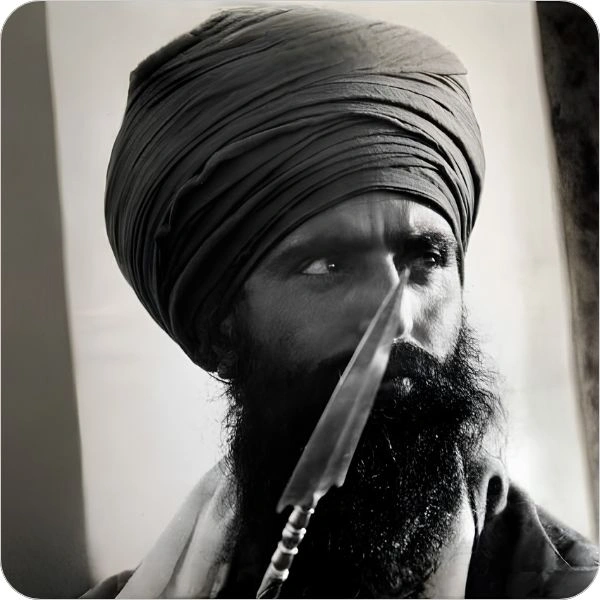
His public message combined strict religious observance with criticism of what he regarded as injustices against Sikhs.
His influence grew rapidly, particularly among sections of Sikh youth.
At the same time, Punjab experienced assassinations, communal violence, attacks on officials and increasing militant activity. Bhindranwale and his associates were accused by authorities of involvement in or encouragement of violence, while his supporters disputed many allegations and regarded him as a defender of Sikh interests.
His position on Khalistan, or an independent Sikh state, was also more complex than it is sometimes presented in short summaries. He did not consistently frame his movement as a straightforward campaign formally demanding Khalistan, although his rhetoric and the activities of armed supporters became deeply associated with the separatist conflict.
By 1984, however, the most urgent issue facing the government was less a debate over labels and more the presence of heavily armed men operating from inside the Golden Temple complex.
How Bhindranwale Came to the Golden Temple Complex?
Bhindranwale moved into the wider Golden Temple complex during the political confrontation of the early 1980s.
By late 1983, he and his followers had established themselves around the Akal Takht.
That location mattered enormously.
The Harmandir Sahib, the gold-covered shrine commonly called the Golden Temple, is the spiritual centre most visitors immediately recognise.
The Akal Takht, situated opposite it within the same complex, has a different but equally important place in Sikh tradition. Established by the sixth Sikh Guru, Guru Hargobind, it symbolises temporal authority alongside spiritual authority and is one of Sikhism’s five Takhts, or seats of authority.
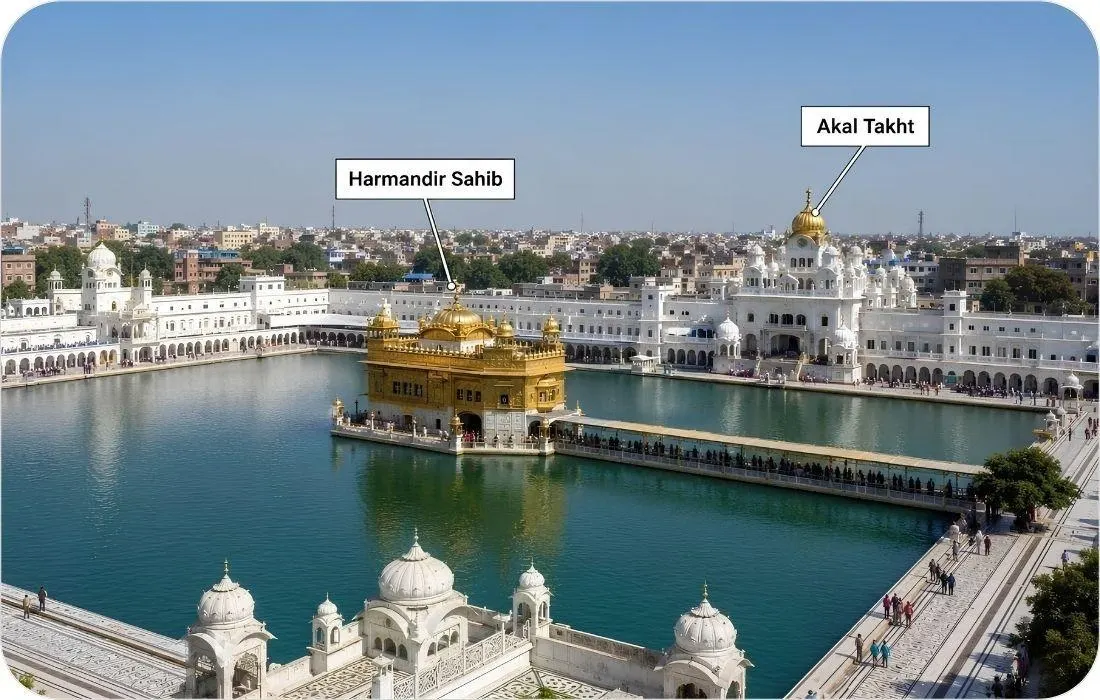
As the confrontation intensified, armed positions were developed in and around buildings in the complex.
One particularly important figure in preparing those defences was Shabeg Singh.
Who Was Major General Shabeg Singh?
Shabeg Singh had once been a highly decorated officer of the Indian Army.
He had played an important role in training the Mukti Bahini during the 1971 Bangladesh Liberation War but was later dismissed from military service shortly before retirement. He subsequently became associated with Bhindranwale.
His military experience proved significant.
According to accounts of the operation, defensive positions in the Golden Temple complex were carefully prepared. Firing points were established to cover likely approaches, buildings were fortified and weapons were positioned in ways that would make a frontal assault extremely difficult.
When soldiers eventually entered the complex, the resistance they encountered was much stronger than many had expected.
Explore other important GK topics and strengthen your knowledge for upcoming exams.
Why Did Indira Gandhi’s Government Decide to Use the Army?
By 1984, Punjab’s security situation had deteriorated considerably.
Killings of police officers, politicians, civilians and religious figures had contributed to growing fear. The Golden Temple complex had also become closely associated with the armed movement around Bhindranwale.
The government argued that armed militants were using the religious complex as a base and that normal policing had become inadequate to remove them.
Negotiations between the central government and Akali political leaders had repeatedly failed to produce a settlement.
Eventually, Prime Minister Indira Gandhi authorised military action.
The stated objective was to remove Bhindranwale and armed militants and recover weapons from the complex.
But the decision contained an enormous dilemma.
The government was not planning an assault on an ordinary fortified building.
It was sending soldiers into the Golden Temple complex, the most revered shrine in Sikhism.
Whatever the military objective, the religious and political consequences were bound to be extraordinary.
Read about Operation Safed Sagar and its key details here!
Operation Blue Star in Amritsar: Full Story
Below is the real story of what happened in Golden Temple Amritsar during Operation Blue Star:
1 June 1984: The Confrontation Begins
The opening phase began before the main Army assault.
On 1 June, exchanges of fire occurred around the Golden Temple complex.
Over the following days, security forces tightened their control around Amritsar.
The city moved towards curfew.
Road and communications access became severely restricted.
Army formations began taking up positions.
The operation was no longer simply about containing the militants.
Preparations were being made to enter the complex.
3 June 1984: Amritsar Is Sealed
By 3 June, a strict curfew had been imposed.
Transportation and communications were restricted, and the Golden Temple area was effectively isolated.
Inside remained several different groups of people:
- armed followers of Bhindranwale,
- Sikh religious personnel,
- Akali political leaders,
- SGPC employees,
- local residents,
- and pilgrims who had come to worship.
That mixture became one of the operation’s greatest complications.
The Army was preparing to confront fortified armed positions, but it was doing so inside a religious complex where non-combatants were also present.
The Night of 5 June 1984: The Army Moves In
The decisive phase began on the evening of 5 June 1984.
Indian Army troops entered the Golden Temple complex from multiple directions.
The expectation that important positions could be captured relatively quickly proved incorrect.
Soldiers came under intense automatic-weapons fire.
The layout of the complex offered defenders several advantages. Buildings overlooked the parikrama, the marble walkway surrounding the sacred pool, and fortified firing positions covered important approaches.
Troops attempting to advance towards the Akal Takht faced particularly strong resistance.
According to later accounts, defenders under Shabeg Singh had anticipated likely Army entry routes and prepared fields of fire accordingly. Soldiers attempting to move through those approaches suffered heavy casualties.
What had begun as an attempt to clear buildings was turning into a major close-quarters battle.
Akal Takht Became the Centre of the Battle
The most intense fighting centred around the Akal Takht, where Bhindranwale, Shabeg Singh and several of their armed followers were positioned.
The building had been fortified.
Automatic weapons covered approaches.
Nearby structures also contained firing positions.
Troops repeatedly attempted to advance but struggled to overcome the resistance.
The problem confronting commanders was becoming increasingly difficult:
Continue sending infantry and commandos forward against entrenched defenders and risk further casualties, or bring heavier weapons into one of Sikhism’s most sacred places.
Eventually, the second option was chosen.
Tanks Used During Operation Blue Star
The use of tanks remains among the most controversial aspects of Operation Blue Star.
During the assault, an armoured personnel carrier attempting to move towards the Akal Takht was disabled by an anti-armour weapon. The resistance convinced commanders that the defensive capability around the building was stronger than anticipated.
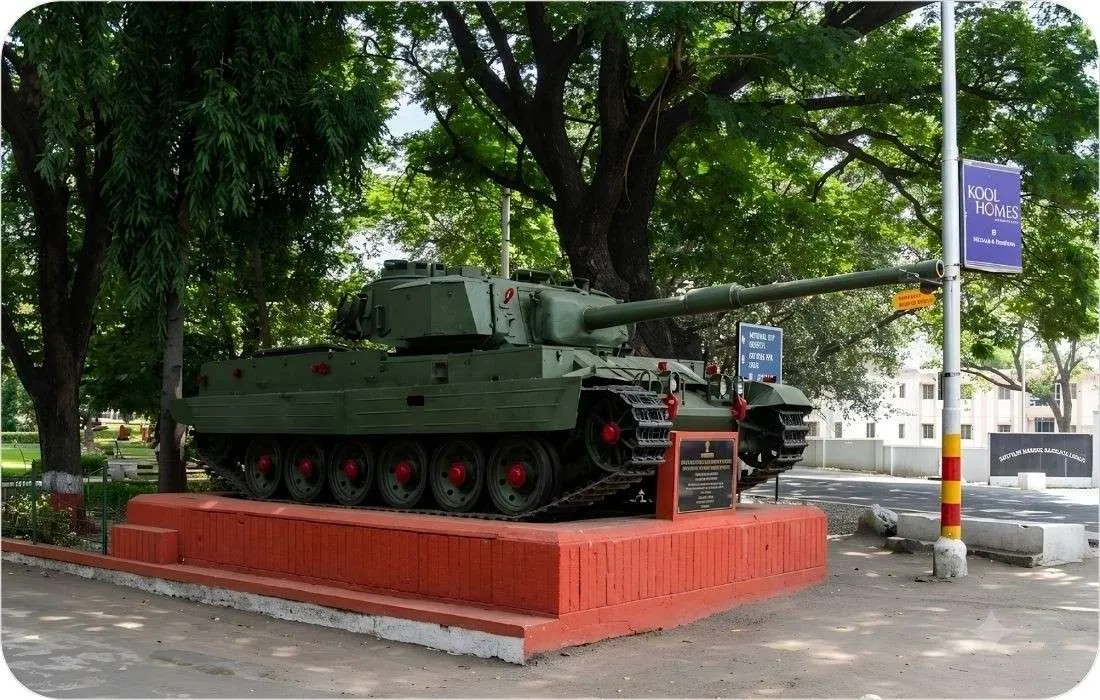
Vijayanta tanks were then brought into the complex, and their weapons were used against fortified positions around the Akal Takht.
Contemporary and later accounts describe the tank fire as playing a major role in breaking the resistance.
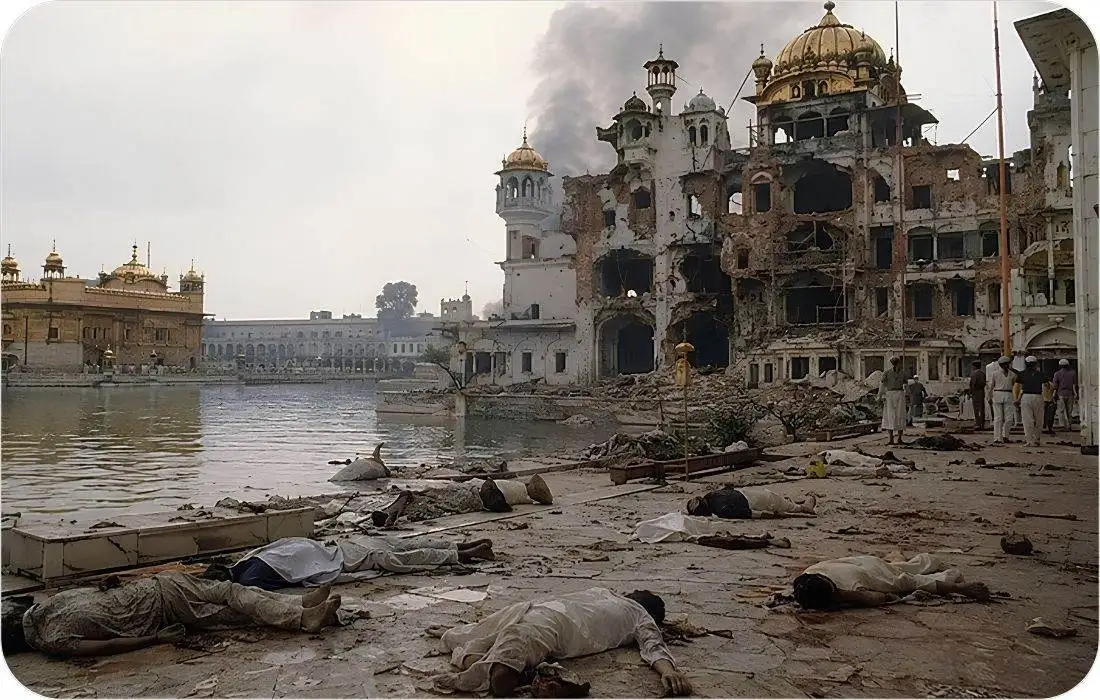
The result was extensive damage to the Akal Takht.
For the Army, the decision was linked to the tactical problem of overcoming heavily fortified resistance.
For many Sikhs, however, images of a sacred seat of Sikh authority badly damaged by Indian military fire became one of the defining memories of 1984.
Both realities are essential to understanding why Operation Blue Star remains so contentious.
6 June 1984: The Battle Turns
By the morning of 6 June, the Army had gained increasing control of the complex.
The resistance around the Akal Takht was largely overcome after the use of heavier weapons and continued infantry operations.
Bhindranwale, Shabeg Singh and Amrik Singh, another leading figure associated with the movement, were found dead.
But securing the whole complex did not happen instantly.
Searches and fighting against remaining armed positions continued over the following days.
By the end of the operation, the government had achieved its immediate military objective.
Bhindranwale was dead.
The armed positions had been overwhelmed.
The Golden Temple complex was under state control.
Politically, however, the crisis was only beginning.
What Happened to Golden Temple During Operation Blue Star?
It is important to distinguish different buildings when discussing the physical damage.
1. Harmandir Sahib
The central gold-covered Harmandir Sahib survived the operation, although the wider complex was hit by gunfire and suffered damage.
It is therefore inaccurate to say simply that “the Golden Temple was destroyed.”
2. Akal Takht
The Akal Takht was severely damaged during the fighting, particularly during the use of heavy weapons against fortified positions.
Its damaged appearance became a powerful symbol of the operation’s impact.
The government subsequently arranged reconstruction, but that reconstruction itself became controversial. The building was later dismantled and rebuilt through Sikh community efforts.
3. Other Buildings
Several buildings within or around the complex showed substantial bullet and shell damage.
The physical scars of the operation remained visible long afterwards.
What Happened to the Sikh Reference Library?
One of the most unresolved controversies concerns the Sikh Reference Library, which held historic manuscripts, books, handwritten religious texts and other material.
There is no universally accepted account of what happened to the entire collection.
One version maintains that the library was damaged by fire during the fighting.
The SGPC and others have maintained that significant quantities of manuscripts and other material survived the fighting, were subsequently removed by authorities and were never fully returned.
The Union government has stated through earlier responses that documents and articles recovered during Operation Blue Star were handed over to the SGPC or Punjab government. The SGPC disputes that all the material was returned.
The issue is still not entirely historical.
In March 2026, the Punjab and Haryana High Court sought responses from the Centre and the Army in litigation concerning manuscripts and religious articles allegedly removed during Operation Blue Star. The SGPC has claimed that around 1,500 manuscripts, including handwritten codices of the Guru Granth Sahib, remain unaccounted for.
Therefore, any claim that the entire library was simply “burned” or, conversely, that all its contents were deliberately taken away should be treated cautiously.
The fate of parts of the collection remains contested.
Why Was the Timing of Operation Blue Star So Controversial?
The timing intensified the controversy.
The main operation took place around the observance of the martyrdom anniversary of Guru Arjan Dev, the fifth Sikh Guru.
Large numbers of pilgrims traditionally visit the Golden Temple around this period.
That meant civilians were present inside the complex as the security situation tightened.
On 3 June, authorities imposed a curfew and increasingly restricted movement in Amritsar. People already inside the complex found themselves caught between armed defenders and the approaching military operation.
This is one reason the civilian death toll remains such an important and disputed part of the history of Operation Blue Star.
How Many People Died in Operation Blue Star?
According to Union Home Ministry response based on official records:
- 493 militants/civilians were killed, and
- 83 Army personnel were killed
in the Golden Temple area in June 1984.
The official category itself presents a difficulty because militants and civilians were combined in the figure of 493.
Independent journalists, eyewitnesses and other accounts have suggested higher death tolls, particularly among civilians.
Because Amritsar was under restrictions and journalists had limited access during the operation, independently establishing an exact figure has remained difficult.
| Category | Figure / Position |
|---|---|
| Indian Army Soldiers killed | 83 according to official Home Ministry records |
| Militants + civilians killed | 493 according to official Home Ministry records |
| Independent estimates | Some accounts give substantially higher figures |
| Exact civilian toll | Remains disputed |
How Many Soldiers Died in Operation Blue Star?
Official records put Army fatalities at 83, with many more wounded.
The casualties reflected the difficulty of the assault.
Soldiers were advancing through confined routes against defenders firing from prepared positions in buildings they knew well.
Operation Blue Star Ends, but the Crisis Deepens
By around 10 June, the major military phase of Operation Blue Star had ended.
The government had regained control of the complex.
Yet the political effect was almost the opposite of closure.
For many Sikhs, seeing soldiers enter the Golden Temple complex and the Akal Takht badly damaged created profound anger and grief.
The reaction was not confined to Punjab.
Sikh communities across India and overseas protested.
There were also incidents of unrest and desertion among some Sikh personnel in the armed forces.
Militancy in Punjab did not disappear with Bhindranwale’s death.
Instead, the events of June 1984 became a powerful rallying point for the insurgency that continued in subsequent years.
Operation Woodrose: What Happened After Blue Star?
Operation Blue Star was followed by a broader security campaign commonly known as Operation Woodrose.
Security forces conducted operations across Punjab aimed at locating militants, weapons and suspected supporters outside the Golden Temple complex.
Large numbers of people were detained.
Human-rights organisations and Sikh groups later alleged widespread arbitrary arrests and abuses during the wider security response.
Woodrose is important because the aftermath of June 1984 was not limited to the Golden Temple.
The state was attempting to dismantle militant networks across Punjab, while many ordinary Sikhs increasingly felt that the security response treated their wider community with suspicion.
Those competing pressures deepened the divide.
31 October 1984: Indira Gandhi Is Assassinated
Almost five months after Operation Blue Star, the consequences reached the Prime Minister personally.
On the morning of 31 October 1984, Indira Gandhi was walking through the grounds of her New Delhi residence when two members of her security detail—Beant Singh and Satwant Singh—shot her.
Both men were Sikh.
The assassination was carried out in retaliation for Operation Blue Star.
Gandhi was taken to AIIMS but died from her injuries.
The killing shocked India.
But what happened next turned one assassination into another national tragedy.
The 1984 Anti-Sikh Violence
After news of Indira Gandhi’s assassination spread, Sikhs were targeted in large-scale violence, particularly in Delhi.
- Homes were attacked.
- Businesses were looted and burned.
- Sikh men were assaulted and killed.
- Families were displaced.
Official Government of India records later put the nationwide death toll at 3,325 people, including 2,733 in Delhi alone.
The Justice Nanavati Commission later described large mobs attacking Sikh homes and businesses, with most killings in Delhi occurring on 1 and 2 November 1984. It examined allegations of political instigation as well as failures by police and public authorities.
Why Operation Blue Star Remains So Controversial?
More than four decades later, there is still no single interpretation accepted by everyone. That is because several difficult questions overlap.
1. Was Military Action Necessary?
The government’s position was that armed militants had established fortified positions inside the Golden Temple complex, violence had escalated and earlier political efforts had failed.
From this perspective, the state could not indefinitely allow an armed enclave to operate from such a strategically and symbolically important site.
Critics argue that political and policing alternatives were not sufficiently exhausted and that the decision to launch a full military operation produced consequences far worse than the threat it was meant to resolve.
2. Why Were Armed Positions Allowed Inside a Sacred Complex?
Criticism of the government does not remove another difficult question.
Armed groups had established positions inside one of Sikhism’s holiest places.
Weapons and defensive arrangements transformed parts of a religious complex into a battlefield.
For critics of Bhindranwale and his armed followers, allowing this to happen itself represented a profound violation of the sanctity of the site.
3. Why Conduct the Operation When Pilgrims Were Present?
The operation took place during an important period on the Sikh religious calendar.
The presence of pilgrims increased the danger to civilians and remains one of the strongest criticisms of the timing.
4. Could the Akal Takht Have Been Saved?
Army commanders argued that unexpectedly strong fortified resistance required escalation.
Critics point to the later success of Black Thunder as evidence that containment and siege tactics could potentially have reduced destruction.
The two events were not identical, however, so the comparison cannot by itself settle the debate.
5. How Many Civilians Were Actually Killed?
Official records provide one figure. Independent accounts provide others.
Restrictions on journalists and limited independent access during the operation have made a universally accepted count impossible.
The uncertainty itself remains part of the controversy.
Operation Blue Star Timeline
| Date/Period | Event |
|---|---|
| 1970s | Political disputes over Punjab’s autonomy and other issues intensify |
| 1978 | Sikh-Nirankari clash in Amritsar becomes an important point in the radicalisation of sections of Sikh politics |
| Early 1980s | Political violence and militancy increase in Punjab |
| 1982 | Akali Dal launches the Dharam Yudh Morcha; Bhindranwale becomes increasingly prominent |
| 1983 | Bhindranwale establishes himself around the Akal Takht area of the Golden Temple complex |
| 1 June 1984 | Exchanges of fire occur around the complex |
| 3 June 1984 | Amritsar placed under strict curfew and movement restrictions |
| 5 June 1984 | Main Indian Army assault begins |
| Night of 5–6 June | Intense fighting around the Akal Takht; heavy weapons and tanks are employed |
| 6 June 1984 | Bhindranwale, Shabeg Singh and other leading figures killed; Army gains control of major areas |
| 7–10 June 1984 | Remaining positions searched and secured |
| June 1984 onward | Wider security operations, commonly associated with Operation Woodrose, continue across Punjab |
| 31 October 1984 | Prime Minister Indira Gandhi assassinated by Beant Singh and Satwant Singh |
| 31 October–November 1984 | Large-scale anti-Sikh violence follows |
| 1986 | First Operation Black Thunder; General A.S. Vaidya assassinated later that year |
| May 1988 | Operation Black Thunder II conducted at the Golden Temple with significantly different tactics |
Movies Based on Operation Blue Star
- Punjab 1984 (2014) – A Punjabi drama set against the insurgency and its impact on ordinary families.
- Maachis (1996) – Gulzar’s film about young people drawn into militancy amid the political violence of 1980s Punjab.
- Hawayein (2003) – Explores the impact of the 1984 anti-Sikh violence and the subsequent rise of militancy.
- Chauthi Koot (2015) – Examines fear and everyday life in Punjab during the militant period following 1984.
- The Mastermind Jinda Sukha (2015) – Based on Harjinder Singh Jinda and Sukhdev Singh Sukha, who assassinated former Army Chief General A.S. Vaidya in revenge for Operation Blue Star.
Check out our other important GK topics for better preparation:
FAQs About Operation Blue Star Amritsar

SEO Head
Virendra heads SEO & Content at LPT. A writer at heart, he focuses on building exam-focused content that informs, guides, and supports aspirants in their preparation journey.
Other Related Blogs