Talk to a Counsellor
 Support
CLAT PG Blog Category
CLAT PG: All About CLAT Postgraduate Exam for LLM
CLAT PG is a centralized national entrance test for admission to LLM programs offered by National Law Universities (NLUs) in India. It evaluates candidates’ understanding of core legal concepts and analytical ability. The exam consists of 120 MCQs, carrying one mark each, and includes subjects like Constitutional Law, Jurisprudence, Contract, Torts, and Criminal Law.
Latest Posts
Latest CLAT PG Blog Posts
Topic-Wise Reads
Explore CLAT PG Topics in Detail
Preparation Resources
Preparation Strategy & Tips
2 Months Study Plan for CLAT PG 2027: Preparation Strategy, Timetable & Subject-Wise Plan
›
CLAT PG Preparation Strategy: Expert Study Plan, Books, Mocks & Tips
›
Is CLAT PG Tough to Crack? Difficulty Level Explained
›
CLAT PG 2027 Revision Strategy: Subject-Wise Study Plan
›
CLAT PG Preparation Strategy for Last 30 Days? 1 Month Plan
›
Important Topics
CLAT PG Exam Pattern 2027: Marking Scheme & All Details
›
CLAT PG Syllabus 2027: Section-Wise Topics & PDF
›
CLAT PG Eligibility 2027: Age Limit, Qualification, All Criteria
›
CLAT PG Admit Card 2027: Date, Link, How to Download Hall Ticket?
›
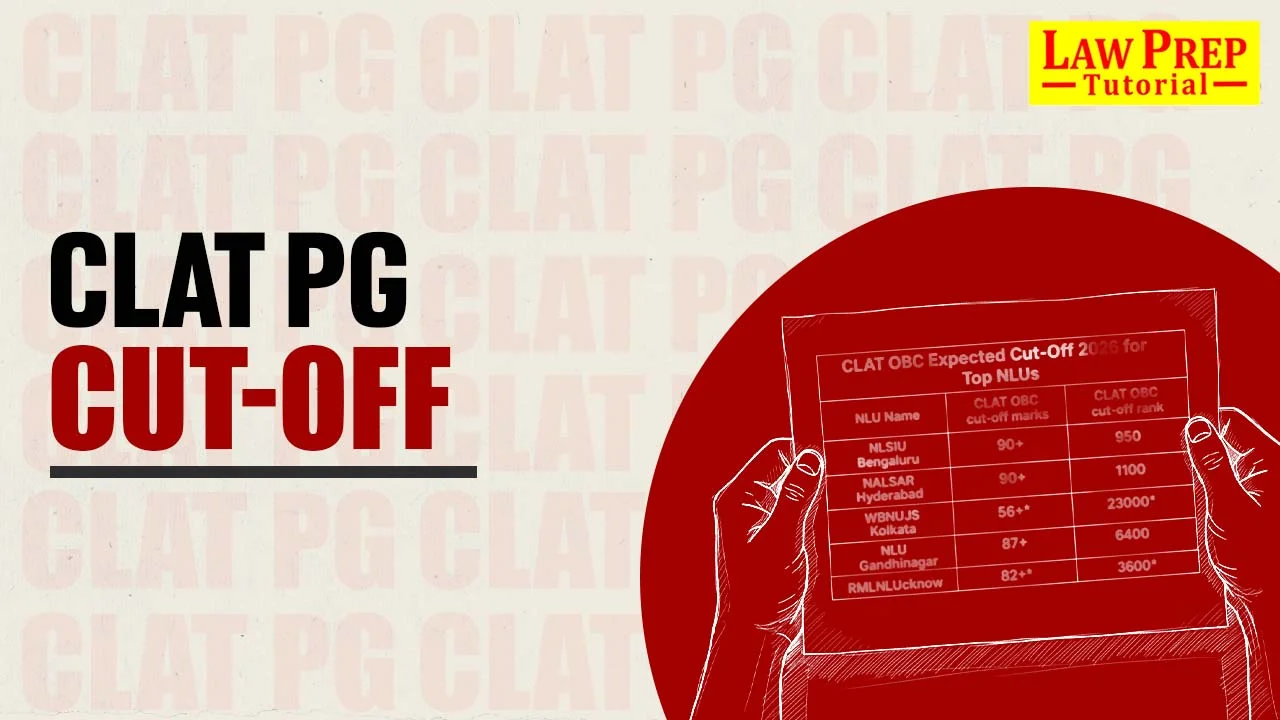
CLAT PG Cut Off 2027 & Past: Check Closing Ranks & Trends
›
CLAT PG Result 2027: Scorecard, Result Date, Link
›
CLAT PG Notification 2027: Download Official PDF Here (All Details)
›
CLAT PG 2027: Exam Date, Preparation, Registration (All Details)
›
Career Opportunities After CLAT PG: LLM, PSU, JAG & Other Jobs
›
CLAT PG Most Important Topics 2027: High-Weightage Areas & PYQ Analysis
›
CLAT PG Mock Analysis: Expert Strategy to Improve Your Score
›
CLAT PG Registration Form 2027: Application Process & Last Date
›
CLAT PG 2027 Last Date to Apply: Registration Deadline & Updates
›








What is CLAT PG Exam?
CLAT PG (Common Law Admission Test for Postgraduate) is a centralized national entrance test for admission to LL.M. programs offered by National Law Universities in India.
It evaluates candidates’ understanding of core legal concepts and analytical ability. The exam consists of 120 objective-type questions, carrying one mark each, and includes subjects like Constitutional Law, Jurisprudence, Contract, Torts, and Criminal Law.
Conducted by the Consortium of National Law Universities (CNLUs), CLAT PG serves as the gateway to India’s premier LL.M. programs.
CLAT PG Exam: Key Highlights
|
Particulars |
Details |
|
Exam Name |
Common Law Admission Test for Postgraduate (CLAT PG) |
|
Conducting Body |
Consortium of NLUs |
|
Purpose |
Admission to LL.M. (Postgraduate Law) Programs in NLUs |
|
Exam Mode |
Offline (Pen and Paper) |
|
Exam Duration |
2 Hours |
|
Total Questions |
120 (Objective Type) |
|
Total Marks |
120 |
|
Marking Scheme |
+1 for correct answer, -0.25 for wrong answer |
|
Medium of Exam |
English |
|
Exam Date |
Sunday, 7th December 2025 |
|
Exam Timing |
2:00 PM – 4:00 PM (2:00 PM – 4:40 PM for PwD) |
|
Eligibility |
LL.B. or equivalent degree with 50% marks (45% for SC/ST/PwD) |
|
Age Limit |
No upper age limit |
|
Application Mode |
Online only |
|
Application Fee |
₹4,000 (Gen/OBC/NRI), ₹3,500 (SC/ST/BPL/PwD) |
|
Participating NLUs |
26 National Law Universities |
|
Negative Marking |
Yes (0.25 marks deducted per wrong answer) |
|
Tie-Breaking Rule |
Higher age, followed by computerized draw of lots |
CLAT PG Exam Date
|
Event |
Date |
|
Online Application Opens |
1st August 2025 |
|
Last Date to Submit Application |
31st October 2025 |
|
CLAT PG Exam Date |
7th December 2025 |
|
Admit Card Release |
November 2025 |
|
Answer Key Publication |
December 2025 |
|
Result Declaration |
December 2025 |
|
Counselling Process Begins |
Soon after result announcement |
CLAT PG Eligibility Criteria
The eligibility criteria for CLAT PG ensure that only candidates with a valid LL.B. degree or equivalent qualification can apply. There is no upper age limit, making it accessible to all law graduates.
|
Eligibility Component |
Details |
|
Educational Qualification |
LL.B. degree or equivalent from a recognized university. |
|
Minimum Marks (General/OBC/NRI) |
50% aggregate or equivalent grade. |
|
Minimum Marks (SC/ST/PwD) |
45% aggregate or equivalent grade. |
|
Appearing Candidates |
Eligible, provided they submit proof of qualification during admission. |
|
Age Limit |
No upper age limit for appearing in CLAT PG |
|
Nationality |
Open to Indian Nationals and NRIs. Foreign Nationals are not eligible. |
Insight: If you’re awaiting your final LL.B. results, you can still apply, but you must produce proof of completion during counselling to secure admission.
CLAT PG Exam Pattern
Understanding the CLAT PG exam pattern helps candidates prepare strategically. The exam is offline, fully objective, and tests both conceptual and applied knowledge across diverse areas of law.
|
Exam Component |
Details |
|
Exam Mode |
Offline (Pen and Paper Based) |
|
Exam Duration |
2 Hours |
|
Type of Questions |
Multiple Choice Questions (MCQs) |
|
Total Questions |
120 |
|
Total Marks |
120 |
|
Marking Scheme |
+1 for each correct answer, -0.25 for each wrong answer |
|
Language of Exam |
English |
Insight: Each question tests in-depth legal understanding rather than rote memory. Regular practice with CLAT PG mock tests and previous papers helps you adapt to this exam’s analytical approach.
CLAT PG Syllabus
The CLAT PG syllabus covers a wide range of core and specialized legal subjects designed to test your conceptual understanding and analytical ability.
|
Core Subject / Area of Law |
Approx. Weightage (Out of 120 Marks) |
Remarks / Preparation Focus |
|
Constitutional Law |
20–25 Marks |
Most important section; expect direct and case-based questions. |
|
Jurisprudence |
10–15 Marks |
Focus on legal theories and philosophical schools of law. |
|
Administrative Law |
5–8 Marks |
Application-based questions on judicial review and natural justice. |
|
Law of Contract |
8–10 Marks |
Conceptual clarity and case law understanding are key. |
|
Law of Torts |
5–8 Marks |
Questions often revolve around doctrines and liabilities. |
|
Family Law |
5 Marks |
Covers both Hindu and Muslim law principles. |
|
Criminal Law |
10–15 Marks |
Case-driven questions from IPC and general principles. |
|
Property Law |
5 Marks |
Fundamental concepts from the Transfer of Property Act. |
|
Company Law |
5–8 Marks |
Based on corporate governance and statutory duties. |
|
Public International Law |
5–8 Marks |
Expect questions on treaties, jurisdiction, and state responsibility. |
|
Tax Law |
3–5 Marks |
Basic-level conceptual and application questions. |
|
Environmental Law |
5–8 Marks |
Recent judgments and sustainable development principles are crucial. |
|
Labour & Industrial Law |
5 Marks |
Focus on labour codes, industrial disputes, and trade unions. |
Insight: Focus more on Constitutional Law, Criminal Law, and Jurisprudence since these carry the highest weightage and often form the foundation for analytical questions in CLAT PG.
CLAT PG Application Process
Check the CLAT PG registration process:
- Register on the portal: Go to consortiumofnlus.ac.in, sign up with your mobile number and email. Validate the OTP to create your account.
- Log in and choose the programme: Select PG carefully. Requests to change programme later are not entertained.
- Fill the application form: Enter personal, academic, and category details exactly as per your certificates; spelling errors can lead to disqualification.
- Upload documents: Photo, signature, and applicable certificates (SC/ST/OBC, PwD, BPL). Uploads must be in PDF format.
- Review critical fields: After submission + payment, programme, category, and BPL fields cannot be changed.
- Pay the fee online: ₹4,000 (General/OBC/NRI) or ₹3,500 (SC/ST/BPL/PwD). PYQ bundle costs ₹500 extra. Bank charges apply; fee is non-refundable.
- Download confirmation: Save the payment receipt/application summary for your records. (Good practice; helps during counselling.)
CLAT PG Admit Card
The CLAT PG admit card is a mandatory document for appearing in the exam. It serves as your official entry pass to the test centre and contains crucial details like your roll number, exam timing, and venue. Candidates must download it only from the official Consortium website using their registered login credentials.
How to Download the CLAT PG Admit Card?
- Visit the official website: Go to consortiumofnlus.ac.in.
- Login: Use your registered mobile number and password.
- Find the admit card link: Once released, click on “Download Admit Card / Hall Ticket.”
- Check all details: Verify your name, photograph, exam centre, and timing.
- Download and print: Save a copy and print two clear A4-size copies for safety.
CLAT PG Results
The CLAT PG Result 2026 will be released online on the official website of the Consortium of NLUs, tentatively within 10 days of the exam date.
How to Check CLAT PG 2026 Result?
- Visit the official website – consortiumofnlus.ac.in.
- Click on ‘CLAT 2026 Result’ link.
- Login with your registered mobile number and password.
- The result/scorecard will appear on the screen.
- Download and print your CLAT PG scorecard for future reference.
Tie-Breaking Policy in CLAT Postgraduate Exam
In case two or more candidates score the same marks in CLAT PG 2026, the tie will be resolved as per the following rules:
- Higher age will be given preference.
- If still tied, a computerized draw of lots will decide the final ranking.
What After CLAT PG Result?
Once the result is declared, qualified candidates must:
- Register for CLAT PG Counselling through the Consortium portal.
- Pay the counselling fee (as notified).
- Fill and lock their NLU preferences carefully.
- Await seat allotment and admission confirmation based on rank and choice.
CLAT PG Counselling Process
The CLAT PG counselling process is conducted online by the Consortium of National Law Universities (CNLUs) for admission to LL.M. programs across 26 NLUs. Only candidates who qualify the exam and appear in the merit list can participate.
The entire process involves registration, fee payment, preference filling, seat allotment, and admission confirmation.
|
Step |
Description |
|
Step 1: Online Registration |
After result declaration, visit consortiumofnlus.ac.in and register for counselling using your CLAT login credentials. |
|
Step 2: Pay Counselling Fee |
Pay the non-refundable counselling fee (usually ₹30,000 for General and ₹20,000 for SC/ST/PwD candidates) to confirm your participation. |
|
Step 3: Fill NLU Preferences |
Select and arrange your preferred NLUs in order of priority. Be careful—seat allotment depends on both rank and preference order. |
|
Step 4: Seat Allotment (Round 1) |
Based on your merit rank, category, and preferences, the Consortium releases the first allotment list. |
|
Step 5: Accept, Revise, or Exit Option |
You can either accept the seat, apply for an upgrade (revise option), or exit the process if not satisfied. |
|
Step 6: Upload Documents |
Upload required documents (scorecard, mark sheets, category certificate, ID proof, etc.) for verification. |
|
Step 7: Final Admission at Allotted NLU |
Report to the allotted NLU within the specified time, pay the remaining admission fee, and complete formalities. |
CLAT PG Participating NLUs 2026
A total of 26 National Law Universities (NLUs) across India will offer admission to their LL.M. (Postgraduate Law) programs through the CLAT PG 2026.
|
S.No. |
NLU Name |
Location |
|
1 |
National Law School of India University (NLSIU) |
Bengaluru, Karnataka |
|
2 |
NALSAR University of Law |
Hyderabad, Telangana |
|
3 |
National Law Institute University (NLIU) |
Bhopal, Madhya Pradesh |
|
4 |
WB National University of Juridical Sciences (WBNUJS) |
Kolkata, West Bengal |
|
5 |
National Law University, Jodhpur (NLUJ) |
Jodhpur, Rajasthan |
|
6 |
Gujarat National Law University (GNLU) |
Gandhinagar, Gujarat |
|
7 |
Hidayatullah National Law University (HNLU) |
Raipur, Chhattisgarh |
|
8 |
Dr. Ram Manohar Lohiya National Law University (RMLNLU) |
Lucknow, Uttar Pradesh |
|
9 |
National University of Advanced Legal Studies (NUALS) |
Kochi, Kerala |
|
10 |
Rajiv Gandhi National University of Law (RGNUL) |
Patiala, Punjab |
|
11 |
Chanakya National Law University (CNLU) |
Patna, Bihar |
|
12 |
Damodaram Sanjivayya National Law University (DSNLU) |
Visakhapatnam, Andhra Pradesh |
|
13 |
National Law University Odisha (NLUO) |
Cuttack, Odisha |
|
14 |
National Law University and Judicial Academy (NLUJA) |
Guwahati, Assam |
|
15 |
National University of Study and Research in Law (NUSRL) |
Ranchi, Jharkhand |
|
16 |
Tamil Nadu National Law University (TNNLU) |
Tiruchirappalli, Tamil Nadu |
|
17 |
Dr. B.R. Ambedkar National Law University (DBRANLU) |
Sonipat, Haryana |
|
18 |
Maharashtra National Law University, Mumbai (MNLU Mumbai) |
Mumbai, Maharashtra |
|
19 |
Maharashtra National Law University, Nagpur (MNLU Nagpur) |
Nagpur, Maharashtra |
|
20 |
Himachal Pradesh National Law University (HPNLU) |
Shimla, Himachal Pradesh |
|
21 |
Maharashtra National Law University, Aurangabad (MNLU Aurangabad) |
Aurangabad, Maharashtra |
|
22 |
Dharmashastra National Law University (DNLU) |
Jabalpur, Madhya Pradesh |
|
23 |
National Law University Tripura (NLUT) |
Agartala, Tripura |
|
24 |
GNLU Silvassa Campus |
Silvassa, Dadra & Nagar Haveli |
|
25 |
Dr. Rajendra Prasad National Law University (RPNLU) |
Prayagraj, Uttar Pradesh |
|
26 |
India International University of Legal Education & Research (IIULER) |
Goa |
Each university has its own intake capacity, specialization areas, and fee structure. Admission is based purely on the CLAT PG rank and preference order submitted during counselling.
How to Prepare for CLAT PG Examination?
1. Understand Syllabus and Weightage Clearly
Start by going through the official CLAT PG syllabus and marking high-weightage subjects like Constitutional Law, Jurisprudence, and Criminal Law. Understanding what’s most important helps you prioritize topics smartly and manage your study time effectively.
2. Build Conceptual Clarity from Bare Acts
Don’t rely only on guides or notes. Read bare acts and landmark judgments to understand the language, intent, and interpretation of the law. This strengthens your conceptual base and helps you handle analytical questions confidently.
3. Practice with Previous Year Papers
Solving past CLAT PG previous year papers gives insight into question patterns and topic trends. It’s one of the best tools for realistic exam practice and identifying weak areas for revision.
4. Focus on Landmark Judgments and Case Laws
Questions in CLAT PG often refer to key Supreme Court judgments. Create a notebook of landmark cases, their principles, and year of judgment. Regularly revising these ensures you can recall and apply them during the exam.
5. Attempt Mock Tests and Analyze Performance
Regularly take CLAT PG mock tests to simulate exam conditions. Analyze each test thoroughly — not just your score but your accuracy and time management. Law Prep’s CLAT PG Mock Test Series helps track progress through detailed performance analytics.
6. Make Short Notes and Revise Frequently
Revision is the key to retention. Prepare concise notes for each subject summarizing sections, definitions, and doctrines. Revise them weekly and before the exam to keep everything fresh in memory.
CLAT PG Answer Key and Objection Window
The CLAT PG Answer Key helps candidates evaluate their performance before the results are announced. It contains all the correct responses to the questions asked in the exam and is released in two stages — Provisional and Final.
This transparency ensures fair evaluation and allows candidates to challenge any discrepancies within the specified period.
Types of Answer Keys
|
Type |
Description |
|
Provisional Answer Key |
Released shortly after the exam, this version allows candidates to check answers and raise objections if they find any errors. |
|
Final Answer Key |
Published after reviewing all objections. It reflects the final, corrected answers used to calculate scores. No further challenges are allowed. |
How to Raise Objections?
|
Step |
Action |
|
1. Log in to the Portal |
Access the objection form link from your candidate dashboard. |
|
2. Select Question(s) |
Choose the specific question(s) you want to challenge. |
|
3. Provide Justification |
Upload supporting references or legal reasoning for your objection. |
|
4. Pay the Fee |
A nominal non-refundable fee (as prescribed by the Consortium) must be paid per question challenged. |
|
5. Submit Before Deadline |
Late submissions are not accepted under any circumstances. |
CLAT PG Cut Offs
The CLAT PG cut-off represents the minimum marks or rank required to secure admission into the LL.M. programs of top National Law Universities (NLUs). Below is the cut-off for CLAT PG 2025 exam’s round-1:
|
NLU |
General (Closing Rank) |
OBC (Closing Rank) |
SC (Closing Rank) |
ST (Closing Rank) |
EWS (Closing Rank) |
|
NLSIU Bengaluru |
108 |
297 |
510 |
1354 |
431 |
|
NALSAR Hyderabad |
143 |
262 |
580 |
1003 |
404 |
|
NLIU Bhopal |
295 |
878 |
1530 |
1749 |
— |
|
WBNUJS Kolkata |
411 |
1490* |
979 |
1866 |
— |
|
NLU Jodhpur |
454 |
567 |
1864 |
3638 |
523 |
|
HNLU Raipur |
719 |
1249 |
2923 |
4497 |
— |
|
GNLU Gandhinagar |
387 |
955 |
1110 |
— |
699 |
|
GNLU Silvassa |
918 |
1413 |
3288 |
5176 |
1196 |
|
RMLNLU Lucknow |
178 |
342* |
751* |
2302* |
496* |
|
RGNUL Patiala |
791 |
— |
950 |
1847 |
— |
|
CNLU Patna |
865 |
1319* |
1280* |
7594* |
1842* |
|
NUALS Kochi |
1131 |
— |
2198* |
— |
— |
|
NLU Odisha |
1051 |
— |
3826 |
5410 |
— |
|
NUSRL Ranchi |
1106 |
1169 |
3952 |
3053 |
1153 |
|
NLUJA Assam |
1255 |
5002* |
6184* |
7339* |
7508* |
|
DSNLU Visakhapatnam |
1265 |
1513 |
4070 |
5867 |
1288 |
|
TNNLU Tiruchirappalli |
1290 |
1497 |
2409 |
2740 |
— |
|
MNLU Mumbai |
478 |
2096* |
3992* |
7484* |
2563* |
|
MNLU Nagpur |
1020 |
6381* |
7826* |
13591* |
4743* |
|
MNLU Aurangabad |
1389 |
5395* |
7996* |
10955* |
4563* |
|
HPNLU Shimla |
1226 |
— |
3851 |
4551 |
— |
|
MPDNLU Jabalpur |
1408 |
2112 |
4313 |
6815 |
1537 |
|
NLUT Agartala |
1512 |
— |
— |
8203* |
— |
|
IIULER Goa |
1252 |
1570 |
3954 |
5155 |
1621 |
The cut-off vary each year depending on factors such as exam difficulty, number of applicants, total seats available, and candidate performance. Analysing past years’ cut-offs helps aspirants estimate a safe target score for their preferred NLU.
Documents Required During CLAT PG Admission
After seat allotment, shortlisted candidates must report to their allotted NLU and complete the verification process. Failing to produce any required document can lead to cancellation of admission, so ensure all originals and photocopies are ready beforehand.
- CLAT PG Admit Card
- CLAT PG Scorecard / Rank Card
- Provisional Allotment Letter (issued by the Consortium)
- LL.B. Degree Certificate / Provisional Degree
- Mark Sheets of All Semesters / Years of LL.B. Program
- Transfer Certificate / Migration Certificate from last attended institution
- Character Certificate / Conduct Certificate
- Category Certificate (SC/ST/OBC/EWS) — if applicable
- PwD Certificate (if applicable, issued by a competent medical authority)
- Domicile Certificate (for state quota seats, if applicable)
- Passport-size Photographs (recent, as per university requirement)
- Photo ID Proof (Aadhaar Card / Passport / Voter ID / Driving Licence)
- Fee Payment Receipt / Demand Draft for the first-semester fee
- Medical Fitness Certificate (if required by the respective NLU)
FAQs About CLAT PG
Who conducts the CLAT PG exam?
The CLAT PG exam is conducted by the Consortium of National Law Universities (CNLUs) on a rotational basis every year.
What is the exam date for CLAT PG 2026?
The exam will be held on Sunday, 7th December 2025, from 2:00 PM to 4:00 PM (and till 4:40 PM for PwD candidates).
What is the mode of the CLAT PG exam?
The exam will be conducted in offline (pen and paper) mode.
Is there any age limit for CLAT PG?
No, there is no upper age limit for appearing in the CLAT PG exam.
How many questions are asked in CLAT PG?
The exam consists of 120 multiple-choice questions, each carrying one mark.
Is there negative marking in CLAT PG?
Yes, 0.25 marks are deducted for each incorrect answer.
What is the duration of the CLAT PG exam?
The total duration of the exam is 2 hours (120 minutes).
Are foreign nationals eligible for CLAT PG?
No, foreign nationals are not eligible to appear for CLAT PG.
What is a good score in CLAT PG?
A score of 85+ marks is considered good for top NLUs like NLSIU Bengaluru and NALSAR Hyderabad.
What is the tie-breaking rule in CLAT PG?
In case of equal marks: (i) higher age is preferred, (ii) computerized draw of lots is used.