Talk to a Counsellor
 Support
CLAT PG Previous Year Papers With Solutions (2021-2026)
Practice with CLAT PG Previous Year Papers (2021–2026) to understand the latest exam pattern, question trends, and difficulty level. Download free PDFs with detailed solutions and answer keys to strengthen your legal concepts, improve accuracy, and boost your preparation for the CLAT PG exam.
Last Updated on 02 Jul 2026

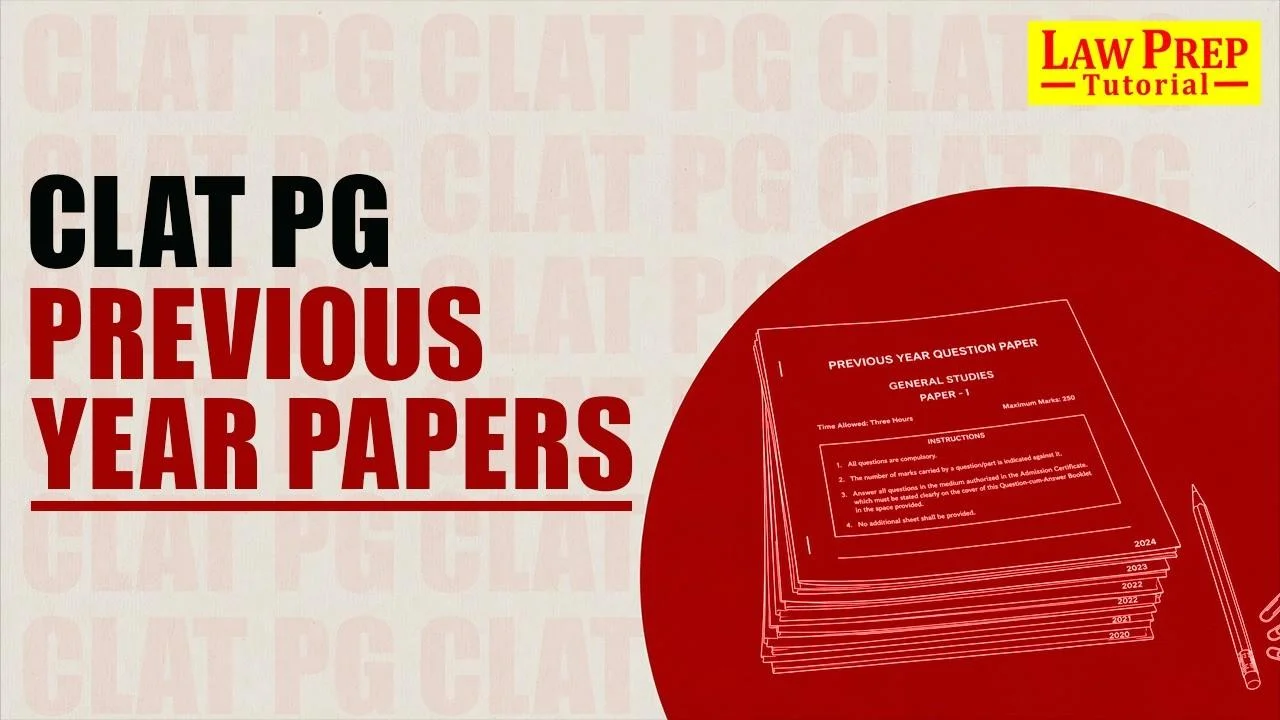
If you’re preparing seriously for your LLM entrance, solving CLAT PG previous year question papers is one of the smartest steps you will take. These papers reveal real exam trends, difficulty levels, and question patterns that help you practice like the actual test day.
Table of Contents
Jump to section- CLAT PG: All About CLAT Postgraduate Exam for LLM
CLAT PG Previous Year Papers PDF (Free Download)
2021 to 2026
Benefits of Practicing with CLAT PG Previous Year Question Paper
1. Understand Real Exam Pattern
Practicing CLAT PG previous year paper sets gives you firsthand experience of the actual structure, question type, and marking scheme. It helps you understand how questions are framed in the CLAT PG papers and prepares you to manage your time efficiently during the real test.
2. Identify High-Weightage Topics
When you go through CLAT PG previous year question papers, you’ll easily spot the subjects that appear most often, like Constitutional Law, Jurisprudence, and Criminal Law. This helps you focus more on high-yield areas instead of wasting time on low-priority topics.
3. Boost Your Conceptual Clarity
Solving previous year papers of CLAT PG challenges your understanding of legal concepts, landmark judgments, and case law interpretation. When you attempt these questions regularly, your conceptual clarity improves, and you learn how to apply theory to practical legal scenarios.
4. Improve Accuracy and Speed
Practicing CLAT PG last year question paper under timed conditions enhances your speed and accuracy. You’ll learn to balance between conceptual questions and tricky options, making sure you can complete the exam within the given two hours.
5. Analyze Strengths and Weaknesses
When you attempt multiple CLAT PG PYQs, it becomes easier to evaluate where you’re strong and where you need improvement. This analysis helps you tweak your study plan to focus more on your weak subjects before the next mock or paper.
6. Experience Real Exam Pressure
By solving previous year CLAT PG question paper, you experience the same kind of pressure you’ll face on the actual day. This helps you handle anxiety, stay calm, and make better decisions even when the paper feels tough.
7. Learn the Examiner’s Mindset
The CLAT PG previous year question papers reveal how examiners think, what kind of reasoning they test, and how they twist straightforward legal principles. With regular practice, you’ll develop an instinct for identifying traps and interpreting complex legal questions correctly.
8. Track Your Progress Over Time
Regularly solving CLAT PG PYQ papers allows you to track your improvement. Comparing your past scores shows you how close you are to your target rank and motivates you to keep refining your preparation before the actual exam.
Important resources to explore for the CLAT PG exam
| CLAT PG 2027: All Details | CLAT PG Eligibility Criteria |
| CLAT PG Cut Off | CLAT PG Admit Card |
CLAT PG Question Paper 2026
- No. of Passages: (TBA)
- No. of Questions: 120
CLAT PG Question Paper 2025
- No. of Passages: 24
- No. of Questions: 120
CLAT PG Question Paper 2024
- No. of Passages: 24
- No. of Questions: 120
CLAT PG Question Paper 2023
- No. of Passages: 12
- No. of Questions: 120
CLAT PG Question Paper 2022
- No. of Passages: 20
- No. of Questions: 120
CLAT PG Question Paper 2021
- No. of Passages: 20
- No. of Questions: 120
CLAT PG Syllabus
Below is the official subject-wise overview of the CLAT PG syllabus:
| Core Subject / Area of Law | Approx. Weightage (Out of 120 Marks) | Remarks / Preparation Focus |
| Constitutional Law | 20–25 Marks | Most important section; expect direct and case-based questions. |
| Jurisprudence | 10–15 Marks | Focus on legal theories and philosophical schools of law. |
| Administrative Law | 5–8 Marks | Application-based questions on judicial review and natural justice. |
| Law of Contract | 8–10 Marks | Conceptual clarity and case law understanding are key. |
| Law of Torts | 5–8 Marks | Questions often revolve around doctrines and liabilities. |
| Family Law | 5 Marks | Covers both Hindu and Muslim law principles. |
| Criminal Law | 10–15 Marks | Case-driven questions from IPC and general principles. |
| Property Law | 5 Marks | Fundamental concepts from the Transfer of Property Act. |
| Company Law | 5–8 Marks | Based on corporate governance and statutory duties. |
| Public International Law | 5–8 Marks | Expect questions on treaties, jurisdiction, and state responsibility. |
| Tax Law | 3–5 Marks | Basic-level conceptual and application questions. |
| Environmental Law | 5–8 Marks | Recent judgments and sustainable development principles are crucial. |
| Labour & Industrial Law | 5 Marks | Focus on labour codes, industrial disputes, and trade unions. |
Check Out These Important CLAT PG Resources
| CLAT PG 2026 Question Paper | CLAT PG Results |
| CLAT PG Answer Key | CLAT PG 2025 Question Paper |
Download CLAT PG Syllabus PDF
Get the detailed and well-structured syllabus for Free!
How to Use CLAT PG Question Paper Effectively for Prep?
Previous year question papers of CLAT are invaluable tools in your preparation journey. Below are some tips for using them effectively:
1. Start with One Paper a Week
Begin with one CLAT LLM previous year paper every week under exam conditions. This builds consistency and gradually improves your timing and focus. Once comfortable, move to two papers weekly to simulate the real test environment and measure steady progress.
2. Analyze Every Paper in Detail
After solving a previous year CLAT PG question paper, don’t just check your score; analyze your mistakes. Revisit the questions you got wrong and note the law section or topic you missed. This reflective approach improves understanding and ensures those errors don’t repeat.
3. Maintain a Dedicated PYQ Notebook
Keep a notebook for CLAT PG question papers where you write down tricky questions, your mistakes, and explanations. Reviewing this before the exam is a quick way to refresh key concepts and avoid the same pitfalls during the final paper.
4. Revise Concepts After Every Attempt
Every CLAT PG previous year question paper exposes areas you forgot or misunderstood. After each paper, go back to your books or bare acts and revise those concepts. This habit bridges the gap between what you’ve studied and what’s actually tested in the exam.
5. Focus on Landmark Judgments and Case Laws
Most CLAT PG previous year papers include questions from important Supreme Court judgments. After attempting each paper, list down all the cases mentioned and revise their facts and principles — this technique builds a strong base for analytical questions.
6. Compare Your Approach with Model Answers
Once you attempt a previous year CLAT PG question paper, check official or expert solutions. Compare your reasoning with theirs to understand how legal arguments should be structured. This reflection improves your answer selection and logical reasoning approach.
7. Mix PYQs with Mock Tests
Don’t rely on CLAT PG question papers alone. Combine PYQs with full-length mock tests to simulate different paper styles. This mix keeps your preparation dynamic and builds adaptability for unpredictable question formats.
8. Track Time and Create Exam Rhythm
While solving CLAT PG PYQ, always set a timer for 120 minutes. Avoid overthinking or lingering on one question. Learning to maintain rhythm and control time helps you finish confidently without last-minute panic.
Common Question Types in CLAT PG
The CLAT PG exam doesn’t just test your memory. It evaluates how well you understand and apply the law. Knowing the types of questions commonly asked helps you prepare strategically and improves your accuracy.
1. Principle-Based Legal Questions
You’ll get questions that provide a principle followed by a factual scenario. You must apply the legal rule to identify the correct outcome. These test your conceptual clarity and interpretation skills.
2. Case-Law Based Questions
Many questions are inspired by recent Supreme Court or High Court judgments. You must recognize the legal principle or landmark case referred to in the question.
3. Conceptual Theory Questions
These are straightforward questions testing your knowledge of definitions, doctrines, and legal theories — particularly from subjects like Jurisprudence and Constitutional Law.
4. Statutory Interpretation Questions
Here, you need to interpret the meaning of a statutory term or provision, often from Acts like the Contract Act, IPC, or Environmental Acts.
5. Analytical and Logical Application Questions
These require understanding the logical outcome of applying two or more legal principles together — testing your ability to connect multiple legal concepts.
6. Match the Following Questions
Sometimes, questions ask you to match case names with principles, articles with rights, or legal doctrines with examples.
7. Chronology or Assertion-Reason Questions
You may find questions asking for the correct sequence of constitutional amendments or reasoning behind landmark decisions.
8. Recent Legal Development Questions
CLAT PG often includes questions from new laws, amendments, and contemporary judgments, so staying updated with current legal affairs is vital.
CLAT PG Exam Pattern
Here is a quick overview of the CLAT PG exam pattern:
| Particulars | Details |
| Exam Name | Common Law Admission Test for Postgraduate (CLAT PG) 2027 |
| Conducting Body | Consortium of NLUs |
| Purpose | Admission to LL.M. programs at 26 National Law Universities |
| Exam Level | National-level entrance exam |
| Mode of Exam | Offline (Pen and Paper) |
| Type of Questions | Multiple Choice Questions (MCQs) |
| Total Questions | 120 |
| Total Marks | 120 |
| Duration | 2 Hours (120 minutes) |
| Medium of Exam | English |
| Marking Scheme | +1 for each correct answer |
| Negative Marking | -0.25 for each incorrect answer |
| Tie-Breaking Criteria | Higher age, followed by computerized draw of lots |
FAQs on CLAT PG Previous Year Papers

SEO Head
Virendra heads SEO & Content at LPT. A writer at heart, he focuses on building exam-focused content that informs, guides, and supports aspirants in their preparation journey.
CLAT PG Trending Blogs