Talk to a Counsellor
 Support
Operation Safed Sagar: Real Story & Facts of India’s Air War During Kargil
In May 1999, Indian soldiers were fighting an enemy they could often see above them but could not easily reach. Pakistani troops and intruders had occupied strategic heights across the Kargil sector, some positioned more than 5,000 metres above sea level. From those mountain posts, they could observe Indian movements, threaten vital supply routes and force Indian troops to climb exposed slopes under fire. India needed another way to attack those positions.
Last Updated on 21 Aug 2026

On 26 May 1999, the Indian Air Force entered offensive combat operations in Kargil under Operation Safed Sagar, working alongside the Indian Army's Operation Vijay. What followed was one of the most unusual chapters in Indian military aviation: fighter aircraft attacking tiny targets hidden among snow-covered mountains, pilots operating under the threat of surface-to-air missiles, and every mission being planned around one strict political instruction—the Line of Control (LoC) was not to be crossed.
The opening days brought losses. Tactics had to change quickly. The Mirage 2000 was brought into an increasingly important strike role, precision weapons were introduced, logistics bases were destroyed and air attacks helped weaken positions that Indian soldiers were fighting to recapture from the ground.
More than 27 years later, Operation Safed Sagar is back in public conversation after Netflix released a military drama of the same name on 7 August 2026. But the real story is much bigger than a television series.
Table of Contents
Jump to section- CLAT PG: All About CLAT Postgraduate Exam for LLM
Operation Safed Sagar 1999: At a Glance
| Particular | Details |
|---|---|
| Operation Name | Operation Safed Sagar |
| Conducted By | Indian Air Force (IAF) |
| Conflict | Kargil War, 1999 |
| Offensive Air Operations Began | 26 May 1999 |
| Primary Objective | Support Indian forces in evicting intruders from Indian territory |
| Related Army Operation | Operation Vijay |
| Operational Area | Kargil, Dras, Batalik and adjoining sectors |
| Major Aircraft Used | MiG-21, MiG-23, MiG-27, MiG-29, Mirage 2000, Jaguar, Canberra and Mi-17, among others |
| Major Challenge | Extremely high-altitude warfare |
| Key Restriction | Indian forces were instructed not to cross the LoC |
| Notable Targets | Tiger Hill, Muntho Dhalo, Point 4388 and other enemy positions |
| Historical Importance | Major demonstration of air power and precision strike capability in high-altitude warfare |
The Story Behind Operation Safed Sagar
Operation Safed Sagar is a real story of India’s Air war during Kargil in 1999. Below is the full story:
May 1999: Something Was Wrong in the Kargil Mountains
The Kargil War did not begin with a formal declaration of war.
In early May 1999, suspicious activity began to be reported in the Kargil region. According to a 2026 Ministry of Defence account, local residents first reported suspicious movement on 3 May 1999. Reconnaissance patrols and subsequent surveillance revealed that the problem was much larger than a few infiltrators.
Positions overlooking strategically important areas had been occupied.
Many of these posts stood at heights exceeding 5,000 metres, and several overlooked or threatened the route connecting Srinagar with Leh. That road was vital for moving troops, equipment and supplies through the region.
The geography immediately created a serious military problem.
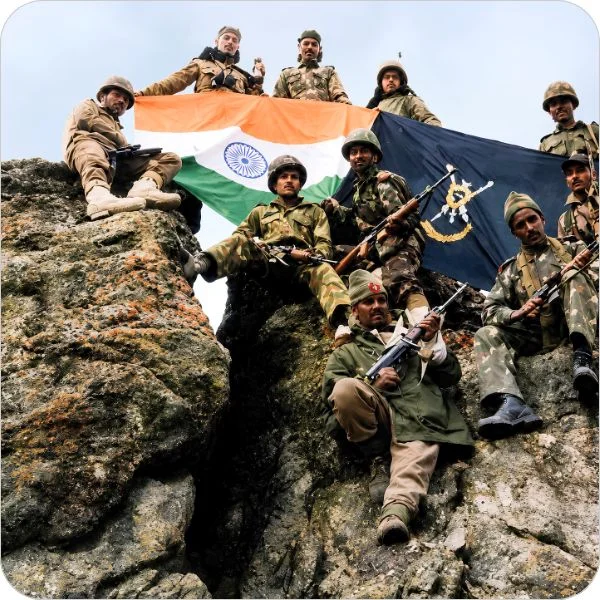
An enemy sitting on a ridge has an enormous advantage over soldiers approaching from below. Indian troops were being asked to climb steep, rocky slopes, often at night and in freezing conditions, while enemy positions above them could observe and fire on likely approaches.
India initially responded with ground operations. As the true extent of the intrusion became clearer, however, it became evident that the campaign would require more than infantry and artillery.
Air power was brought into the battle.
Why the Indian Army Needed Help From the Air
Imagine trying to attack a fortified room when the room is several floors above you, there is almost no staircase, and everyone inside can see you climbing towards them.
Now place that room on a mountain more than 15,000 feet above sea level.
That was the basic tactical disadvantage confronting many Indian troops.
Pakistani positions and supply points were located on commanding heights across the Kargil battlefield. Reaching them demanded physically exhausting climbs through terrain offering limited cover.
Artillery became enormously important during Kargil, but aircraft could provide another capability: attacking supply camps, command positions, troop concentrations and fortified locations from above or at stand-off distances.
The decision was therefore made to employ the Indian Air Force in direct support of the campaign.
The Army’s effort was called Operation Vijay.
The Air Force campaign became Operation Safed Sagar.
26 May 1999: Operation Safed Sagar Enters Combat
There is a small but useful distinction in the dates associated with Operation Safed Sagar.
A Ministry of Defence account of the MiG-23 says the operation was launched on 25 May 1999, with offensive air action scheduled to begin at first light the following morning.
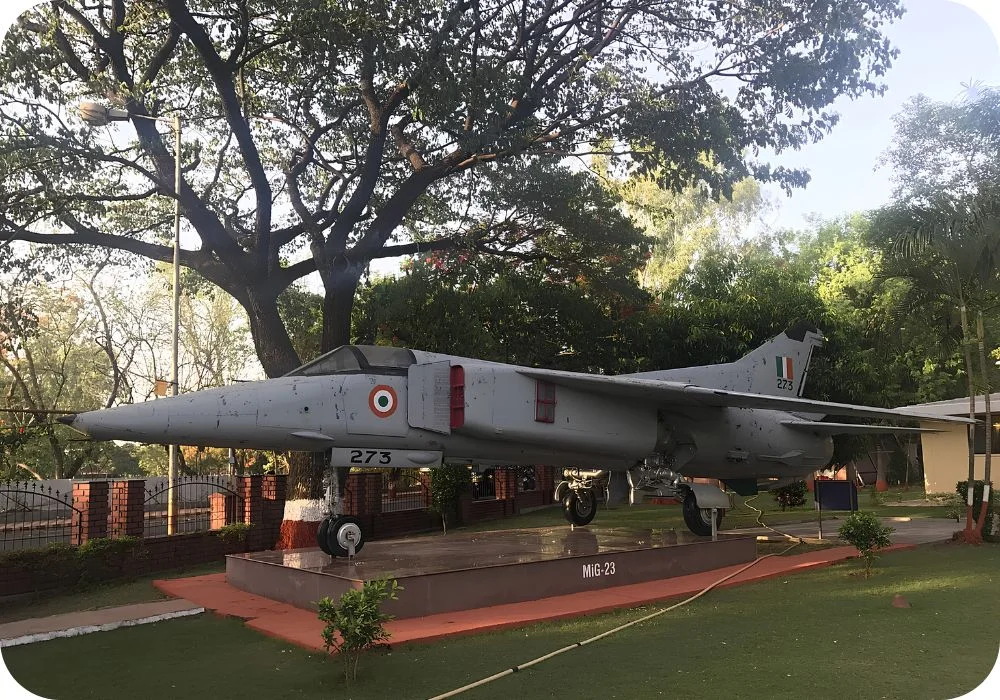
The IAF therefore began its offensive strikes on 26 May 1999.
MiG fighters began attacking enemy positions using rockets and bombs. Reconnaissance missions helped locate positions and assess damage. Other aircraft provided escort, air defence and surveillance.
The campaign eventually involved a wide range of IAF platforms, including the:
- MiG-21
- MiG-23
- MiG-27
- MiG-29
- Mirage 2000
- Jaguar
- Canberra
- Mi-17 helicopter
The IAF’s role grew far beyond simply “dropping bombs”. Aircraft were being used for strike missions, reconnaissance, electronic intelligence, escort, air defence, transportation and casualty evacuation.
During later official commemorations, the Ministry of Defence said the IAF had flown around 5,000 strike missions, 350 reconnaissance/ELINT missions and about 800 escort flights, along with more than 2,000 helicopter sorties for transport and casualty evacuation during the Kargil operations.
There Was One Major Restriction: Do Not Cross the LoC
Operation Safed Sagar was not being fought without political limits.
India’s government had directed its forces not to cross the Line of Control.
That decision shaped the entire campaign.
The objective was to remove the forces occupying Indian territory rather than expand the conflict deep into Pakistan-administered territory. It strengthened India’s diplomatic position, but it also made military planning more difficult.
For pilots, the restriction mattered enormously.
Aircraft travelling hundreds of kilometres per hour had to approach targets located close to a politically sensitive boundary, attack from suitable angles and leave the target area without violating the LoC.
Mountain geography further complicated the problem.
A fighter pilot could not simply approach a target from whichever direction was easiest. Terrain, missile threats, weapon trajectories, visibility and the LoC all had to be considered simultaneously.
This was one reason Operation Safed Sagar became such an unusual air campaign.
Why Flying Over Kargil Was So Difficult During Operation Safed Sagar?
1. The Targets Were Extremely High
Many enemy positions were located above 16,000 feet, and the fighting took place across some of the world’s harshest inhabited terrain.
The height affected both humans and machines.
Aircraft engines, helicopters, weapons and flight characteristics behave differently in thinner air. Pilots also had to attack targets located on slopes and ridgelines rather than on conventional flat battlefields.
The Ministry of Defence has described the steep gradient and altitudes above 16,000 feet as creating unique targeting difficulties for the IAF.
2. A Mountain Bunker is Difficult to Spot From a Fighter Jet
A military camp on a plain may stand out clearly.
A bunker made of stone and positioned among hundreds of kilometres of similarly coloured rock can almost disappear into the landscape.
Pilots travelling at high speed had very little time to identify such targets, line up their attacks and release weapons.
Snow, clouds, shadows and steep valleys made recognition even harder.
3. Surface-to-Air Missiles Changed the Risk
The enemy also possessed shoulder-fired surface-to-air missiles.
Aircraft or helicopters flying low enough to identify and attack mountain targets could potentially enter the missile envelope.
The danger became tragically clear during the first few days of Safed Sagar.
Read about Operation Blue Star and its key details here!
The Opening Days Came at a Heavy Cost
- India’s air campaign had barely begun when the risks of fighting over Kargil became painfully apparent.
- On 27 May 1999, Flight Lieutenant K. Nachiketa had to eject from his MiG-27 during a strike mission.
- That same day, Squadron Leader Ajay Ahuja’s MiG-21 was hit by a surface-to-air missile while he was trying to locate the downed pilot.
- On 28 May, the IAF lost a Mi-17 helicopter during an attack in the Dras sector.
- Within roughly 48 hours, the Air Force had received a brutal reminder that conventional attack methods could not simply be transplanted onto the Kargil battlefield.
- Flight Lieutenant Kambampati Nachiketa was flying a MiG-27 during a strike in the Batalik sector on 27 May when his aircraft suffered an engine problem.
- He was forced to eject.
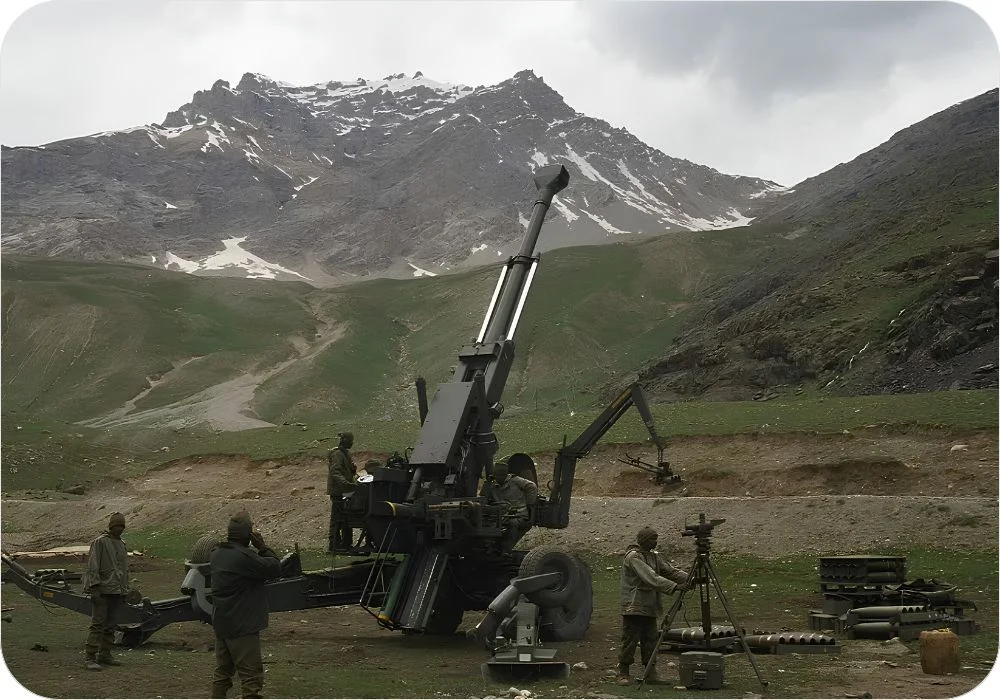
- Nachiketa landed in territory controlled by Pakistani forces and was captured. He spent several days as a prisoner before being returned to India.
- His capture also set in motion another tragedy.
- Squadron Leader Ajay Ahuja remained in the area trying to help locate him.
- The Ministry of Defence continues to identify Nachiketa as one of the important figures associated with Operation Safed Sagar, including in its commemorations of the 25th anniversary of the Kargil victory.
Squadron Leader Ajay Ahuja and His Final Mission
Squadron Leader Ajay Ahuja was the Flight Commander of No. 17 Squadron, the Golden Arrows.
After Nachiketa went down, Ahuja attempted to locate the missing pilot.
He knew surface-to-air missiles were present in the area.
His MiG-21 was eventually struck by an enemy shoulder-fired missile. Ahuja managed to eject, but he did not return alive.
The official IAF account states that he was killed after ejecting and landing in enemy-controlled territory. He was later awarded the Vir Chakra posthumously.
His story remains one of the most remembered human episodes of Operation Safed Sagar because his final actions were centred on locating another pilot.
The Mi-17 Loss Changed the Air Campaign
The following day brought another loss.
On 28 May 1999, a Mi-17 helicopter was taking part in a rocket attack in the Dras sector when it was shot down.
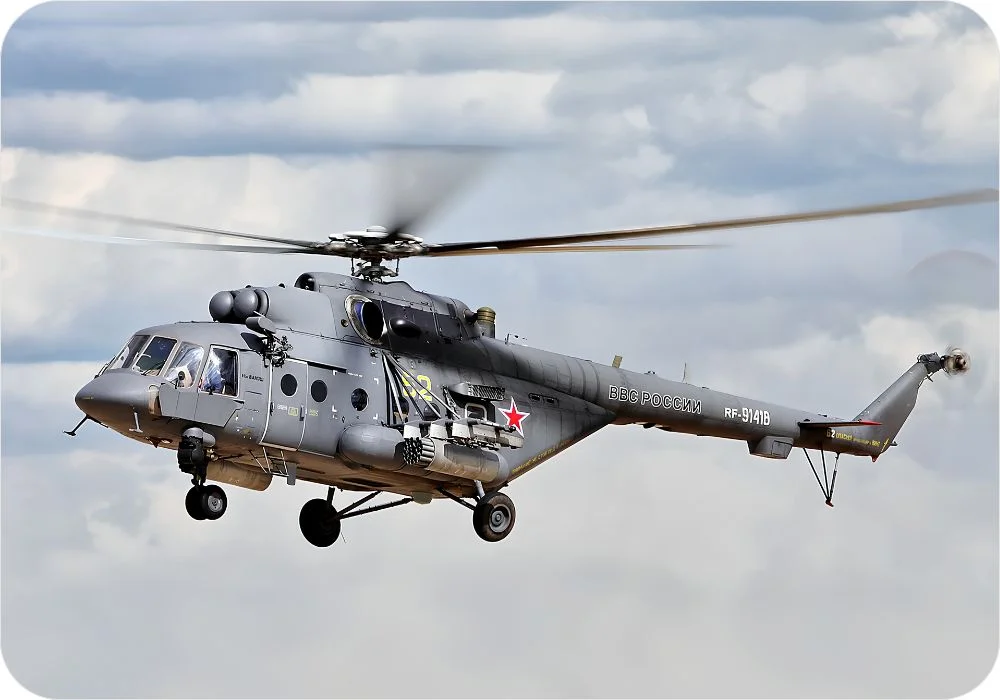
Four IAF personnel were killed:
- Squadron Leader Rajiv Pundir
- Flight Lieutenant S. Muhilan
- Sergeant R.K. Sahu
- Sergeant P.V.N.R. Prasad
The Ministry of Defence says the helicopter had successfully attacked enemy positions before it was lost.
The loss reinforced an increasingly obvious lesson: helicopters and low-flying aircraft were dangerously exposed to shoulder-fired missiles.
The IAF began adapting.
And one aircraft would soon assume an especially important role.
Explore Other important GK topics and strengthen your knowledge for upcoming exams.
Then Came the Mirage 2000
The Mirage 2000 became one of the defining aircraft of Operation Safed Sagar.
It was not the only aircraft involved—far from it—but its ability to operate effectively at altitude, its navigation and weapon-delivery systems and its compatibility with precision-guided weapons made it particularly valuable.
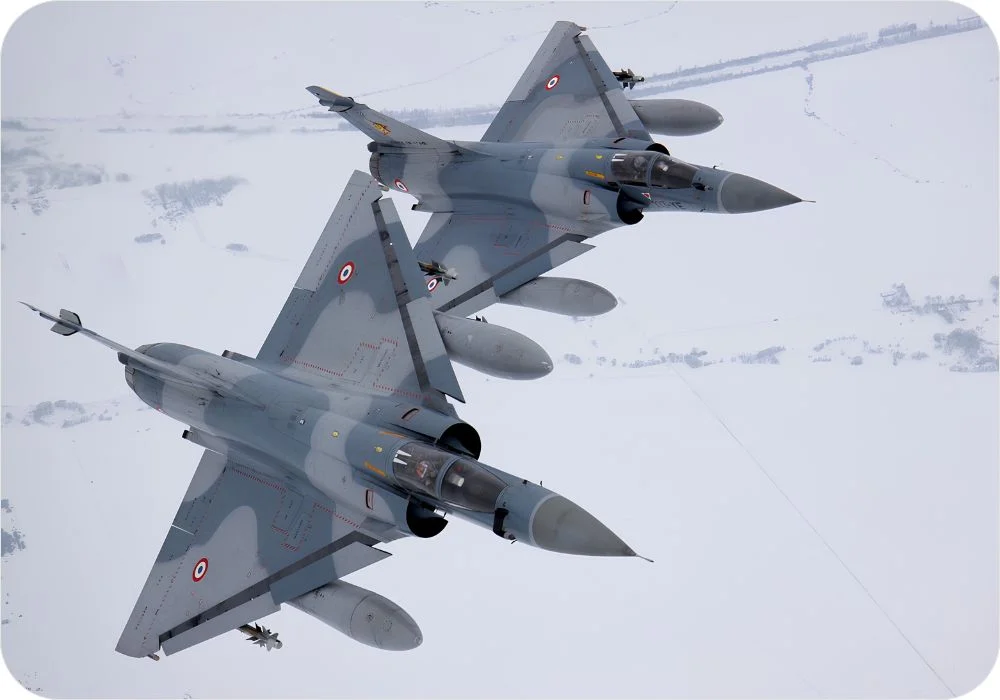
Mirage 2000s began operating in the conflict from the end of May.
Initially, they also used conventional bombs.
But the IAF was rapidly adapting technology and tactics for a battlefield unlike anything it had previously encountered.
The result would be a major milestone in Indian air warfare.
How India Used Precision-Guided Bombing During Safed Sagar Operation?
A normal unguided bomb follows a ballistic path after release. Accuracy depends heavily on the aircraft's position, speed, altitude, attack angle and calculations made before the bomb leaves the aircraft.
A laser-guided bomb adds another layer.
A target is illuminated by a laser designator. The weapon detects the reflected laser energy and makes corrections during its descent, allowing it to strike far more precisely.
That capability was particularly valuable in Kargil.
The IAF did not want to flatten entire areas. It needed to hit specific command bunkers, logistics points and fortified positions located among mountains.
On 24 June 1999, the Mirage 2000 conducted what Air Marshal Raghunath Nambiar later described as the IAF's first operational combat use of a laser-guided bomb. Nambiar himself was the pilot in command for that mission.
Official Ministry of Defence accounts likewise highlight Mirage 2000 precision strikes using laser-guided bombs and laser designation pods as one of the significant elements of the campaign.
Muntho Dhalo: A Strike at the Enemy’s Logistics
Wars are not sustained by soldiers alone.
Every position requires ammunition, food, equipment, communications and reinforcements.
That made logistics camps extremely valuable targets.
One of the most important was Muntho Dhalo in the Batalik sector.
On 17 June 1999, Mirage 2000 aircraft struck the camp using accurately delivered conventional bombs. The attack severely damaged a major logistics base supporting Pakistani positions in the area.
Muntho Dhalo is often associated with the rise of precision air power during Kargil, but there is an important distinction:
The famous 17 June strike on the Muntho Dhalo logistics camp used unguided bombs delivered accurately by Mirage 2000s.
Laser-guided weapons came into operational combat use shortly afterwards.
That distinction matters because it demonstrates that the Mirage’s contribution was not simply about carrying “smart bombs”. The aircraft’s own navigation, sensors and weapon-delivery capability allowed conventional bombs to be used with considerable accuracy as well.
The importance of the target itself has also been recognised officially. In 2022, Defence Minister Rajnath Singh specifically referred to the role of precision ammunition at Muntho Dhalo while discussing how precision weapons can shape modern warfare.
Tiger Hill: Air Power Meets the Ground Assault
Few names are as strongly associated with the Kargil War as Tiger Hill.
Its prominence made it strategically and symbolically important.
The Indian Air Force had attacked positions around Tiger Hill from the early stages of Operation Safed Sagar. MiG-23s, for example, targeted enemy positions there with rockets and 500-kg bombs soon after offensive operations began.
But the campaign changed significantly in late June.
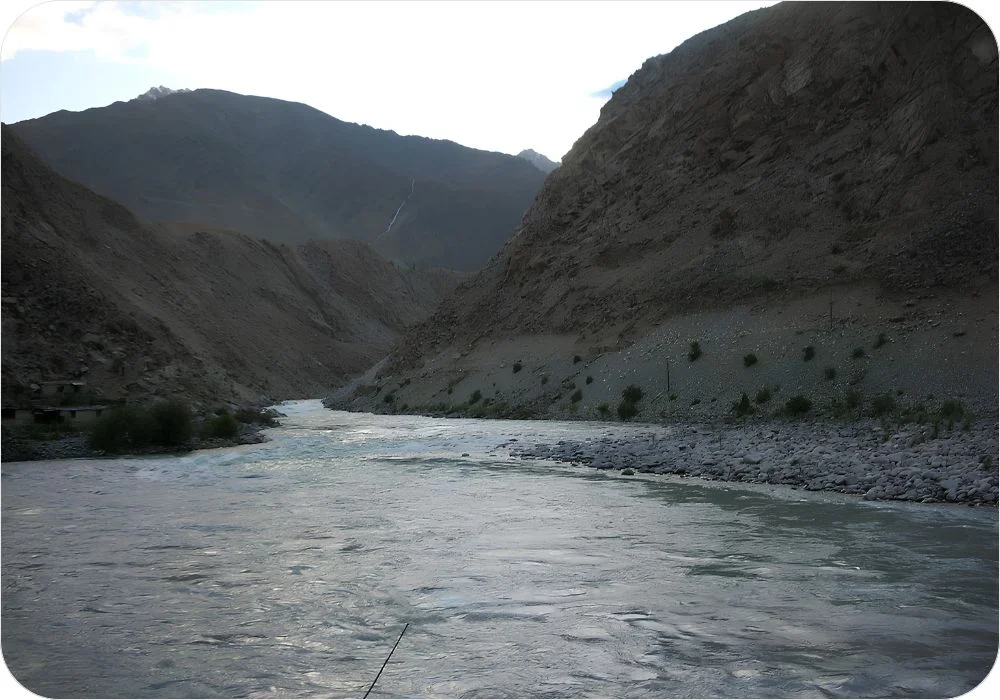
On 24 June, Mirage 2000 aircraft used laser-guided bombs against important targets at Tiger Hill.
The precision attacks were part of a wider effort to weaken command positions and defences before and during the Army’s operations in the area.
Indian troops ultimately recaptured Tiger Hill in early July.
This is an important point when discussing Safed Sagar:
The Air Force did not capture Tiger Hill. The Army did.
The IAF’s role was to make the ground battle more favourable by attacking positions, disrupting command and logistics, suppressing enemy activity and supporting the troops who still had to climb the mountain and physically take the objective.
That Army-Air Force relationship was one of the defining features of the Kargil campaign.
The Aircraft Behind Operation Safed Sagar
Operation Safed Sagar was not the story of one aircraft.
It was a combined effort involving fighters, strike aircraft, reconnaissance platforms and helicopters.
| Aircraft | Major Role During Operation Safed Sagar |
|---|---|
| Mirage 2000 | Precision and conventional strikes, including important attacks around Tiger Hill and Muntho Dhalo |
| MiG-21 | Strike and reconnaissance-related missions; No. 17 Squadron was heavily involved |
| MiG-23 | Ground-attack missions using bombs and rockets |
| MiG-27 | Ground attack during the opening stages of the campaign |
| MiG-29 | Air defence/top-cover role |
| Jaguar | Reconnaissance and strike-related roles |
| Canberra | Reconnaissance |
| Mi-17 | Transport and early armed helicopter attacks, along with other support roles |
The People Behind Operation Safed Sagar
Machines are easier to list than people, but wars are ultimately fought by individuals making decisions under pressure.
Several names became closely associated with Safed Sagar.
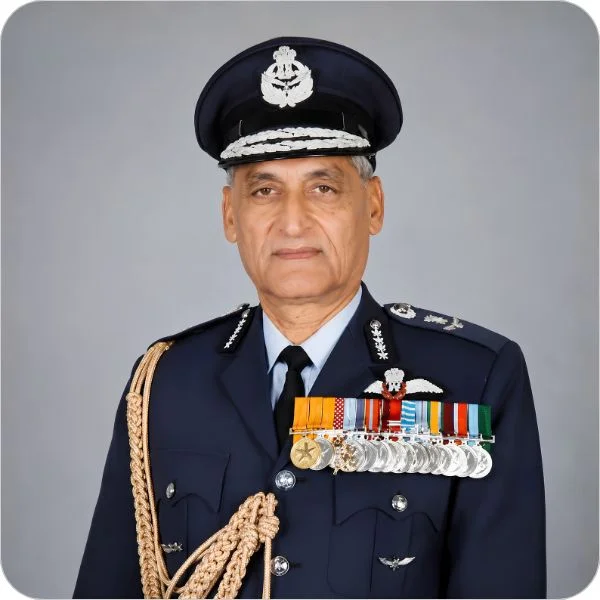
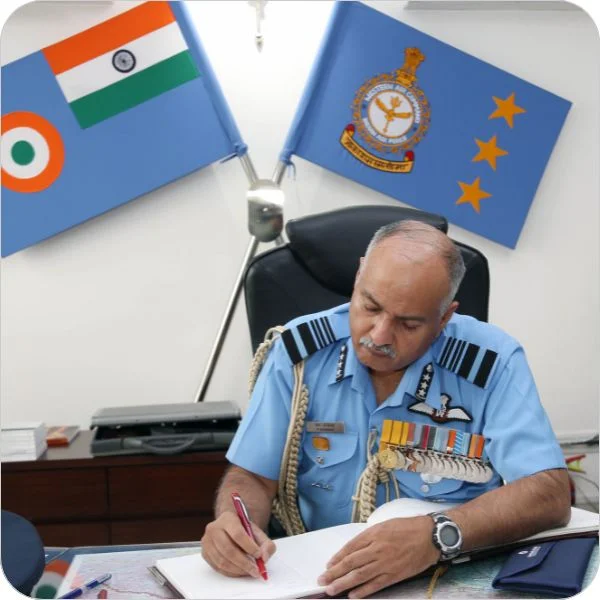
Air Chief Marshal A.Y. Tipnis
Air Chief Marshal Anil Yashwant Tipnis was Chief of the Air Staff during the Kargil conflict and oversaw the IAF’s response during Operation Safed Sagar.
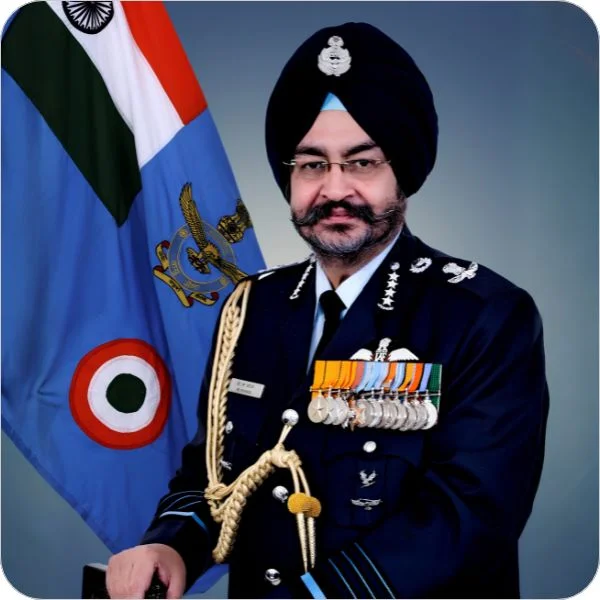
Air Chief Marshal B.S. Dhanoa
Then a Group Captain, B.S. Dhanoa commanded No. 17 Squadron, the Golden Arrows, during the conflict.
He personally flew operational missions and later became Chief of the Air Staff.
The Golden Arrows undertook reconnaissance and strike missions during Safed Sagar and received Battle Honours for their role.
Air Marshal Raghunath Nambiar
Then Wing Commander Raghunath Nambiar flew Mirage 2000 missions during the conflict and piloted the aircraft involved in the IAF’s first operational release of a laser-guided bomb on 24 June 1999.
Squadron Leader Ajay Ahuja
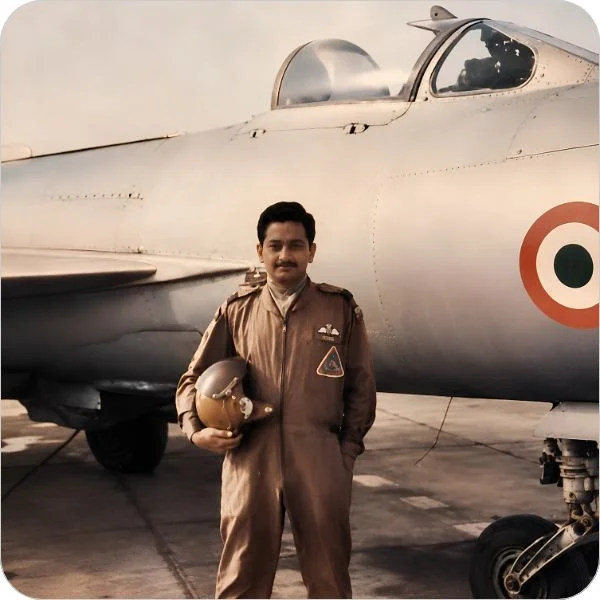
Ahuja’s sacrifice on 27 May remains among the best-known stories from the operation.
Flight Lieutenant K. Nachiketa
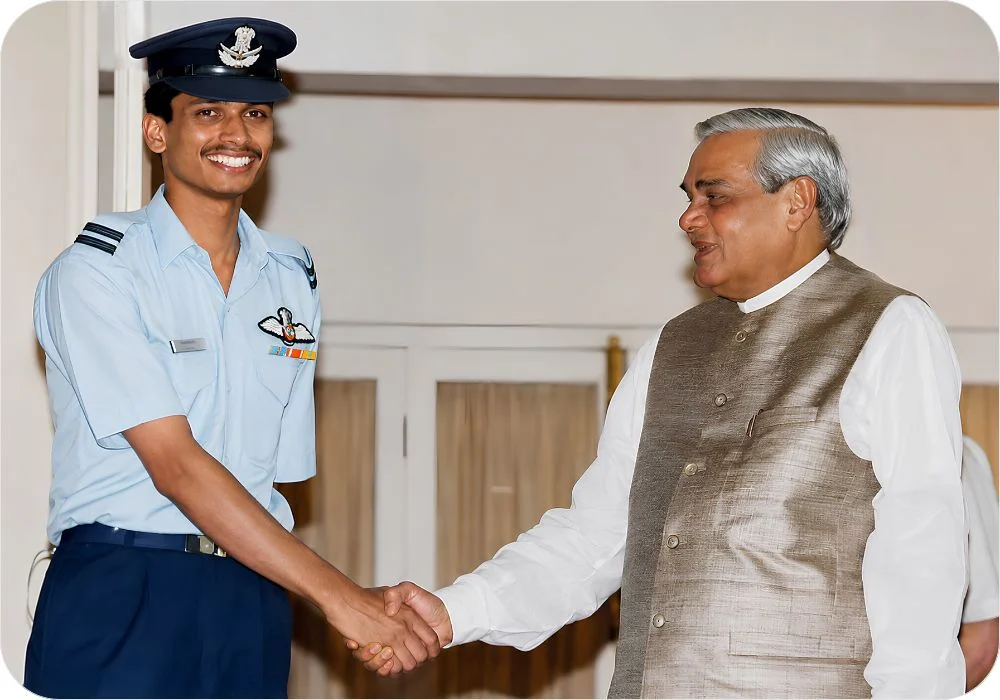
Nachiketa survived his ejection and captivity and later returned to India, becoming one of the most recognisable surviving figures from the air campaign.
And beyond these well-known names were thousands of pilots, technicians, helicopter crews, air-traffic personnel, ground crews, intelligence specialists and support staff whose work made sustained operations possible.
Operation Vijay vs Operation Safed Sagar: What Was the Difference?
The names are sometimes used interchangeably, but they refer to different parts of India’s Kargil response.
| Operation | Service | Main Role |
|---|---|---|
| Operation Vijay | Indian Army | Evict intruders and recapture occupied Indian positions |
| Operation Safed Sagar | Indian Air Force | Conduct air operations in support of the Kargil campaign |
| Operation Talwar | Indian Navy | Naval deployment and pressure against Pakistan during the conflict |
Safed Sagar should therefore be understood as the air component of India’s broader military response, not as an entirely separate conflict.
The Army remained responsible for physically recapturing the occupied heights.
The Air Force helped make that task possible.
When Did Operation Safed Sagar End?
The air campaign continued through the period in which Indian forces progressively recaptured the occupied positions.
By 12 July 1999, an official Ministry of Defence account says almost all posts had been recaptured. Individual IAF units continued operational activity into mid-July.
The wider Kargil campaign culminated later that month.
26 July is commemorated as Kargil Vijay Diwas, marking India’s victory and the successful conclusion of Operation Vijay.
Rather than assigning one overly simplified “end date” to every component of the campaign, it is more accurate to view Safed Sagar as running alongside the decisive phase of Kargil operations from late May into July 1999.
Why Operation Safed Sagar Was Historically Important
The IAF was being asked to conduct offensive combat operations against targets positioned thousands of metres above sea level.
Terrain, weather and thin air changed the normal assumptions of air warfare.
The Ministry of Defence has called Kargil a milestone in military aviation because air power was successfully employed against targets at such extreme altitude.
2. It Marked a Major Precision-Strike Milestone for the IAF
The use of laser-guided bombs during Kargil showed what accurate air-delivered weapons could achieve against specific hardened or strategically important positions.
On 24 June, the IAF used an LGB operationally in combat for the first time.
3. It Demonstrated Joint Warfare
Kargil was not won by one service operating alone.
Army infantry had to take the heights.
Artillery had to support them.
Air power had to weaken enemy positions and logistics.
The Navy simultaneously maintained pressure from the maritime domain.
The campaign showed the importance of coordination between services.
4. It Exposed Gaps That India Could No Longer Ignore
Kargil highlighted the need for better:
- High-altitude surveillance,
- Battlefield intelligence,
- Precision weapons,
- Night-fighting capability,
- Target identification,
- Communications,
- Joint-service coordination.
Those lessons influenced India’s defence planning long after the fighting stopped.
How Safed Sagar Influenced Indian Air Force After Kargil?
Operation Safed Sagar offered the IAF something no training exercise could fully reproduce: real combat experience against difficult targets under political and geographic restrictions.
The value of precision weapons became unmistakable.
So did the importance of surveillance, reconnaissance and rapidly transferring information from sensors to the aircraft or units capable of attacking a target.
India’s air-power modernization continued in the following decades through new aircraft, weapons, sensors, communications networks and indigenous platforms.
It would be too simplistic to claim that every later modernization programme happened because of Kargil.
But Safed Sagar provided a powerful demonstration of what modern air power required.
The difference between finding a mountain bunker and accurately destroying it could depend on sensors, software, targeting pods, communications and trained crews just as much as on the aircraft carrying the bomb.
Operation Safed Sagar Date: Timeline
| Date | What Happened |
|---|---|
| 3 May 1999 | Suspicious activity in the Kargil sector was reported by local residents |
| May 1999 | The scale of the intrusion became progressively clearer |
| 25 May 1999 | Operation Safed Sagar was prepared/launched, with offensive action planned for the next morning |
| 26 May 1999 | Indian Air Force offensive air strikes began |
| 27 May 1999 | K. Nachiketa ejected from his MiG-27 and was captured; Sqn Ldr Ajay Ahuja’s MiG-21 was hit and Ahuja was killed |
| 28 May 1999 | An IAF Mi-17 was shot down; four air warriors were killed |
| Late May 1999 | Mirage 2000 aircraft entered the operational campaign |
| 17 June 1999 | Mirage 2000s carried out a major strike against Muntho Dhalo |
| 24 June 1999 | IAF conducted its first operational combat release of a laser-guided bomb, targeting Tiger Hill |
| Early July 1999 | Indian forces recaptured Tiger Hill and continued clearing occupied positions |
| July 1999 | Air and ground operations progressively forced the remaining Pakistani forces from occupied positions |
| 26 July 1999 | India commemorates the successful conclusion of the Kargil campaign as Kargil Vijay Diwas |
Why Is Operation Safed Sagar in the News in 2026?
More than two decades after the Kargil War, the name Operation Safed Sagar has returned to popular conversation because of a Netflix series based on the IAF’s role in the conflict.
Netflix’s Operation Safed Sagar premiered globally on 7 August 2026.
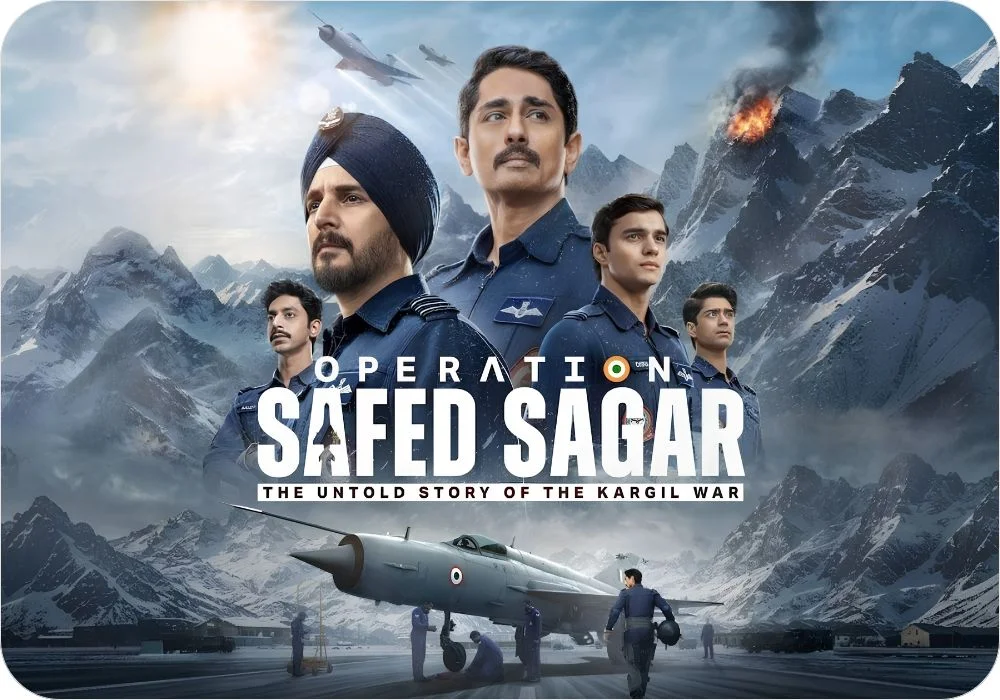
The military drama focuses particularly on the Golden Arrows Squadron, while using the larger Kargil air campaign as its historical setting.
The series is directed by Oni Sen and created by Abhijeet Singh Parmar and Kushal Srivastava. Its cast includes Siddharth, Jimmy Shergill, Abhay Verma, Dia Mirza, Prajakta Koli, Adil Hussain, Mihir Ahuja, Taaruk Raina, Arnav Bhasin and Amrita Bagchi.
Netflix says the production was developed following extensive research and consultation with IAF veterans. It was filmed at more than 100 locations, including high-altitude environments, and received access to Air Force bases, aircraft and infrastructure. Former Air Chief Marshal B.S. Dhanoa was also among those who supported and guided the project.
The renewed attention offers an opportunity to revisit the history behind the dramatization.
Because while a television series naturally follows characters and personal stories, the real Safed Sagar involved multiple squadrons, several aircraft types, thousands of sorties and a much wider joint military campaign.
Check out our other important GK topics for better preparation:
FAQs About Operation Safed Sagar

SEO Head
Virendra heads SEO & Content at LPT. A writer at heart, he focuses on building exam-focused content that informs, guides, and supports aspirants in their preparation journey.
Other Related Blogs