 Talk to a Counsellor
 Support
Nani Palkhivala Moot Court Competition 2026/2027: Full Guide
Complete guide to the Nani Palkhivala Moot Court Competition 2026/2027—eligibility, registration, format, dates, and tips for law students.
Last Updated on 14 Jul 2026

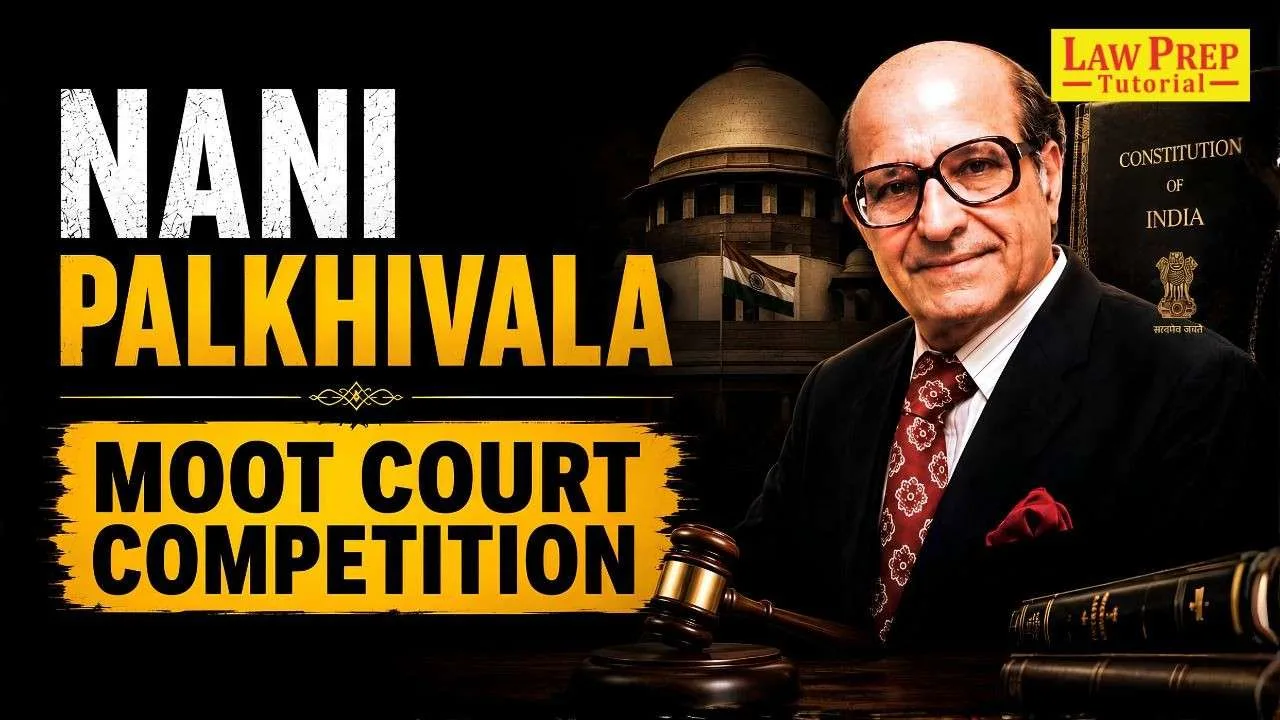
The Nani Palkhivala Memorial Moot Court Competition is expected to return with its 22nd edition in March 2027, continuing the legacy of one of India’s most respected tax and constitutional law moot competitions. Based on the pattern of the previous edition, registrations are expected to begin in February 2027, followed by memorial submissions, virtual oral rounds, and final arguments in March 2027.
The Nani Palkhivala moot court competition is especially important for law students interested in taxation law, constitutional law, legal research, and courtroom advocacy. The previous edition, popularly known as Nani Palkhivala Tax Moot 2026, saw online participation from students across institutions and offered cash prizes, memorial rounds, researcher tests, and knockout oral rounds.
For students planning careers in litigation, taxation, or corporate law, this competition offers valuable practical exposure beyond classroom learning.
Table of Contents
Jump to section- CLAT PG: All About CLAT Postgraduate Exam for LLM
What is Nani Palkhivala Memorial Moot Court Competition?
The Nani Palkhivala Moot Court Competition is a national-level moot court competition organized in memory of Nani Palkhivala, one of India’s greatest constitutional lawyers and tax experts. The competition mainly focuses on taxation law, constitutional principles, legal drafting, advocacy, and courtroom argument skills.
It gives law students an opportunity to experience simulated court proceedings where participants research legal issues, prepare memorials, argue before judges, answer questions, and compete against teams from different law schools. Unlike classroom theory, moot court competitions help students develop practical legal skills such as public speaking, legal reasoning, teamwork, time management, and case analysis.
The recent 21st edition was organized virtually by School of Law, SASTRA Deemed to be University and included memorial selection rounds, oral rounds, researcher interviews, and cash prizes for winners.
Also check out Facts About Indian Constitution
Nani Palkhivala Moot Court Competition: Key Details
These are the most important things to know about Nani Palkhivala moot court competition:
| Detail | Information |
| Competition Name | 22nd Nani Palkhivala Memorial Moot Court Competition 2027 (Expected) |
| Previous Edition | 21st Nani Palkhivala Memorial Virtual Tax Moot Court Competition 2026 |
| Organized By | School of Law, SASTRA Deemed to be University |
| Main Focus Area | Taxation Law and Constitutional Law |
| Mode | Likely Virtual / Online Mode |
| Competition Dates | March 2027 |
| Registration Period | February 2027 |
| Eligibility | Law students enrolled in 3-year or 5-year law courses |
| Team Composition | 2 Speakers + 1 Researcher |
| Competition Structure | Memorial Round + Oral Rounds |
| Main Rounds | Pre-Quarters, Quarter Finals, Semi Finals, Finals |
| Researcher’s Test | Expected to continue |
| Memorial Submission | Mandatory for both sides |
| Popular For | Advocacy, tax law research, constitutional arguments |
| Winner Prize | ₹50,000 |
| Runner-Up Prize | ₹25,000 |
| Best Speaker Prize | ₹5,000 |
| Best Memorial Prize | ₹5,000 |
| Best Researcher Prize | ₹5,000 |
| Official Email (Previous Edition) | sms.nani@sastra.ac.in |
| Official Website | Click Here |
About Nani Palkhivala
Nani Palkhivala was one of India’s most respected constitutional lawyers, economists, authors, and public intellectuals. He became nationally famous for defending the Indian Constitution in the historic Kesavananda Bharati v. State of Kerala case, which introduced the Basic Structure Doctrine.
Apart from constitutional law, he was also widely admired for his expertise in taxation law and economic analysis. His courtroom advocacy, clarity of arguments, and public speeches inspired generations of lawyers and law students across India.
The moot court competition named after him aims to continue his legacy of legal excellence, constitutional values, research, and professional advocacy.
Read more about Legal Awareness and Law Resources
History of Nani Palkhivala Memorial Moot Court Competition
The Nani Palkhivala Moot Court Competition was established to honor the contribution of Nani Palkhivala to constitutional law, taxation law, and Indian legal education. The competition was designed to encourage law students to develop strong advocacy, research, and analytical skills inspired by his professional standards and constitutional thinking.
Focus on Taxation and Constitutional Law
Unlike general moot court competitions, this competition developed a strong identity around taxation law and constitutional issues. Participants are required to work on complex legal problems involving statutory interpretation, constitutional principles, policy arguments, and courtroom advocacy.
This specialized focus has made the competition highly valuable for students interested in litigation, tax practice, and corporate law careers.
Growth Into a Recognized National Moot
Over the years, the competition has attracted participation from multiple law schools and universities across India. The introduction of virtual rounds in recent editions further expanded accessibility for students from different regions.
With memorial rounds, researcher tests, knockout oral rounds, and cash prizes, the competition has become one of the recognized tax moot platforms for aspiring law students.
21st Nani Palkhivala Memorial Virtual Tax Moot Court Competition 2026
The 2026 edition of Nani Palkhivala moot court competition has already taken place in March:
| Detail | Information |
| Competition Name | 21st Nani Palkhivala Memorial Virtual Tax Moot Court Competition 2026 |
| Organized By | School of Law, SASTRA Deemed to be University |
| Mode | Virtual / Online |
| Competition Dates | 13th–15th March 2026 |
| Registration Start | 6 February 2026 |
| Memorial Submission Deadline | 23 February 2026 |
| Memorial Result Date | 1 March 2026 |
| Researcher’s Test | 13 March 2026 |
| Final Rounds | 15 March 2026 |
| Team Structure | 2 Speakers + 1 Researcher |
| Winner Prize | ₹50,000 |
| Runner-Up Prize | ₹25,000 |
| Best Speaker Prize | ₹5,000 |
| Best Memorial Prize | ₹5,000 |
| Best Researcher Prize | ₹5,000 |
| Official Email | sms.nani@sastra.ac.in |
Get Complete details about Kapil Sibal here!
Focus Areas of Nani Palkhivala Moot Court Competition
- Taxation Law
- Constitutional Law
- Legal Research
- Memorial Drafting
- Oral Advocacy
- Statutory Interpretation
- Courtroom Presentation Skills
- Rebuttal and Sur-Rebuttal Practice
- Legal Analysis and Reasoning
- Time Management in Oral Arguments
Explore the Best Books & Novels for Law Students & Lawyers
Eligibility Criteria to Participate in Nani Palkhivala Moot Competition
| Eligibility Requirement | Details |
| Eligible Participants | Bona fide law students |
| Courses Allowed | 3-Year LLB and 5-Year Integrated Law Courses |
| Team Size | 3 Members |
| Team Composition | 2 Speakers + 1 Researcher |
| Institutional Limit | Only One Team Per Institution |
| Competition Level | National-Level Moot Court Competition |
| Mode of Participation | Expected Virtual / Online Participation |
| Memorial Submission | Mandatory |
| Researcher’s Test | Expected to continue |
| Oral Rounds Qualification | Based on memorial selection |
| Required Skills | Legal research, drafting, advocacy, constitutional understanding |
| Registration Requirement | Institutional registration and authorization likely required |
Also read Courtroom Genius by Nani Palkhivala
Format of the Nani Palkhivala Moot Court Competition
Memorial Submission Round
All participating teams are first required to prepare and submit memorials for both sides of the case proposition. Memorials are evaluated on legal research, analysis, organization, citation style, and drafting quality. Only the top-performing teams generally qualify for the oral rounds.
Preliminary Knockout Oral Rounds
The oral rounds usually begin with Pre-Quarter Finals, where selected teams argue before judges in virtual courtroom settings. Teams present arguments, answer judicial questions, and use rebuttals or sur-rebuttals when permitted.
Quarter Finals and Semi Finals
Winning teams from the earlier rounds advance to Quarter Finals and then Semi Finals. At this stage, the level of questioning becomes more intense and focuses heavily on constitutional reasoning, taxation principles, legal interpretation, and advocacy clarity.
Final Round
The Final Round is the concluding stage of the competition where the best-performing teams compete for the championship title. Finalists are evaluated on legal knowledge, courtroom manner, organization, analytical skills, and response to judges’ questions.
Researcher’s Test
The competition also includes a separate Researcher’s Test designed to evaluate the legal research and analytical abilities of researchers. This usually takes place alongside the oral rounds.
Virtual Courtroom Proceedings
Recent editions have been conducted in virtual mode, where all rounds are organized through online video conferencing platforms with formal courtroom rules, dress codes, and structured speaking time limits.
Skills Students Develop Through Nani Palkhivala Moot Competition
- Legal Research Skills: Students learn how to research statutes, constitutional provisions, judgments, and legal precedents effectively.
- Memorial Drafting: Participants improve their ability to prepare structured legal memorials with proper arguments, citations, and analysis.
- Courtroom Advocacy: The competition helps students develop confidence in presenting arguments before judges in simulated courtroom settings.
- Public Speaking: Students improve clarity, confidence, articulation, and communication skills through oral arguments and rebuttals.
- Constitutional Analysis: Participants learn how to interpret constitutional principles, legal issues, and judicial reasoning practically.
- Time Management: Strict speaking limits and memorial deadlines teach students how to manage preparation and presentation time efficiently.
- Team Coordination: Students learn teamwork by dividing research, drafting, and oral responsibilities among team members.
- Handling Judicial Questions: Mooting improves the ability to think quickly and answer difficult legal questions under pressure.
- Professional Discipline: Participants become familiar with courtroom etiquette, professional conduct, and legal presentation standards.
Read more about the Journey of Lawyer Ram Jethmalani
Why Law Students Should Participate in This Competition?
- Gain practical courtroom and advocacy experience beyond classroom learning
- Improve CV and internship opportunities for litigation and corporate law careers
- Develop strong legal research and memorial drafting skills
- Build confidence in public speaking and answering judicial questions
- Get exposure to taxation law and constitutional law issues
- Network with judges, legal professionals, and law students from different institutions
- Learn teamwork, discipline, and professional courtroom conduct
- Experience real-time legal problem-solving under competitive conditions

How to Prepare for Nani Palkhivala Moot Court Competition?
1. Understand the Moot Proposition Properly
Before starting research or drafting, carefully read the moot proposition multiple times. Identify the legal issues, facts, constitutional questions, and taxation principles involved in the problem. Many teams lose marks because they misunderstand the core issue of the case. Creating a timeline of facts and separating legal issues clearly can make preparation much easier.
2. Build Strong Legal Research
Research is the foundation of every successful moot court team. Students should study constitutional provisions, taxation statutes, landmark judgments, and recent legal developments related to the proposition.
Instead of collecting too many cases randomly, focus on understanding how each judgment supports your arguments. Strong legal authorities make memorials and oral submissions more convincing.
3. Prepare Well-Structured Memorials
Memorial drafting requires clarity, organization, and proper legal reasoning. Keep arguments direct, logically connected, and supported with authorities. Follow the prescribed citation format, page limits, and formatting rules carefully because technical mistakes can also lead to penalties.
A good memorial should not only explain the law but also show how it applies to the given facts.
4. Practice Oral Arguments Repeatedly
Strong mooters do not rely only on written preparation. Practice oral rounds regularly with teammates, seniors, or faculty members. Work on voice clarity, confidence, courtroom etiquette, eye contact, and handling judicial interruptions.
Mock practice sessions help students improve time management and become comfortable answering difficult questions under pressure.
5. Prepare for Judicial Questions and Rebuttals
Judges can test participants beyond prepared speeches. Students should understand both sides of the case and anticipate possible questions in advance. Preparing rebuttals and counter-arguments improves flexibility during oral rounds. Teams that remain calm, analytical, and respectful during questioning usually perform better in moot competitions.
Learn more about the Preamble to the Indian Constitution here!
Nani Palkhivala Moot Court Competition: Awards & Cash Prizes
| Award Category | Prize / Recognition |
| Winning Team | ₹50,000 + e-Certificate |
| Runner-Up Team | ₹25,000 + e-Certificate |
| Best Memorial | ₹5,000 + e-Certificate |
| Best Speaker | ₹5,000 + e-Certificate |
| Best Researcher | ₹5,000 + e-Certificate |
| Participation Certificate | e-Certificate for all participants |
Get the complete list of Highest Paid Lawyers in India here!
FAQs on Nani Palkhivala Moot Court Competition

SEO Head
Virendra heads SEO & Content at LPT. A writer at heart, he focuses on building exam-focused content that informs, guides, and supports aspirants in their preparation journey.