Talk to a Counsellor
 Support
Basic Structure Doctrine of Indian Constitution: Explained Simply
Learn the Basic Structure Doctrine of the Indian Constitution—its meaning, origin, and importance in protecting the core principles of the legal document.
Last Updated on 05 Jul 2026

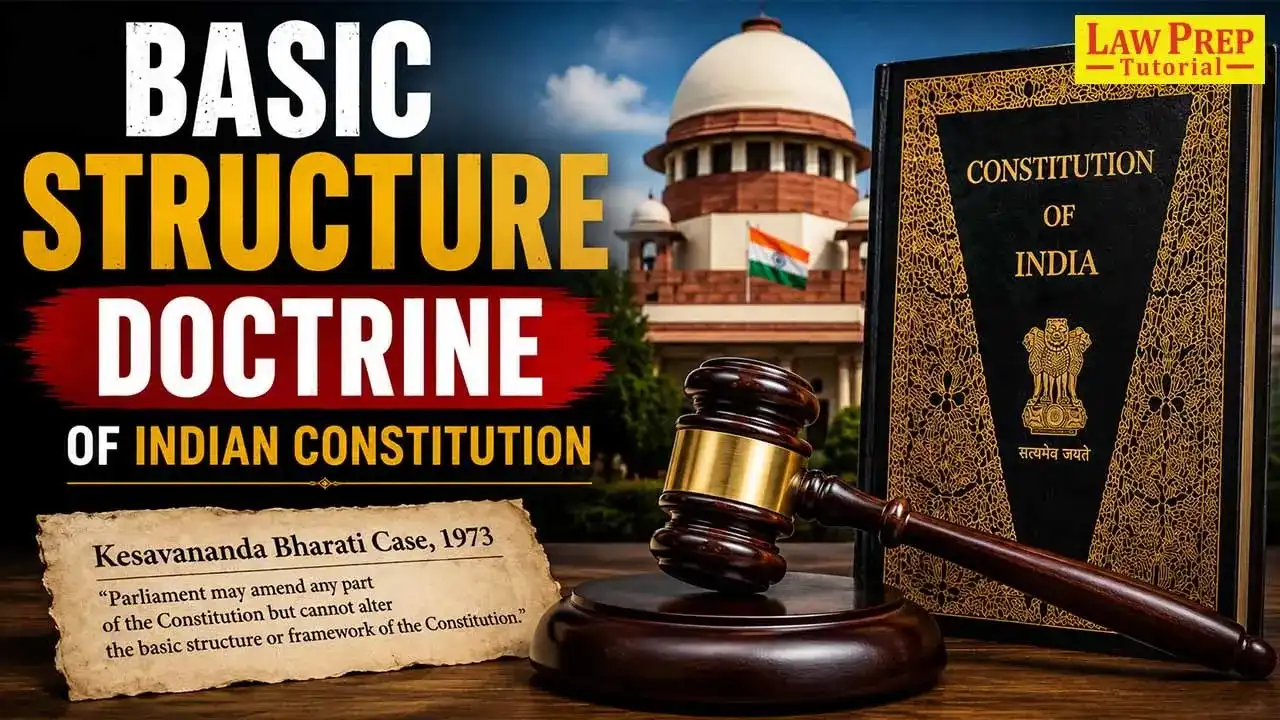
The Basic Structure Doctrine is one of the most important constitutional principles in India because it protects the identity of the Indian Constitution from unlimited political power. It ensures that even Parliament cannot completely change or destroy the core values of the Constitution.
This doctrine became famous after the historic Kesavananda Bharati v. State of Kerala judgment in 1973 and continues to guide major constitutional decisions even today.
If you are a law student, UPSC aspirant, judiciary student, or simply someone trying to understand Indian democracy better, learning about the Basic Structure Doctrine of Indian Constitution is extremely important.
Table of Contents
Jump to section- CLAT PG: All About CLAT Postgraduate Exam for LLM
What is the Basic Structure Doctrine?
The Basic Structure Doctrine means that Parliament can change many parts of the Indian Constitution, but it cannot destroy its most important features or identity. For example, Parliament can make new laws, update constitutional provisions, or introduce reforms. But it cannot remove democracy, cancel free elections, destroy judicial independence, or take away all Fundamental Rights completely.
This doctrine acts like a safety wall that protects India from misuse of unlimited political power. It ensures that no government can completely change the democratic nature of the country, even if it has a huge majority in Parliament.
Basic Structure Doctrine of Indian Constitution: Key Details
These are the most important things to know about the Basic Structure Doctrine in the Constitution of India:
| Detail | Information |
| Doctrine Name | Basic Structure Doctrine |
| Country | India |
| Introduced By | Supreme Court of India |
| Landmark Case | Kesavananda Bharati v. State of Kerala |
| Year Introduced | 1973 |
| Main Purpose | To protect the core identity of the Constitution |
| Constitutional Article Involved | Article 368 |
| Meaning | Parliament can amend the Constitution but cannot destroy its essential features |
| Famous Lawyer Connected | Nani Palkhivala |
| Bench Strength | 13 Judges |
| Majority Decision | 7:6 |
| Key Protection | Democracy, judicial review, Fundamental Rights, federalism, secularism |
| Importance | Prevents misuse of unlimited amendment powers |
| Current Relevance | Still used by courts in major constitutional cases |
Origin of the Basic Structure Doctrine
Conflict Between Parliament and Judiciary
During the 1950s and 1960s, a major constitutional conflict started growing between Parliament and the judiciary. The government wanted broader powers to amend the Constitution and implement social and economic reforms.
On the other hand, the Supreme Court believed certain constitutional protections and citizens’ rights should remain safe from unlimited political power. This disagreement slowly created one of the biggest constitutional debates in India.
Debate Over Constitutional Amendments
Several constitutional amendments passed by Parliament were challenged before the Supreme Court, especially those related to property rights and Fundamental Rights. Earlier cases like Shankari Prasad, Sajjan Singh, and Golaknath created confusion regarding how much power Parliament actually had under Article 368 of Indian Constitution.
Some judgments supported broad amendment powers, while others placed restrictions on Parliament. Because of these conflicting views, a final constitutional clarification became necessary.
The Kesavananda Bharati Judgment of 1973
The Basic Structure Doctrine officially emerged from the historic Kesavananda Bharati v. State of Kerala judgment delivered on 24 April 1973. In this case, the Supreme Court ruled that Parliament can amend the Constitution, but it cannot destroy its essential identity or “basic structure.”
The judgment permanently changed Indian constitutional law and became one of the strongest safeguards of democracy in India.
Check out other important Indian Constitution topics here:
| Preamble of Indian Constitution | Schedules of Indian Constitution |
| Salient Features of Indian Constitution | Facts About Indian Constitution |
| Constitution Day of India | Parts of Indian Constitution |
Why Was the Basic Structure Doctrine Needed?
- To prevent misuse of unlimited political power
- To protect democracy and constitutional balance
- To safeguard Fundamental Rights of citizens
- To stop governments from destroying the Constitution’s identity
- To maintain judicial independence
- To ensure free and fair elections continue
- To protect the rule of law in India
- To prevent authoritarian or dictatorial rule
- To keep Parliament under constitutional limits
- To preserve secularism and federalism
- To maintain balance between Parliament and judiciary
- To protect future generations from constitutional misuse
Features Protected Under the Basic Structure Doctrine
- Supremacy of the Constitution: The Constitution remains the highest law of the country, and no authority can place itself above it.
- Democracy: India must continue as a democratic country where citizens elect their representatives through free and fair elections.
- Rule of Law: Every person and institution, including the government, must follow the law and constitutional principles.
- Judicial Review: Courts have the authority to review laws and constitutional amendments to ensure they follow the Constitution.
- Independence of Judiciary: The judiciary must remain independent from political pressure so that courts can protect citizens’ rights fairly.
- Fundamental Rights: Basic rights guaranteed to citizens under the Constitution cannot be completely destroyed or removed.
- Federalism: India’s balance of powers between the central government and states must remain protected.
- Secularism: The Constitution must continue treating all religions equally without favoring one religion over another.
- Separation of Powers: The powers of Parliament, Executive, and Judiciary must remain separate to prevent concentration of authority.
- Free and Fair Elections: Citizens must continue getting the right to choose their government through transparent elections.
- Unity and Integrity of India: The Constitution protects the sovereignty, unity, and integrity of the nation.
Explore articles of Indian Constitution:
| Articles of Indian Constitution | Article 14 of Indian Constitution |
| Article 343 of Indian Constitution | Article 15 of Indian Constitution |
Important Cases Related to the Basic Structure Doctrine of Indian Constitution
| Case | Year | Importance |
| Kesavananda Bharati v. State of Kerala | 1973 | Introduced the Basic Structure Doctrine and limited Parliament’s amendment powers |
| Indira Gandhi v. Raj Narain | 1975 | Strengthened democracy and free elections as part of Basic Structure |
| Minerva Mills v. Union of India | 1980 | Reinforced limits on constitutional amendment powers |
| Waman Rao v. Union of India | 1981 | Clarified application of the Basic Structure Doctrine to amendments |
| I.R. Coelho v. State of Tamil Nadu | 2007 | Held that laws violating Basic Structure can still be reviewed by courts |
| S.R. Bommai v. Union of India | 1994 | Strengthened secularism and federalism under Basic Structure |
| Kihoto Hollohan v. Zachillhu | 1992 | Examined judicial review in anti-defection matters |
| Supreme Court Advocates-on-Record Association v. Union of India | 2015 | Protected judicial independence as part of Basic Structure |
What Can Parliament Amend and What Cannot Be Changed?
| Parliament Can Amend | Parliament Cannot Change or Destroy |
| Election procedures | Democracy |
| Administrative structures | Basic Structure of the Constitution |
| Taxation provisions | Judicial independence |
| Reservation policies | Rule of Law |
| Centre-State administrative matters | Free and fair elections |
| Number of constitutional provisions | Fundamental Rights completely |
| Schedules and technical provisions | Secularism |
| Emergency-related procedures | Federalism |
| Citizenship-related rules | Separation of Powers |
| Parliamentary procedures | Judicial Review |
| Service conditions of officials | Constitutional supremacy |
| New constitutional reforms | Unity and integrity of India |
| Amendment process details | Parliamentary democratic system |
| Welfare and development policies | Core identity of the Constitution |
Explore more Law-Related Topics here:
Criticism of the Basic Structure Doctrine in Constitution of India
- Doctrine Not Explicitly Written in Constitution: Critics argue that the term “Basic Structure Doctrine” is not directly mentioned anywhere in the Indian Constitution and was created through judicial interpretation.
- Judicial Overreach Debate: Some people believe the doctrine gives excessive power to the judiciary because judges can decide which constitutional amendments are valid or invalid.
- Unclear Definition of “Basic Structure”: Critics say there is no fixed or complete list of what exactly forms the “basic structure,” which can create uncertainty in constitutional interpretation.
- Limits Parliament’s Authority: Certain constitutional experts argue that Parliament represents the will of the people and should have wider amendment powers without judicial restrictions.
- Possibility of Subjective Interpretation: Different judges may interpret constitutional principles differently, which can lead to inconsistent decisions in future cases.
Importance of the Basic Structure Doctrine Today
- Protects Indian democracy from unlimited political power
- Safeguards Fundamental Rights of citizens
- Prevents authoritarian or dictatorial governance
- Maintains constitutional balance between Parliament and judiciary
- Protects judicial independence
- Ensures free and fair elections continue
- Prevents misuse of constitutional amendment powers
- Protects secularism and federalism
- Keeps the Constitution supreme above political majorities
- Helps courts review unconstitutional amendments
- Maintains stability in democratic governance
- Continues guiding major Supreme Court constitutional decisions
Critical Analysis of the Basic Structure Doctrine in India
The Basic Structure Doctrine is considered one of the strongest constitutional safeguards in India because it prevents governments from misusing amendment powers to damage democracy or constitutional identity. By limiting Parliament’s authority, the doctrine protects core principles like judicial review, Fundamental Rights, secularism, and rule of law. It became especially important during politically sensitive periods such as the Emergency when democratic institutions faced pressure.
At the same time, the doctrine has faced criticism because it is not directly written in the Constitution. Critics argue that unelected judges gained significant authority to decide constitutional limits, which some view as judicial overreach. Supporters, however, believe this judicial power is necessary to protect democracy from unlimited political control.
Despite debates and criticism, the doctrine continues to play a crucial role in maintaining constitutional balance and protecting India’s democratic structure.
FAQs on Basic Structure Doctrine of Indian Constitution

SEO Head
Virendra heads SEO & Content at LPT. A writer at heart, he focuses on building exam-focused content that informs, guides, and supports aspirants in their preparation journey.
Constitution of India Trending Blogs
Other Related Blogs