 Talk to a Counsellor
 Support
CBSE Class 12th: Streams, Exam Pattern, All Details
Explore CBSE Class 12 streams, latest, exam pattern, books, and smart tips to score high in board exams.
Last Updated on 14 Jul 2026

CBSE Class 12 is a turning point in a student’s academic journey, where school learning begins to align closely with future career goals. At this stage, students start preparing not only for board exams but also for competitive exams such as JEE, NEET, CUET, CLAT, and IPMAT. The curriculum provides a clear direction, helping students identify important topics and structure their preparation without confusion.
The CBSE Class 12th Board Examination is conducted every year by the Central Board of Secondary Education for senior secondary students. The registration process is completed through schools, and the examination is held in offline mode using a pen-and-paper format. Each subject paper is conducted for a duration of three hours, allowing students to attempt all sections in a planned and balanced manner. The consistent exam structure makes it easier for students to prepare with a defined approach.
At Law Prep Tutorial, students can access a well-organised set of resources tailored for the 2026-27 session. The platform offers the stream, syllabus, and exam pattern. This structured support helps students streamline their preparation and stay focused on topics that carry the most weight in the examination.
Table of Contents
Jump to section- CLAT PG: All About CLAT Postgraduate Exam for LLM
CBSE Class 12 Overview
Class 12 brings board exams and future plans together in one year. Students need a clear idea of the exam format and timeline to stay on track and avoid confusion during preparation.
The CBSE Class 12 exam follows a structured pattern with fixed components and dates. It includes written papers along with practical work, depending on the subject. The question papers mix objective and descriptive questions, so students need to focus on both accuracy and clear presentation. The exam schedule also follows a set timeline, which helps students plan revision and practice in advance.
Below are the major highlights that define this academic assessment.
| Name of Examination | All India Senior School Certificate Examination (AISSCE) |
| Conducting Body | Central Board of Secondary Education (CBSE) |
| Exam Type | Written + Practical |
| Question Format | Objective and Subjective Questions |
CBSE Board Class 12th Streams
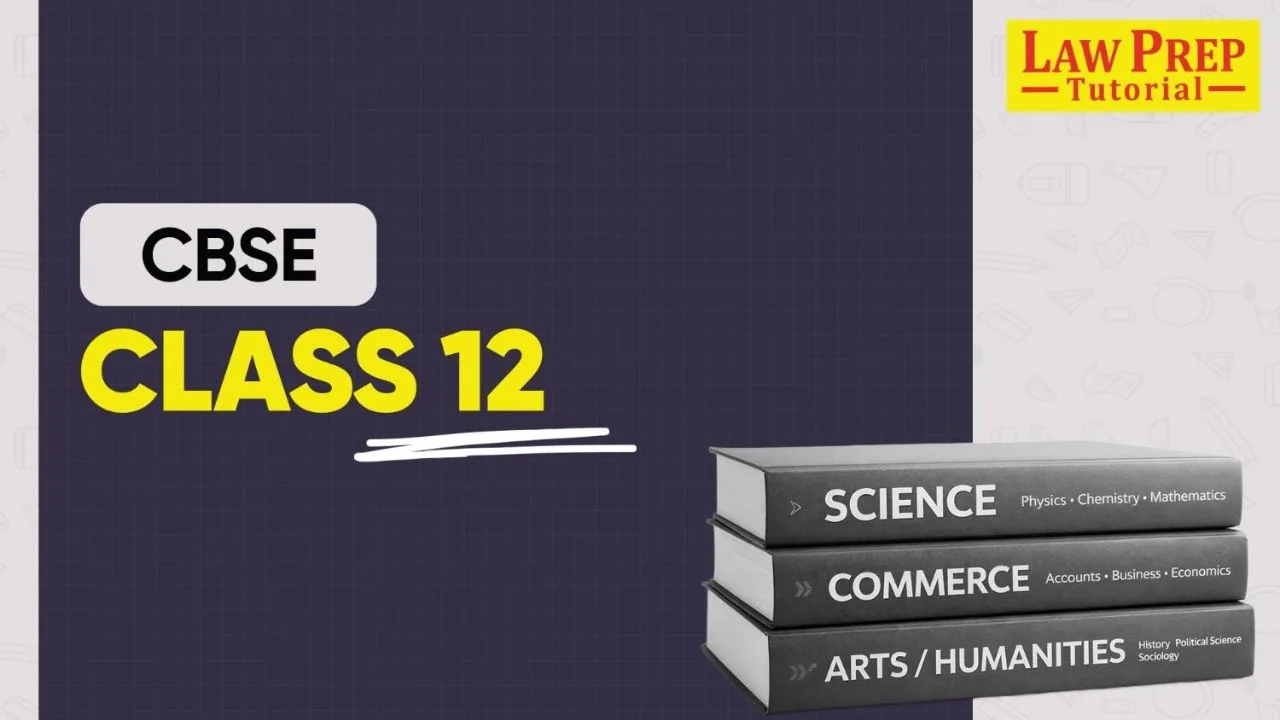
Subject selection in Class 12 shapes a student’s study path and future course options. CBSE organises subjects into three main streams—Science, Commerce, and Humanities, so students can align their choices with their interests and career plans. Most students study five to six subjects, with English as a compulsory subject and the rest chosen based on stream and school availability.
Each stream includes core subjects and a set of elective options. Students can also follow common subject combinations that connect with specific career paths, such as engineering, medicine, business, or social sciences.
Below are the major highlights that define this academic assessment.
| CBSE Class 12 Streams | Core Subjects | Main Elective Options | Popular Combinations |
| Science | – English, – Physics, – Chemistry |
– Mathematics, – Biology, – Computer Science, – Physical Education, – Biotechnology, – Economics |
– Physics + Chemistry + Maths (PCM) -Physics + Chemistry + Biology (PCB) -Physics, Chemistry, Maths, Biology (PCMB) |
| Commerce | – English, – Accountancy, – Business Studies, – Economics |
– Mathematics, – Informatics Practices, – Entrepreneurship, – Legal Studies, – Physical Education |
Core Commerce with/without Mathematics |
| Humanities (Arts) | – English | – History, – Political Science, – Geography, – Economics, – Sociology, – Psychology, – Fine Arts, – Legal Studies |
– History + Political – Science + Geography; – Psychology + Sociology |
Preparing for IPMAT? Learn from the experts with leading Online IPMAT Coaching in India.
CBSE Class 12 Syllabus 2026-27
CBSE Class 12 syllabus sets clear boundaries for exam preparation by listing chapters, practical work, and assessment components for each subject. Students can plan their study schedules more effectively when the syllabus defines what to cover and what to leave out.
CBSE organises the syllabus across three main streams:
- Science
- Commerce
- Humanities
Each stream includes subjects that follow a specific structure of theory, application, and internal assessment. For example:
- Physics combines numerical problem-solving with practical experiments
- Business Studies includes case-based questions linked to real scenarios
- Humanities subjects focus on detailed, descriptive answers
CBSE also divides subjects into structured categories:
- Languages (Group-L)
- Academic Electives (Group-A)
- Internal Assessment components such as projects and practicals
Under the CBSE Class 12 subject-wise syllabus, students can explore major subjects across all streams:
CBSE Class 12th Books
Once the syllabus is clear, students need the right books to cover each topic properly. The syllabus lists what to study, but books show how to understand and practise those topics.
NCERT textbooks form the base of Class 12 preparation. Most board questions come directly from NCERT examples, in-text questions, and exercises. For example, derivations in Physics, numericals in Chemistry, and case-based questions in Economics often follow the same pattern as NCERT content.
Reference books help students practise beyond basic questions. They include extra numericals, sample papers, and case studies. Students preparing for exams like JEE or NEET use books like RD Sharma or Trueman’s Biology for deeper practice, but they still keep NCERT as the main source.
Below are the major highlights that define this academic assessment.
| CBSE Class 12 Subjects | NCERT Book Title | Popular Reference Books |
| Mathematics | Mathematics Textbook Part I & II (Class XII) | – RD Sharma, – RS Aggarwal, – NCERT Exemplar Problems |
| Biology | Biology (Class XII) | – Trueman’s Elementary Biology, – Pradeep’s Biology, – Dinesh Objective Biology |
| Computer Science | Computer Science (with Python)- NCERT | – Sumita Arora, – Preeti Arora (S Chand) |
| Physical Education | Health and Physical Education / CBSE Textbook | – Saraswati Physical Education, (SP Publications) |
| Biotechnology | Biotechnology Textbook for Class XII (NCERT) | – Trueman’s Biotechnology, – CBSE Lab Manuals |
| Economics | Introductory Macroeconomics + Indian Economic Development (NCERT) | – TR Jain & VK Ohri, – Sandeep Garg |
| Informatics Practices | Informatics Practices (NCERT) | – Sumita Arora, – Preeti Arora |
| Entrepreneurship | Entrepreneurship (NCERT / CBSE Material) | – Arihant, – Full Marks |
| Legal Studies | Legal Studies (NCERT) | – Universal, – Arihant Guides |
| History | Themes in Indian History Part I, II, III (NCERT) | – Arihant All-in-One, – Together With |
| Political Science | Contemporary World Politics + Politics in India Since Independence (NCERT) | – Arihant, – Laxmikant |
| Geography | Fundamentals of Human Geography + India: People and Economy + Practical Work | – Goh Cheng Leong, – Majid Husain |
| Sociology | Indian Society + Social Change and Development in India (NCERT) | – Brij Kishore Sharma, – Full Marks |
| Psychology | Psychology Textbook for Class XII (NCERT) | – Baron, – Morgan & King |
| Fine Arts | An Introduction to Indian Art Part II (NCERT) | – Vishal Prakashan, – Panoramic Indian Painting |
CBSE Class 12th Exam Pattern and Marking Scheme
After selecting subjects and books, students need to focus on how the exam actually awards marks. A clear view of the paper structure and marking scheme helps students decide where to practise more and how to improve scores.
The exam pattern now focuses more on application-based questions. Students solve MCQs, case-based, and source-based questions that test how well concepts are applied in real situations. For example:
- Business Studies includes case-based questions linked to real business situations
- Physics and Chemistry include numericals and diagram-based questions
- Humanities subjects require structured, point-wise answers with analysis
Below are the major highlights that define the academic assessment for CBSE Class 12th:
| Type of Questions | Previous Weightage (2023–24) | Current Weightage (2024–25 onwards) |
| Competency-Based (MCQs, Case-Based, Source-Based) | 40% | 50% |
| MCQs (Objective Type) | 20% | 20% |
| Short & Long Answer Questions | 40% | 30% |
CBSE Class 12th Marking Scheme
The marking scheme explains how marks are divided between written exams and school-based evaluation. Students earn marks not only through final papers but also through projects, practicals, and internal assessments completed during the year.
Most theory-based subjects follow:
– 80 marks theory + 20 marks internal assessment
Subjects with practical components follow:
– 70 marks theory + 30 marks practical
In subjects like Fine Arts, practical work carries the highest share of marks, which makes regular project work important.
Below are the major highlights that define CBSE Class 12th academic assessment.
| Name of Subject | Subject Code | Theory Marks | Practical/Project Marks | Total Marks |
| English Core / English Elective | 301 / 001 | 80 | 20 (Internal Assessment) | 100 |
| Hindi Core / Hindi Elective | 302 / 002 | 80 | 20 (Internal Assessment) | 100 |
| Physics | 042 | 70 | 30 (Practical) | 100 |
| Chemistry | 043 | 70 | 30 (Practical) | 100 |
| Biology | 044 | 70 | 30 (Practical) | 100 |
| Mathematics | 041 | 80 | 20 (Internal Assessment) | 100 |
| Accountancy | 055 | 80 | 20 (Project Work) | 100 |
| Business Studies | 054 | 80 | 20 (Project Work) | 100 |
| Economics | 030 | 80 | 20 (Project Work) | 100 |
| History | 027 | 80 | 20 (Project Work) | 100 |
| Political Science | 028 | 80 | 20 (Project Work) | 100 |
| Geography | 029 | 70 | 30 (Practical) | 100 |
| Psychology | 037 | 70 | 30 (Practical) | 100 |
| Computer Science | 083 | 70 | 30 (Practical) | 100 |
| Informatics Practices | 065 | 70 | 30 (Practical) | 100 |
| Physical Education | 048 | 70 | 30 (Practical) | 100 |
| Home Science | 064 | 70 | 30 (Practical) | 100 |
| Entrepreneurship | 066 | 70 | 30 (Project Work) | 100 |
| Fine Arts (Painting) | 049 | 30 | 70 (Practical) | 100 |
| Legal Studies | 074 | 80 | 20 (Project Work) | 100 |
CBSE Class 12 Previous Year Question Papers
After reviewing the exam pattern and marking scheme, students need to shift focus to practice. Previous year question papers show the exact structure of the exam, including section flow, question types, and level of difficulty.
Solving full-length papers improves time control and answer accuracy. For example:
- Mathematics papers help divide time across sections and reduce calculation errors
- Physics and Chemistry papers improve step-wise problem-solving
- Business Studies and Economics papers strengthen case-based answers
Students can download CBSE Class 12 previous year question papers and practise them regularly.
NCERT Solutions for Class 12
After practising previous year papers, students need to focus on improving answer quality. NCERT Solutions help students learn the exact method to solve questions and present answers in the board exam.
CBSE papers follow NCERT closely, so many questions appear directly or follow the same pattern. Regular practice with NCERT Solutions helps students write accurate answers, follow correct steps, and avoid common errors. For example:
- Mathematics solutions show step-by-step methods for solving problems
- Physics and Chemistry solutions improve numerical accuracy and logic flow
- Economics and Business Studies solutions help structure answers using key terms and points
Students can use subject-wise NCERT Solutions to strengthen preparation across all major subjects:
| NCERT Solutions Class 12 English |
| NCERT Solutions Class 12 Hindi |
| NCERT Solutions Class 12 Physics |
| NCERT Solutions Class 12 Chemistry |
| NCERT Solutions Class 12 Biology |
| NCERT Solutions Class 12 Mathematics |
| NCERT Solutions Class 12 Accountancy |
| NCERT Solutions Class 12 Business Studies |
| NCERT Solutions Class 12 Economics |
| NCERT Solutions Class 12 History |
| NCERT Solutions Class 12 Political Science |
| NCERT Solutions Class 12 Geography |
| NCERT Solutions Class 12 Psychology |
| NCERT Solutions Class 12 Computer Science |
| NCERT Solutions Class 12 Entrepreneurship |
| NCERT Solutions Class 12 Information Practices |
| NCERT Solutions Class 12 Legal Studies |
| NCERT Solutions Class 12 Physical Education |
| NCERT Solution Class 12 Home Science |
CBSE Class 12 Notes
Revision decides how well students recall concepts in the final exam. CBSE Class 12 notes help students revise faster by keeping all important points in one place.
Good notes focus on what students need just before the exam. They include formulas, key definitions, diagrams, and short explanations. For example:
- Physics notes list formulas and key derivations for quick revision
- Chemistry notes organise reactions and named equations chapter-wise
- Mathematics notes summarise formulas and common question types
Students can use the following subject-wise notes to revise efficiently and cover more topics in less time:
| CBSE Class 12 English Notes |
| CBSE Class 12 Hindi Notes |
| CBSE Class 12 Physics Notes |
| CBSE Class 12 Chemistry Notes |
| CBSE Class 12 Biology Notes |
| CBSE Class 12 Mathematics Notes |
| CBSE Class 12 Accountancy Notes |
| CBSE Class 12 Business Studies Notes |
| CBSE Class 12 Economics Notes |
| CBSE Class 12 History Notes |
| CBSE Class 12 Political Science Notes |
| CBSE Class 12 Geography Notes |
| CBSE Class 12 Psychology Notes |
| CBSE Class 12 Computer Science Notes |
| CBSE Class 12 Entrepreneurship Notes |
| CBSE Class 12 Information Practices Notes |
| CBSE Class 12 Legal Studies Notes |
| CBSE Class 12 Physical Education Notes |
| CBSE Class 12 Home Science Notes |
CBSE Class 12th Board Exam 2026 Updates
After completing revision and practice, students need to stay aligned with the exam timeline and latest updates. Knowing when each stage happens helps students plan final revision and avoid last-minute gaps.
CBSE conducts Class 12th board exams between February and April. Most papers run in a single shift from 10:30 AM to 1:30 PM. Schools complete practical exams and internal assessments between January and mid-February, so internal marks are finalised before theory exams begin.
The paper pattern continues to focus on application-based questions. Competency-based questions can cover up to 50% of the paper, including case-based and source-based formats. Students need to focus on concept clarity and regular practice instead of memorising answers. CBSE also uses On-Screen Marking (OSM) to ensure faster and more accurate evaluation of answer sheets.
CBSE Class 12th Date Sheet
After tracking exam updates, students need to plan their revision based on the official schedule. The date sheet helps students organise preparation and focus on one subject at a time.
CBSE usually releases the Class 12th date sheet a few months before the exams, often around October, with updates if required. The schedule includes planned gaps between major subjects, which allows students to revise properly before each paper.
Exams are spread across several weeks. Core subjects like Physics, Chemistry, Mathematics, Accountancy, and English appear on different dates with enough gap in between. Students can use these gaps to revise key topics, practise sample papers, and improve weak areas before the next exam.
CBSE Class 12 Admit Card
As the exam dates approach, students need to complete the final formal step before entering the exam hall. The admit card confirms exam details and allows entry on each exam day.
CBSE releases the Class 12 admit card in early February. Regular students collect it from their school, while private candidates download it from the official website. The document includes important details such as roll number, subject list, exam dates, and centre information.
Students must carry the admit card to the exam hall on every exam day. They should check all details carefully after receiving it. Any error in name, subject, or centre should be reported to the school immediately to avoid issues during the exam.
CBSE Class 12 Result
After completing all exams, students wait for the final outcome of their performance. The result marks the end of the board exam cycle and plays an important role in college admissions.
CBSE usually declares Class 12 results around May, a few weeks after the exams conclude. The board takes time to evaluate answer sheets carefully to ensure accurate marking across all subjects.
Students can check results online using their roll number and required details. CBSE also provides a digital marksheet through DigiLocker, which students can use for college admissions and other official purposes.
Students who want to improve scores or clear a subject can appear for supplementary exams held around July. This option allows students to continue their academic plans without waiting for the next full exam cycle.
Preparation Tips for CBSE Class 12th Board Exam
Strong preparation comes from a clear plan and consistent effort. Students who follow a structured routine cover the syllabus on time and revise without pressure.
Below are the major highlights that define preparation tips for CBSE Class 12 Board Exam.
1. Create a study timetable
Set fixed time slots for each subject during the day. Keep theory subjects like History or Business Studies in one slot and problem-solving subjects like Physics or Mathematics in another. Add short revision sessions every few days to retain what has been studied.
2. Revise formulas and key concepts daily
Subjects like Mathematics, Physics, and Chemistry require regular formula practice. Solve a few questions every day instead of only reading. Daily practice improves speed and reduces mistakes in the exam.
3. Maintain a healthy routine
Follow a balanced daily routine during preparation. Eat proper meals, stay hydrated, and take short breaks between study sessions. A stable routine helps maintain focus for longer study hours.
4. Practise previous year and sample papers
Solve at least one full paper regularly under exam conditions. Time-bound practice improves speed, accuracy, and familiarity with the question pattern.
5. Analyse mistakes and improve
Check every paper after solving it. Identify errors, revise weak topics, and practise similar questions again. Regular analysis helps avoid repeating the same mistakes.
6. Focus on concept clarity
Understand the logic behind each topic instead of memorising answers. Clear concepts help students solve application-based and case-based questions with confidence.
Career Options After Class 12th
After completing Class 12, students choose career paths based on their stream and interests. Each stream opens different opportunities in higher education and professional fields.
Below are the major highlights that define career options after Class 12 Board Exam:
| CBSE Class 12 Stream | Popular Career Options | Entrance Exams / Courses | Stream Requirement |
| English | – Journalism, – Content Writing, – Teaching, Public – Relations, Mass – Communication |
– CUET, – BA English, – Mass Communication Courses |
Any stream with English |
| Hindi | – Teaching, – Translation, – Journalism, – Content Writing, – Civil Services |
– CUET, – BA Hindi, – UPSC |
Any stream with Hindi |
| Physics | – Engineering, – Research, – Defence Services, – Astronomy |
– JEE, – NDA, – CUET (Science) |
Science (PCM) |
| Chemistry | – Pharmacy, – Chemical Engineering, – Forensic Science, – Research |
– NEET, – JEE, – CUET (Science), – Pharmacy Courses |
Science (PCM/PCB) |
| Biology | – Medicine, – Dentistry, – Nursing, – Biotechnology |
– NEET, – CUET (Science) |
Science (PCB) |
| Mathematics | – Engineering, – Data Science, – Actuarial Science, – Finance |
– JEE, – CUET, – Actuarial Exams |
Science (PCM) / Commerce with Maths |
| Accountancy | – Chartered Accountant, – Auditor, – Banking, – Finance |
– CA Foundation, – CUET (Commerce) |
Commerce |
| Business Studies | – Management, – Entrepreneurship, – Marketing |
– CUET, – BBA, – IPMAT |
Commerce |
| Economics | – Economist, – Banking, – Data Analyst, – Finance |
– CUET, – BA Economics, – IPMAT |
Commerce / Humanities (Math preferred) |
| History | – Civil Services, – Archaeology, – Teaching, – Research |
– UPSC, – CUET (Arts), – BA History |
Humanities |
| Political Science | – Civil Services, – Law, Policy Making, – International Relations |
UPSC, CLAT, CUET | Humanities |
| Geography | – Urban Planning, – Environmental Science, – GIS Analyst |
– CUET, – BA Geography |
Humanities / Science |
| Psychology | – Clinical Psychology, – Counselling, – Human Resources |
– CUET, – BA/BSc Psychology |
Humanities / Science |
| Computer Science | – Software Development, – AI, Cybersecurity, – Data Science |
– JEE, – CUET, – B.Tech, – BCA |
Science (PCM) |
| Entrepreneurship | – Startups, – Business Management, – Consulting |
– CUET, – BBA, – Entrepreneurship Courses |
Commerce / Any stream |
| Information Practices | – Data Analysis, – IT Services, – Database Management |
– CUET, – BCA, – IT Courses |
Commerce / Science |
| Legal Studies | – Law, – Legal Advisor, – Judiciary, – Corporate Law |
– CLAT, – CUET (Law) |
Humanities / Any stream |
| Physical Education | – Sports Management, – Coaching, – Fitness Training |
– Sports Courses, – B.P.Ed, – CUET |
Any stream |
| Home Science | – Nutritionist, – Interior Design, – Fashion Design, – Social Work |
– CUET, – BSc Home Science |
Any stream |
CBSE Class 12 requires consistent effort, not last-minute preparation. When you follow the syllabus closely, practise NCERT questions, and revise regularly, you can manage your studies without stress. Focus on understanding concepts, solving papers in exam conditions, and improving weak areas. This approach will help you perform confidently in the board exam.
Check the latest CBSE Class 11 syllabus for all subjects below:
FAQs on CBSE Class 12th

SEO Head
Virendra heads SEO & Content at LPT. A writer at heart, he focuses on building exam-focused content that informs, guides, and supports aspirants in their preparation journey.