 Talk to a Counsellor
 Support
The Summer of The Beautiful White Horse: Summary & Theme
Explore the summary of The Summer of The Beautiful White Horse by William Saroyan with theme, central idea and character sketch clearly explained.
Last Updated on 14 Jul 2026


The story The Summer of a Beautiful White Horse by William Saroyan is the opening chapter of the NCERT Class 11 supplementary book Snapshots. It highlights themes of honesty, childhood innocence, and moral values through the simple yet meaningful lives of two Armenian boys, Aram and Mourad.
Below, you will find summary of The Summer of A Beautiful White Horse explained in an easy and clear manner. We will also explore the central idea, theme, and message of the story to help you understand it better.
Table of Contents
Jump to section- CLAT PG: All About CLAT Postgraduate Exam for LLM
Summary of The Summer of The Beautiful White Horse
The Summer of a Beautiful White Horse by William Saroyan is a heart-warming short story that beautifully captures the innocence of childhood and the importance of honesty. The story is narrated by Aram, a nine-year-old boy belonging to the Garoghlanian family, an Armenian tribe known for their strict sense of honesty and integrity despite their poverty.
One early morning, Aram is awakened by his cousin Mourad, who is thirteen years old. To Aram’s surprise and delight, Mourad is sitting outside on a beautiful white horse. Since their family is too poor to buy such a horse, Aram is confused about how Mourad got it. Yet, being a child who loves horses, he is too excited to question much and quickly climbs on for a ride.
The two cousins spend their summer mornings joyfully riding the horse through fields and vineyards. However, Aram often wonders whether taking the horse without the owner’s permission was right or wrong. Mourad insists that they are not stealing because he only intends to enjoy the horse for some time and then return it. This shows the difference in their personalities—Mourad is adventurous and carefree, while Aram is thoughtful and values the family’s reputation.
One day, they meet John Byro, the horse’s actual owner. Byro immediately recognizes the horse but, noticing the honesty in the boys’ faces and respecting their family’s reputation, he does not accuse them. Instead, he remarks that though the horse looks exactly like his, it cannot be, since the Garoghlanian family would never steal. His faith in their integrity deeply impacts the boys.
Feeling guilty and realizing the importance of their family’s values, Mourad and Aram decide to return the horse quietly to Byro’s barn. When Byro finds the horse back in perfect condition, he is overjoyed and thankful.
The story ends on a positive note, showing that while the boys were tempted by adventure and desire, they ultimately chose honesty. It highlights the innocence of childhood, the temptation to bend rules, and the strength of moral values passed down through generations.
In simple terms, the story of The Summer of the Beautiful White Horse in Class 11th English teaches us that true happiness comes not from taking what is not ours, but from living with honesty, integrity, and respect.
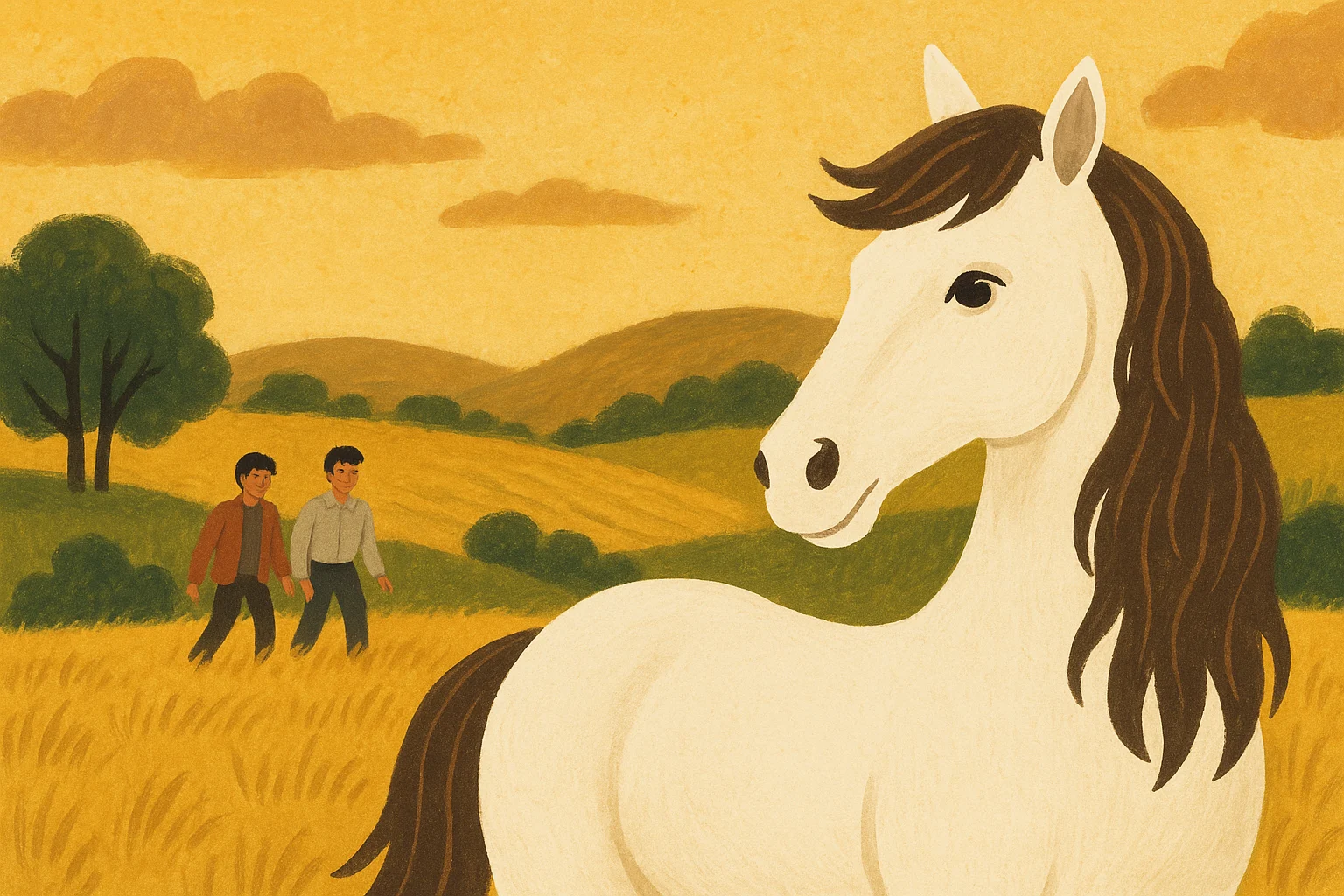
The Summer of a Beautiful White Horse: Short Summary
The Summer of a Beautiful White Horse by William Saroyan is a touching story about two Armenian cousins, Aram and Mourad, who belong to the poor but honest Garoghlanian family. One morning, nine-year-old Aram is thrilled to see his cousin Mourad with a beautiful white horse.
Knowing their family cannot afford such a horse, Aram is puzzled, but his love for horses makes him join Mourad for joyful rides. Mourad insists they are not stealing since he plans to return the horse. The boys enjoy their secret adventure until they meet John Byro, the horse’s rightful owner.
Although Byro recognizes his horse, he does not accuse the boys because of his trust in their family’s honesty. This silent faith makes the cousins realize their mistake. They soon return the horse quietly, proving that integrity and moral values are more important than momentary pleasure.
The Summer of The Beautiful White Horse: Character Sketch
| Character | Traits | Role in the Story |
| Aram | Innocent, thoughtful, honest, curious, values family reputation | The 9-year-old narrator of the story. He admires Mourad and loves horses but questions the morality of taking one without permission. Represents childhood innocence and conscience. |
| Mourad | Adventurous, daring, passionate about horses, fun-loving, slightly impulsive but not dishonest | Aram’s 13-year-old cousin. Brings the white horse for rides but insists he is not stealing since he plans to return it. Symbolizes youthful passion and boldness. |
| Uncle Khosrove | Short-tempered, impatient, loud, comical | Known for his constant phrase, “It is no harm; pay no attention to it.” Provides humor and highlights the strong personalities in the Garoghlanian family. |
| John Byro | Kind, patient, forgiving, trusting | The real owner of the horse. Though he recognizes it, he does not accuse the boys, showing faith in their family’s honesty. His trust leads the boys to correct their mistake. |
More Important Resources for CBSE Exam:
| Class 11th Hornbill Syllabus | CBSE Class 11th Commerce Subjects |
| CBSE Full Form | All about CBSE Class 11th |
| Class 11th Syllabus | Class 12th Syllabus |
| Class 11th Commerce Books | CBSE Board: All details |
Central Idea of The Summer of a Beautiful White Horse
The central idea of The Summer of a Beautiful White Horse is the importance of honesty, integrity, and moral values, even when one is tempted by desire. The story highlights how the Garoghlanian family, though poor, is rich in its principles and reputation.
Through the characters of Aram and Mourad, William Saroyan shows the innocence of childhood, the thrill of adventure, and the inner conflict between right and wrong. The boys’ decision to eventually return the horse reflects that true pride lies not in material possessions but in upholding values. The story teaches that honesty and trust are treasures greater than wealth.
Theme of The Summer of a Beautiful White Horse
The theme of The Summer of a Beautiful White Horse revolves around honesty, childhood innocence, and moral responsibility. It shows how the Garoghlanian family values integrity above all, despite living in poverty.
Through Aram and Mourad’s adventure with the horse, the story highlights the conflict between temptation and ethics, ultimately proving that true honor comes from upholding values, trust, and family reputation rather than seeking temporary pleasure.
Read the chapter-wise summaries of Class 11 English here:
Message of The Summer of a Beautiful White Horse
- Honesty is Priceless: Wealth may be lacking, but moral values make a family truly rich.
- Innocence of Childhood: Children may make mistakes, but their pure hearts guide them back to the right path.
- Temptation vs. Integrity: Desires test character, but integrity must always win.
- Family Reputation Matters; Upholding family values brings pride greater than possessions.
- Trust Inspires Change: John Byro’s faith in the Garoghlanian family encourages the boys to correct their mistake.
- True Happiness is in Doing Right: Lasting joy comes not from taking what is not ours, but from honest living.
About the Author William Saroyan
William Saroyan (1908–1981) was an Armenian-American writer, playwright, and short story author known for his simple yet deeply human storytelling. Born in Fresno, California, to Armenian immigrant parents, Saroyan often drew inspiration from his cultural roots and personal experiences. His works focus on themes of childhood, family, hope, honesty, and the resilience of ordinary people.
He achieved fame with his short story collection The Daring Young Man on the Flying Trapeze (1934) and later won the Pulitzer Prize for Drama in 1940 for his play The Time of Your Life. Saroyan’s writing style is marked by warmth, humor, and a celebration of life’s small joys, as reflected in The Summer of a Beautiful White Horse.
Synopsis of The Summer of the Beautiful White Horse
William Saroyan’s short story The Summer of the Beautiful White Horse from Class 11 Snapshots is about two Armenian cousins, Aram and Mourad, who belong to the poor but honest Garoghlanian family. Mourad secretly brings home a beautiful white horse, and together they enjoy morning rides.
While Aram is thrilled, he struggles with the thought of whether it is right or wrong. Their adventure takes a turn when they meet John Byro, the horse’s owner, who recognizes the horse but does not accuse them out of respect for their family’s honesty. This silent trust makes the boys realize their mistake, and they return the horse.
The story highlights innocence, temptation, and the importance of integrity over material desire.
Find detailed questions and answers from all chapters of English Class 11 now:
FAQs on The Summer of The Beautiful White Horse Summary

SEO Head
Virendra heads SEO & Content at LPT. A writer at heart, he focuses on building exam-focused content that informs, guides, and supports aspirants in their preparation journey.