Talk to a Counsellor
 Support
CLAT PG Taxation Law: Preparation Tips, Topics, Books, Notes PDF
Tax Law is one of the main subjects covered in the CLAT PG exam, with an approximate weightage of 3-5 marks out of 120. Your CLAT PG Taxation Law preparation strategy should focus on core tax concepts, constitutional provisions, assessment procedures, and recent taxation judgments.
Last Updated on 30 Oct 2026

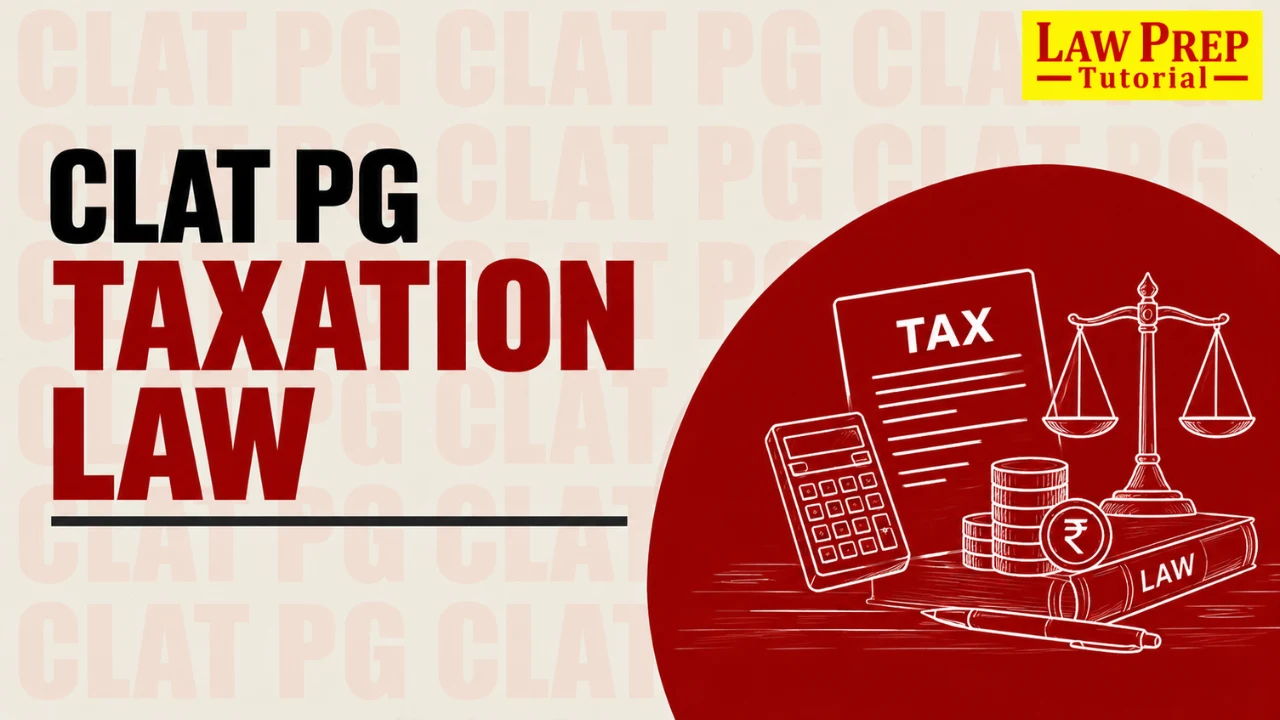
Tax Law carried limited weightage in CLAT PG 2026, and its questions were linked to a recent judgment. Candidates preparing for CLAT PG 2027 should combine subject revision with case-law reading and passage-based practice.
Table of Contents
Jump to sectionWhat is Taxation Law in CLAT PG?
Taxation Law in CLAT PG covers the legal principles governing the imposition and collection of taxes in India. It includes the constitutional authority of the Union and State Governments to levy taxes, the basic framework of income tax and GST, and the procedures for assessing and challenging tax liabilities.
Candidates must understand the legal issues discussed in these passages, identify the arguments presented, summarise the material and apply their knowledge of the relevant area of law to the questions.
Why Is Taxation Law Important for CLAT PG 2027?
Candidates need to understand the Taxation Law paper format to answer passage-based questions correctly.
- Limited question share: Candidates can plan their revision according to its expected weightage.
- Judgment-based questions: Taxation questions in CLAT PG 2026 were based on a recent judgment. Following relevant case law helps candidates understand how tax principles apply in legal disputes.
- Application of law: The examination requires candidates to connect legal principles with the issues presented in a passage.
Learn about the most important topics for the CLAT PG exam.
CLAT PG Taxation Law Syllabus 2027
The CLAT PG taxation law syllabus plays an important role in your preparation. Candidates should prepare each topic by understanding its legal basis, important concepts and application in judgments.
| Taxation Law Topic | Syllabus Coverage |
| Direct and Indirect Taxes | Difference between taxes imposed directly on income and taxes collected through transactions involving goods and services |
| Income Tax and GST Basics | Fundamental structure and functioning of income tax and GST in India |
| Constitutional Provisions on Taxation | Constitutional basis of the taxation powers exercised by Union and State Governments under Articles 265-289 |
| Tax Assessment and Appeals | Legal procedures for determining tax liability and challenging tax assessments |
1. Direct and Indirect Taxes
This topic introduces two broad categories of taxation. Candidates should understand how they differ in the way taxes are imposed and collected.
CLAT PG Taxation Law Preparation strategy:
- Learn what direct and indirect taxes mean.
- Understand the distinction between taxes imposed on income and taxes collected through transactions involving goods and services.
- Practise explaining the difference in a few sentences.
- When reading a tax judgment, identify the type of tax involved and the legal question being considered.
2. Income Tax and GST Basics
Income tax and Goods and Services Tax (GST) form part of the basic taxation framework covered in the CLAT PG syllabus. Candidates should understand their fundamental structure and how each operates.
CLAT PG Taxation Law Preparation strategy:
- Revise the basic framework of income tax.
- Study the purpose and functioning of GST.
- Keep separate notes for the two subjects to avoid mixing up their concepts.
- While studying a judgment, identify whether the dispute concerns income tax or GST and note the legal issue involved.
3. Constitutional Provisions on Taxation
The syllabus includes Articles 265-289, which cover constitutional provisions relevant to taxation. This area requires candidates to understand the constitutional basis of the taxation powers exercised by the Union and State Governments.
CLAT PG Taxation Law Preparation strategy:
- Revise the relevant constitutional provisions within Articles 265-289.
- Note the main principle associated with each provision studied.
- Identify how the constitutional authority to levy taxes relates to the issue discussed in a judgment.
- Practise reading legal passages that refer to constitutional provisions and identifying the question of law involved.
4. Tax Assessment and Appeals
Tax assessment and appeals cover the legal process of determining tax liabilities and challenging taxation decisions.
CLAT PG Taxation Law Preparation strategy:
- Understand what tax assessment involves.
- Study the basic purpose of the process used to contest a tax liability.
- Distinguish between ascertaining a tax liability and challenging that determination.
- When studying a judgment, identify the dispute, the issue being challenged and the legal reasoning relevant to the outcome.
Check our other blogs:
| CLAT PG Preparation 1 Month | CLAT PG Career Opportunities |
| CLAT PG Revision Strategy | CLAT PG Marks Vs Rank |
| CLAT PG Attempt Strategy | CLAT PG Exam Pattern |
CLAT PG Taxation Law Weightage
Candidates should prepare all syllabus areas, while paying extra attention to concepts and judgments that help them solve passage-based questions. The weightage is an estimate, not a fixed number of questions for CLAT PG 2027.
| Core Subject | Approximate Weightage | Difficulty Level |
| Tax Law | 3-5 marks | Moderate to Easy |
CLAT PG Taxation Law Preparation Strategy
An effective CLAT PG Taxation Law Preparation plan should cover the syllabus, legal developments and passage-based practice. Candidates can allocate study time according to their existing understanding and progress in other subjects.
Step 1: Divide the Syllabus into Manageable Sections
Start by separating the syllabus into direct and indirect taxes, income tax and GST basics, constitutional provisions, and assessment and appeals.
Prepare a checklist for each area. Mark a topic as complete only after you revise its basics and solve relevant questions.
Step 2: Build Conceptual Clarity
Learn the basic meaning and legal purpose of each topic before moving to detailed judgments.
For example, understand the distinction between direct and indirect taxes before attempting a passage involving a tax dispute. Similarly, revise the constitutional basis of taxation before reading a judgment that discusses the authority to impose a tax.
Step 3: Read Relevant Tax Judgments
Tax Law questions in CLAT PG 2026 were associated with recent judgments. Candidates preparing for the next examination should therefore include judgment reading in their revision schedule.
- For every judgment you study, record:
- The central legal issue.
- The relevant tax concept or constitutional provision.
- The main argument or legal question.
- The court’s reasoning.
Step 4: Practise Passage-Based Questions
After revising a topic, attempt questions based on a legal passage. Read the extract carefully before looking at the options.
Identify the issue first, then locate the legal principle and the reasoning that support the answer. If you make a mistake, check whether it resulted from misunderstanding the passage, missing a legal point or selecting an option that went beyond the extract.
Step 5: Revise Constitutional Provisions
Keep a separate revision sheet for the taxation-related constitutional provisions covered by Articles 265-289.
Record the main principle associated with each provision in your own words. Review the sheet regularly and practise recognising provisions when they appear in a legal passage.
Step 6: Track Accuracy and Negative Marking
Each incorrect answer deducts 0.25 marks. While practising, record both correct and incorrect responses.
Review mistakes to determine whether you need to revise the concept, read the passage more carefully or improve your option-selection process. Avoid treating the number of questions attempted as the only measure of progress.
Learn How to Analyse CLAT PG Mock Tests and improve your exam performance.
Note-Making Strategy for Tax Law in CLAT PG
CLAT PG Taxation Law Notes should help candidates revise the subject quickly and recall the legal principles needed for passage-based questions. Keep separate sections for concepts, constitutional provisions, procedures and judgments.
| Notes Section | What to Include | How to Revise |
| Direct and indirect taxes | Meaning and key differences | Review the distinction and test it through examples from your study material |
| Income tax and GST | Basic framework of each subject | Revise the two frameworks separately |
| Constitutional provisions | Relevant articles and their main principles | Use an article-wise revision sheet |
| Assessment and appeals | Purpose of assessment and process of challenging tax liabilities | Revise the sequence and purpose of the procedures studied |
| Tax judgments | Legal issue, relevant provision, reasoning and principle | Revisit the legal question and explain the court’s reasoning in your own words |
How to Make Useful Taxation Law Notes
- Use short explanations: Write the meaning of a concept in a few clear sentences.
- Keep constitutional notes organised: Record the article number alongside its main principle.
- Separate facts from legal principles: For judgments, distinguish the background of the dispute from the rule or reasoning relevant to the case.
- Record difficult concepts: Maintain a separate list of points that you repeatedly get wrong in practice questions.
- Revise through questions: After reading your notes, try to explain the concept without looking at the page.
Explore the CLAT PG Difficulty Level and know what to expect in the exam!
CLAT PG Taxation Law Books and Study Material
Candidates should choose study material that covers the relevant areas and helps them understand legal passages. Focus on concept revision, constitutional provisions, tax-related judgments, and practice questions.
| Study Material | Purpose During Preparation |
| Undergraduate Tax Law textbooks or class notes | Build a basic understanding of direct and indirect taxes, income tax, GST, assessment and appeals |
| Constitutional Law notes | Revise Articles 265-289 and their relevance to taxation |
| Tax-related court judgments | Understand legal disputes, judicial reasoning and the application of tax principles |
| CLAT PG previous-year question papers | Become familiar with passage-based questions and review mistakes |
| Personal revision notes | Retain key concepts, constitutional provisions and judgment summaries in a compact format |
Candidates can also refer to the following CLAT PG Taxation books for structured preparation:
- Taxmann’s Direct Taxes Ready Reckoner (DTRR) by Dr Vinod K. Singhania
- Law of Taxation by Dr S. R. Myneni
- Taxation Laws by B.K. Goyal
- Law of Taxation by (LL.M) Advocate V.Krishna Priya Lahari, B.A., LL.B
- Principles of Taxation Laws by Prof. Ullas Kumar Saha
CLAT PG Taxation Law Notes PDF
Candidates can organise their CLAT PG Taxation Law Notes into a compact revision PDF that includes the syllabus, constitutional provisions, key concepts, and summaries of relevant judgments.
Law Prep Tutorial offers free CLAT notes and PDFs for candidates seeking study material. Use your revision PDF alongside passage-based practice so that you can test whether you can apply the concepts you have studied.
Download PDF
Common Mistakes to Avoid During Taxation Law Preparation
Candidates can lose valuable preparation time by focusing on material that doesn’t match the syllabus or the exam format.
- Ignoring judgments: Conceptual knowledge may not be sufficient when questions require candidates to understand judicial reasoning.
- Memorising without understanding: Remembering definitions does not automatically help with questions that require applying a legal principle to a passage.
- Skipping passage practice: Test your ability to identify legal issues and apply the relevant principles.
- Avoiding incorrect answers: Revisit the reason for each error before solving similar questions again.
Explore CLAT PG Previous Year Papers here:
| CLAT PG Previous Year Question Papers | CLAT PG 2026 Question Paper |
| CLAT PG 2025 Question Paper |
FAQs on CLAT PG Taxation Law

SEO Head
Virendra heads SEO & Content at LPT. A writer at heart, he focuses on building exam-focused content that informs, guides, and supports aspirants in their preparation journey.
CLAT PG Trending Blogs
Other Related Blogs