Talk to a Counsellor
 Support
CLAT PG Torts: Syllabus, Topics, Books, Notes PDF
Law of Torts carries an approximate weightage of 5-8 marks in CLAT PG (out of 120 marks). Your preparation should cover negligence, nuisance, defamation, vicarious liability, strict and absolute liability, and remedies. You also need to understand how these concepts apply to legal situations and judicial decisions.
Last Updated on 03 Nov 2026

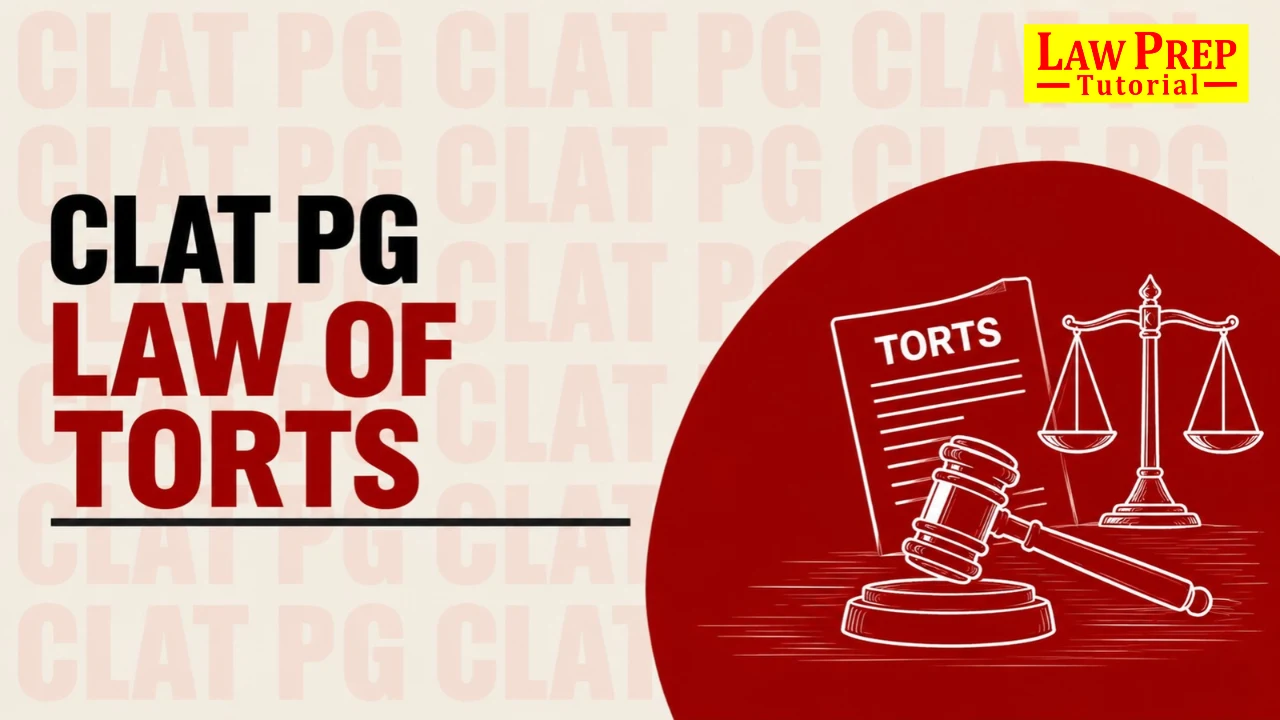
For CLAT PG 2027, focus on building clear subject notes, revising important legal principles and practising passage-based questions. This guide covers the Law of Torts syllabus, a 30-day preparation plan, recommended books, note-making strategies and CLAT PG Torts notes PDF.
Table of Contents
Jump to sectionWhat Is Torts in CLAT PG?
The Law of Torts deals with civil wrongs that cause harm to another person or affect their rights. It covers situations where a person’s actions, failure to act or conduct may create legal responsibility. In CLAT PG, you need to understand the principles behind different torts and their legal consequences.
Why Is Torts Important for CLAT PG 2027?
Here are three reasons to pay attention to CLAT PG Law of Torts :
- Defined syllabus areas: You can organise your CLAT PG preparation around major areas, including negligence, nuisance and different forms of liability.
- Understanding legal responsibility: Studying tort principles helps you identify who may be legally responsible when someone’s actions cause harm.
- Concept-based preparation: You need to understand the meaning and application of legal principles. Memorising definitions alone may not help you solve questions based on legal passages.
Law of Torts Syllabus for CLAT PG
Start your CLAT PG Torts preparation with the major concepts listed in the syllabus. Divide the subject into smaller topics and understand the legal principles covered under each one.
The following table gives you a topic-wise breakdown of the Law of Torts syllabus.
| Topics | What to Cover |
| Negligence | Meaning of negligence, failure to exercise reasonable care and legal consequences of causing harm. |
| Nuisance | Unlawful interference with another person’s use or enjoyment of property. |
| Defamation | Statements that cause unlawful damage to a person’s reputation. |
| Vicarious Liability | Legal responsibility for another person’s wrongful conduct, especially in employment relationships. |
| Strict and Absolute Liability | Liability arising from certain activities without proof of negligence. |
| Remedies | Compensation, injunctions and other legal relief available for tortious harm. |
Explore the complete CLAT PG syllabus and start your preparation!
How to Cover Torts for CLAT PG in 30 Days?
You can divide your CLAT PG Torts preparation into four weekly phases. This gives you time to understand concepts, prepare notes, practise questions and revise the complete subject.
| Days | Topics and Activities | Preparation Target |
| Days 1-7 | Negligence and Nuisance | Understand both concepts and prepare short notes on their important principles. |
| Days 8-14 | Defamation and Vicarious Liability | Cover the legal principles and identify the circumstances in which liability arises. |
| Days 15-21 | Strict Liability, Absolute Liability and Remedies | Understand the differences between liability concepts and revise available remedies. |
| Days 22-25 | Revision of All Topics | Read your notes and revisit concepts that need more attention. |
| Days 26-28 | Passage-Based Practice | Attempt Law of Torts CLAT questions and review your answers. |
| Days 29-30 | Final Revision | Revise key concepts, important judgments and mistakes from practice sessions. |
Daily Preparation Routine
You need to follow a fixed routine during these 30 days. Here is what you can do:
- Concept study: Use your first study session to understand one topic and its legal principles.
- Judgment revision: Record relevant judgments and revise their key legal principles.
- Note revision: Read your short notes after completing the topic.
- Question practice: Attempt questions related to the concepts you have studied.
- Mistake analysis: Identify whether an incorrect answer resulted from a concept gap or misunderstanding of the question.
Learn how to prepare for CLAT PG in 30 days with an effective study plan.
Best Books for CLAT PG Law of Torts Preparation
Select books that cover the basic principles and explain different forms of liability and remedies. Here are some recommended CLAT PG books for Torts preparation.
| Book Name | Author/Publisher |
| The Law of Torts | Dr. R.K. Bangia |
| Law of Torts | Ramachandran |
| The Law of Torts | Ratanlal & Dhirajlal |
| The Law for Torts (2026-27 Edition) | Jhabvala Law Series |
How to Use These Books
Use your primary book to understand the subject and refer to other books when you need additional clarity.
- Choose one primary book to study the major topics.
- Read the relevant chapter and note down the important legal principles.
- Use another reference book if you need a clearer explanation of a concept.
- Prepare short notes after completing each topic.
- Revise those notes and practise chapter-related questions.
Check our other blogs:
| CLAT PG Important Topics | CLAT PG Career Opportunities |
| CLAT PG Revision Strategy | CLAT PG Marks Vs Rank |
| CLAT PG Attempt Strategy | CLAT PG Difficulty Level |
Note-Making Strategy for Torts in CLAT PG
Your CLAT PG torts notes should help you revise the subject without re-reading entire chapters. Avoid writing lengthy explanations from your textbooks.
Use the following approach while preparing your notes.
1. Divide notes according to topics
Create separate sections for negligence, nuisance, defamation, vicarious liability, strict and absolute liability, and remedies. This will help you locate information quickly during revision.
2. Write legal principles in simple words
Explain each concept in two or three sentences. Keep the original legal meaning intact while making the explanation easier to understand.
3. Maintain a separate judgment list
Record relevant judgments under their respective topics. Include these details:
- Name of the judgment
- Main legal issue
- Important legal principle
- Related torts topic
4. Prepare comparison notes
Some concepts need to be studied together. Create separate comparison sheets for strict liability and absolute liability. Record their distinguishing features to avoid confusion during revision.
5. Keep a question practice record
You should keep a record of questions you answered incorrectly. Write down the concept behind each mistake and revise it before attempting similar questions.
6. Create a final revision sheet
Prepare a compact document with key concepts, legal principles, relevant judgments and short topic summaries. Use this sheet during your final revision.
Explore other related articles:
| CLAT PG Mock Analysis Strategy | CLAT PG Colleges |
| CLAT PG Exam Pattern | CLAT PG Cut Off |
CLAT PG Tort Notes PDF
Create a concise CLAT PG Tort Notes PDF to keep important topics and key concepts organised for quick revision. Law Prep Tutorial offers free CLAT notes and PDFs for candidates looking for best study material. You can use these resources alongside your textbook preparation and personal revision notes.
Common Mistakes to Avoid During Torts Preparation
You can avoid the following mistakes when preparing for the CLAT PG Torts subject:
- Reading without preparing notes: You should not rely entirely on textbooks. Write down important legal principles after completing each topic.
- Ignoring smaller syllabus areas: Do not leave nuisance, defamation or remedies untouched. Cover all major areas.
- Confusing liability concepts: Study strict and absolute liability separately. Prepare comparison notes to remember their differences.
- Memorising judgments without understanding them: Record the legal principle associated with each judgment. Knowing only the case name will not help you understand its relevance.
- Using too many books: Avoid switching between multiple books for the same concept. Select one primary reference and use others when you need clarification.
Explore CLAT PG Previous Year Papers here:
| CLAT PG Previous Year Question Papers | CLAT PG 2026 Question Paper |
| CLAT PG 2025 Question Paper |
FAQs on CLAT PG Torts

SEO Head
Virendra heads SEO & Content at LPT. A writer at heart, he focuses on building exam-focused content that informs, guides, and supports aspirants in their preparation journey.
CLAT PG Trending Blogs
Other Related Blogs