Talk to a Counsellor
 Support
Fundamental Rights Taken/Borrowed From Which Country?
Learn from which country India borrowed Fundamental Rights, how they were adapted from the USA, key constitutional provisions, and landmark cases.
Last Updated on 05 Jul 2026

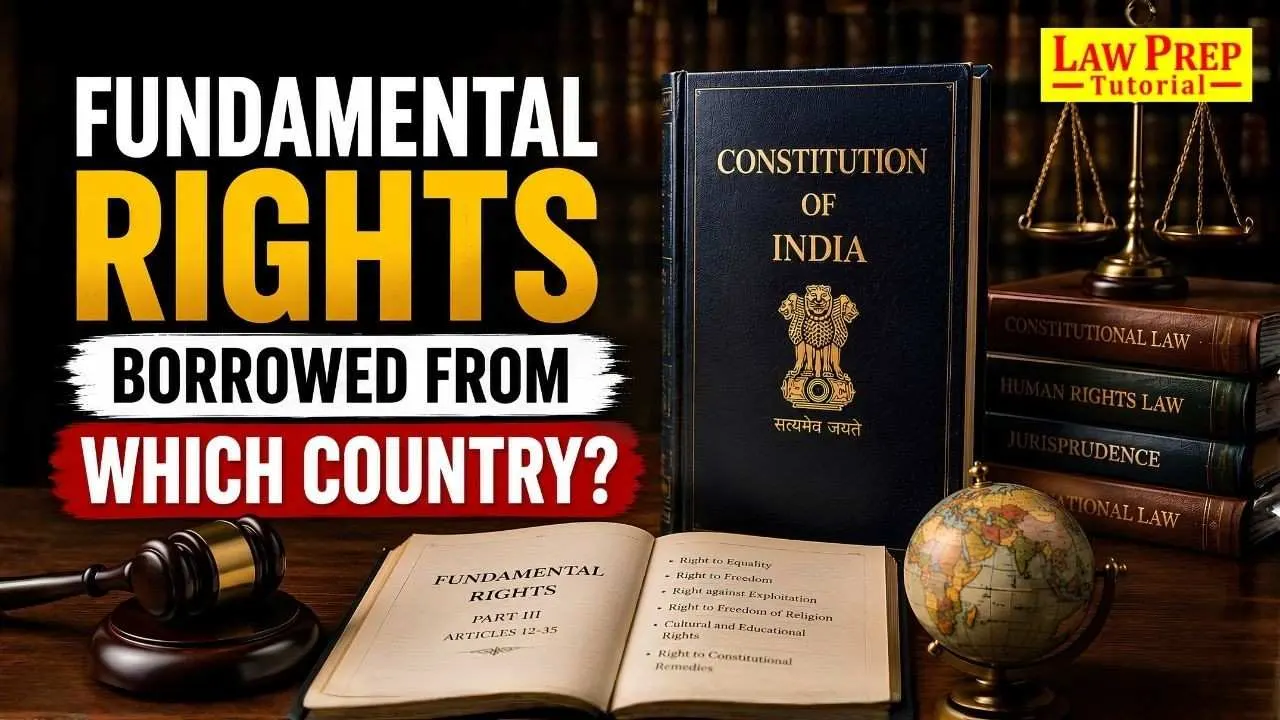
Fundamental Rights are taken from the United States Constitution. Fundamental Rights are placed in Part III of the Constitution, from Article 12 to Article 35. These rights protect citizens from unfair actions of the State and give them basic freedoms like equality, liberty, religion, education, and constitutional remedies.
Fundamental rights in Indian Constitution are borrowed from the US Constitution because the framers wanted India to have a strong rights-based democracy where citizens could approach courts if their rights were violated.
Table of Contents
Jump to section- CLAT PG: All About CLAT Postgraduate Exam for LLM
What Are Fundamental Rights?
Fundamental Rights are the basic rights given by the Indian Constitution to protect individual freedom, equality, and dignity. These rights are called fundamental because they are essential for the overall development of a person and the proper working of democracy. They protect people from unfair actions of the State and allow them to live with freedom and respect.
Some Fundamental Rights are available only to citizens, while some are available to all persons, including foreigners. These rights are enforceable by courts, which means you can approach the Supreme Court or High Courts if your rights are violated.
Explore the Sources of Indian Constitution in detail!
List of Fundamental Rights in Indian Constitution
| Fundamental Right | Articles Covered | What It Protects |
| Right to Equality | Articles 14 to 18 | Equality before law, no discrimination, equal opportunity, abolition of untouchability and titles |
| Right to Freedom | Articles 19 to 22 | Freedom of speech, movement, profession, life, liberty, education, and protection from arrest |
| Right Against Exploitation | Articles 23 to 24 | Protection from human trafficking, forced labour, and child labour |
| Right to Freedom of Religion | Articles 25 to 28 | Freedom to follow, practice, and manage religious affairs |
| Cultural and Educational Rights | Articles 29 to 30 | Protection of language, culture, script, and minority educational institutions |
| Right to Constitutional Remedies | Article 32 | Right to approach the Supreme Court for enforcement of Fundamental Rights |
Note: Earlier, the Right to Property was also a Fundamental Right under Article 31. It was removed by the 44th Constitutional Amendment Act, 1978. Now, it is a legal right under Article 300A.
Related articles to read:
| Articles of Indian Constitution | Article 14 of Indian Constitution |
| Article 343 of Indian Constitution | Article 15 of Indian Constitution |
Fundamental Rights Borrowed From USA: How India Adapted Them?
Fundamental Rights are borrowed from the United States Constitution, but India did not copy them word-for-word. The framers studied the US Bill of Rights and then changed the idea according to India’s social, political, and legal needs. In the USA, rights have a strong individual liberty focus. In India, Fundamental Rights were designed to protect liberty while also supporting equality, social justice, public order, and national unity.
For example, Article 19 gives important freedoms like speech, movement, and profession, but these freedoms are subject to reasonable restrictions. This means the State can limit them in the interest of sovereignty, security, public order, morality, and other constitutional grounds.
India also gave citizens a direct remedy under Article 32, allowing them to approach the Supreme Court if their Fundamental Rights are violated. So, the idea came from the USA, but its Indian form was shaped by India’s needs.
Check out other important Indian Constitution topics here:
Important Supreme Court Cases on Fundamental Rights
| Case | Related Article / Right | Importance |
| A.K. Gopalan v. State of Madras | Article 21 | Gave an early narrow interpretation of personal liberty and procedure established by law. |
| Golaknath v. State of Punjab | Fundamental Rights | Held that Parliament could not amend Fundamental Rights, later changed by constitutional developments. |
| Kesavananda Bharati v. State of Kerala | Basic Structure and Fundamental Rights | Established the Basic Structure Doctrine and limited Parliament’s power to amend the Constitution. |
| Maneka Gandhi v. Union of India | Article 21 | Expanded the meaning of life and personal liberty and made Article 21 much wider. |
| Minerva Mills v. Union of India | Fundamental Rights and DPSP | Highlighted the balance between Fundamental Rights and Directive Principles of State Policy. |
| Indra Sawhney v. Union of India | Articles 14 and 16 | Upheld reservation for backward classes and discussed limits on reservations in public employment. |
| Vishaka v. State of Rajasthan | Articles 14, 19 and 21 | Laid down guidelines against sexual harassment at the workplace. |
| Puttaswamy v. Union of India | Article 21 | Recognized the Right to Privacy as part of the Right to Life and Personal Liberty. |
| Shreya Singhal v. Union of India | Article 19 | Protected freedom of speech online and struck down Section 66A of the IT Act. |
Fundamental Rights PDF Download
This PDF will help you revise the source of Fundamental Rights, important articles, rights available to citizens and foreigners, landmark cases, and quick exam facts.
Check out more Law-Related Topics here:
FAQs on Fundamental Rights Borrowed From Which Country

SEO Head
Virendra heads SEO & Content at LPT. A writer at heart, he focuses on building exam-focused content that informs, guides, and supports aspirants in their preparation journey.
Constitution of India Trending Blogs
Other Related Blogs