Talk to a Counsellor
 Support
Drafting Committee of Indian Constitution: Members, Chairman, Roles
Learn about the Drafting Committee of the Indian Constitution, its chairman, members, roles, responsibilities, and contributions to framing the Constitution.
Last Updated on 04 Jul 2026

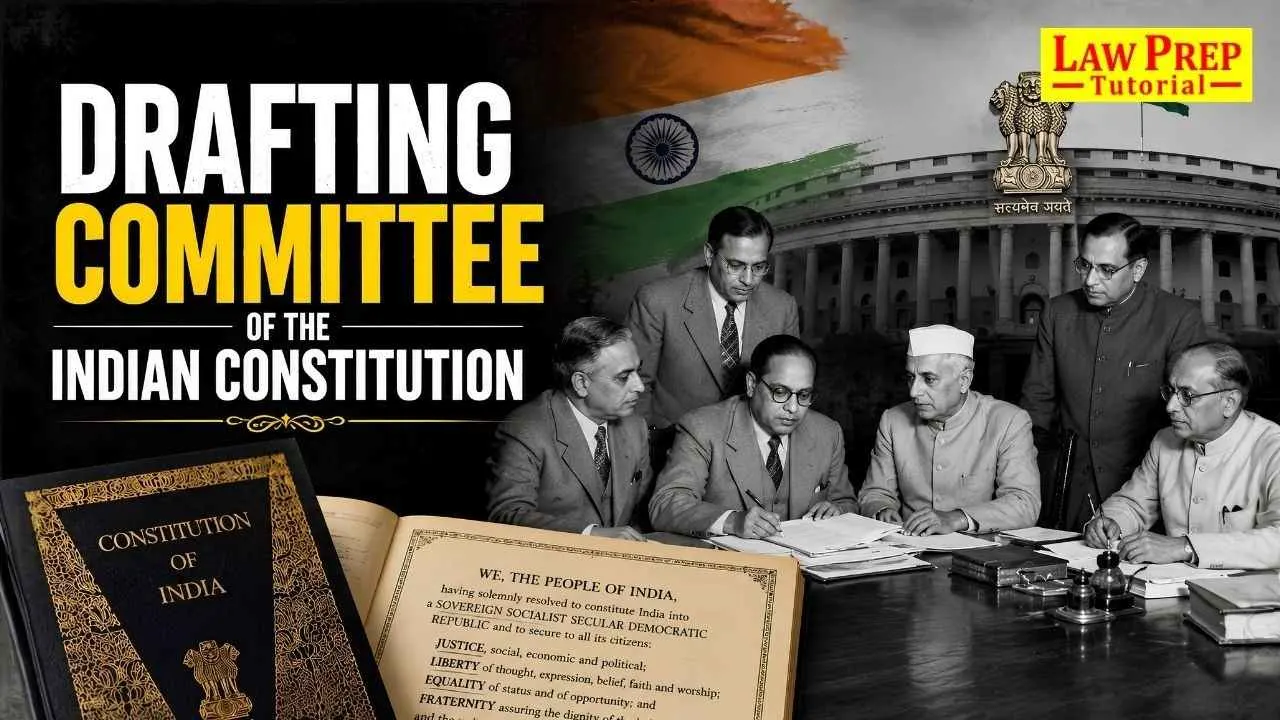
The Drafting Committee of Constitution of India was one of the most important committees of the Constituent Assembly. It was formed on 29 August 1947 to prepare the draft of the Indian Constitution. The committee had 7 original members, and Dr. B.R. Ambedkar was its chairman.
The main role of the drafting committee of Indian constitution was to turn the ideas, reports, debates, and decisions of the Constituent Assembly into proper legal language. It arranged the Constitution into Articles, Parts, and Schedules so that India could have a clear system of rights, government, courts, elections, and law-making after independence.
Table of Contents
Jump to sectionMembers of Drafting Committee
The Drafting Committee of Indian Constitution had 7 members. Dr. B.R. Ambedkar served as the chairman. Two members were later replaced because B.L. Mitter resigned due to ill health and D.P. Khaitan passed away during the process.
| Member | Role / Importance | Status |
| Dr. B.R. Ambedkar | Chairman of the Drafting Committee; played the leading role in presenting and explaining the draft Constitution | Continued |
| N. Gopalaswami Ayyangar | Experienced administrator and statesman; contributed to Union, States, and governance-related provisions | Continued |
| Alladi Krishnaswami Ayyar | Eminent lawyer and constitutional expert; contributed to legal and constitutional clarity | Continued |
| K.M. Munshi | Lawyer, writer, and freedom fighter; contributed to rights, culture, and governance-related discussions | Continued |
| Mohammad Saadullah | Former Premier of Assam; brought administrative and political experience to the committee | Continued |
| B.L. Mitter | Legal expert and original member of the committee | Resigned due to ill health; replaced by N. Madhava Rao |
| D.P. Khaitan | Senior lawyer and constitutional expert | Passed away; replaced by T.T. Krishnamachari |
| N. Madhava Rao | Replaced B.L. Mitter in the committee | Later member |
| T.T. Krishnamachari | Replaced D.P. Khaitan and contributed during later stages of drafting | Later member |
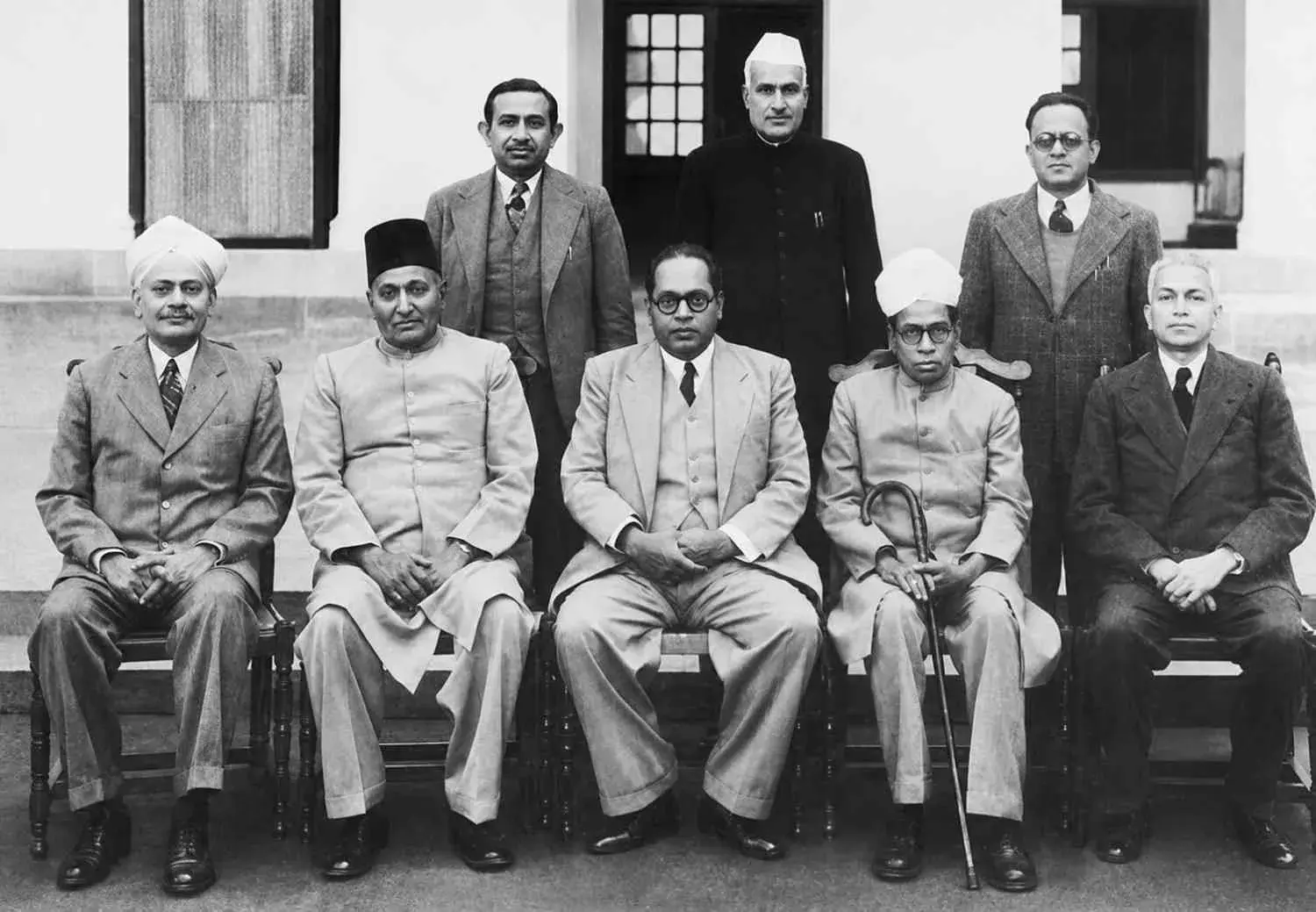
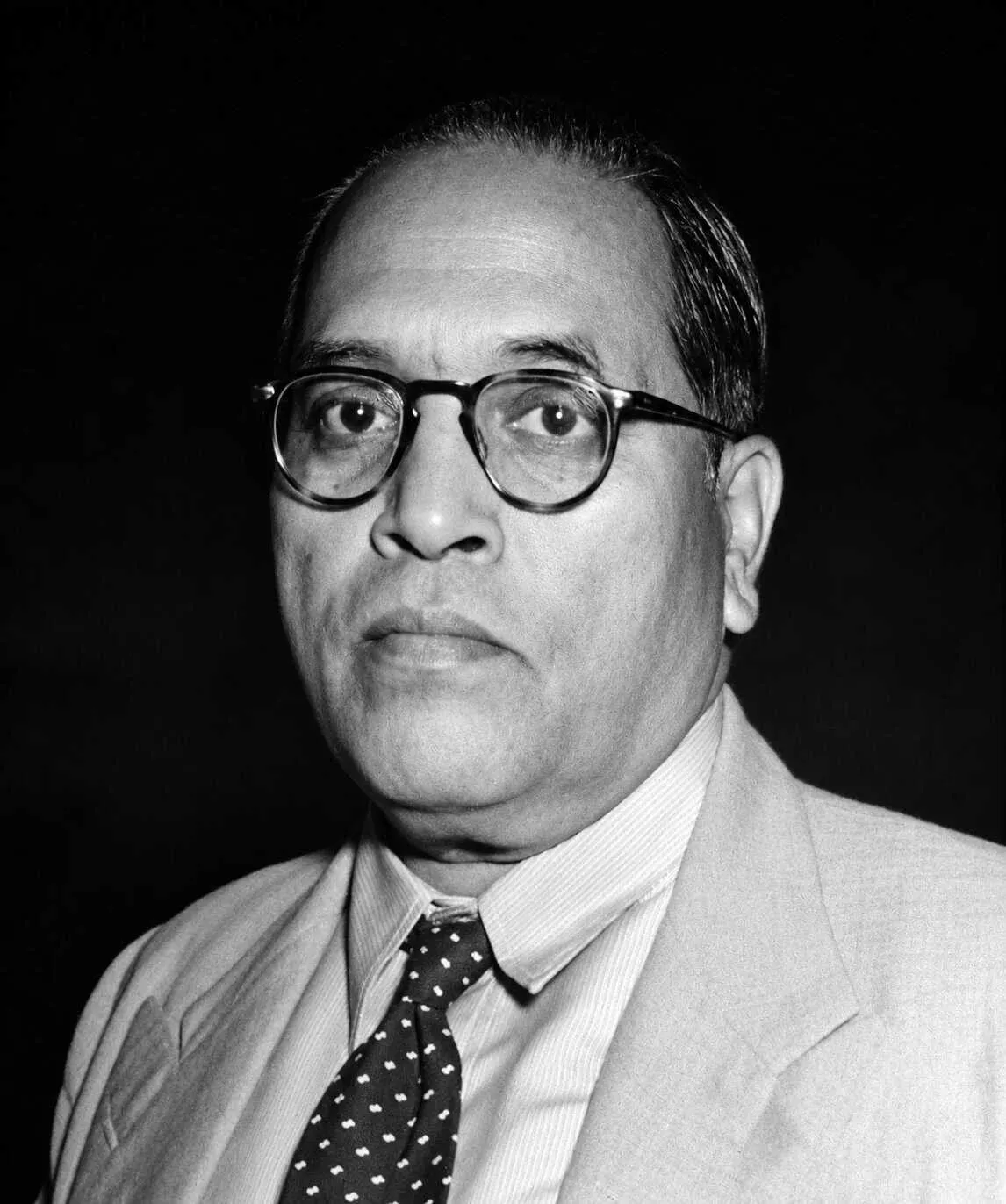
Chairman of Drafting Committee: Dr. BR Ambedkar
Dr. B.R. Ambedkar was the Chairman of the Drafting Committee and is widely known as the Father of the Indian Constitution. His role was not limited to writing legal provisions. He studied the reports of different committees, explained the draft Constitution in the Constituent Assembly, responded to objections, and defended many important provisions during debates. His deep knowledge of law, economics, politics, and social justice helped shape the Constitution in a balanced way.
Ambedkar gave strong focus to equality, liberty, constitutional morality, social justice, and protection of individual rights. Under his leadership, the Drafting Committee prepared a Constitution that could guide a large and diverse country like India.
He also made sure that the Constitution of India created strong institutions, protected Fundamental Rights, and gave space for democratic governance. His contribution remains central to India’s constitutional journey.
Why Was the Drafting Committee of Indian Constitution Formed?
- To Prepare the Final Draft: The Constituent Assembly had many reports, ideas, and debates. The Drafting Committee was formed to convert them into one complete constitutional draft.
- To Give Legal Shape: The committee converted broad ideas on rights, government, courts, elections, and federalism into clear legal Articles that could be applied.
- To Organise the Constitution: It arranged the Constitution into proper Parts, Articles, Schedules, and sections so that the document became structured and easy to follow.
- To Review Suggestions: Many members of the Constituent Assembly gave suggestions and proposed changes. The Drafting Committee studied them and revised the draft where needed.
- To Create a Working Constitution: India needed a Constitution that could run a new democracy. The committee helped create practical rules for governance after independence.
- To Maintain Legal Clarity: The committee made sure that constitutional provisions were written in clear legal language for courts, governments, lawmakers, and citizens.
Related Articles to Read:
| Articles of Indian Constitution | Article 343 of Indian Constitution |
| Article 14 of Indian Constitution | Article 15 of Indian Constitution |
Role of Drafting Committee Members in Making the Constitution
1. Prepared the Draft Constitution
The Drafting Committee prepared the draft Constitution by studying reports, proposals, debates, and decisions of the Constituent Assembly.
2. Converted Ideas Into Legal Provisions
The committee turned broad ideas on rights, governance, courts, elections, federalism, and public administration into clear constitutional Articles.
3. Organised the Constitution
It arranged the Constitution into proper Parts, Articles, Schedules, and sections so that the document became structured and usable.
4. Reviewed Amendments and Suggestions
Members of the Constituent Assembly proposed many changes during debates. The Drafting Committee reviewed them and made suitable changes in the draft.
5. Refined Legal Language
The committee made the language clear, precise, and legally workable so courts, governments, lawmakers, and citizens could understand it.
6. Balanced Different Viewpoints
The Constitution had to reflect different regions, communities, rights, duties, and governance needs. The committee helped create a balanced constitutional document.
7. Presented the Draft for Debate
The Draft Constitution was introduced in the Constituent Assembly on 4 November 1948. It was then discussed, debated, amended, and finally adopted on 26 November 1949.
Check out other important Indian Constitution topics here:
How the First Draft of Indian Constitution Was Prepared?
The Draft Constitution went through reports, discussions, legal drafting, debates, changes, and final approval by the Constituent Assembly.
- Constituent Assembly was formed: The Constituent Assembly was formed to frame the Constitution of independent India and held its first meeting on 9 December 1946.
- Different committees were created: Several committees were formed to study areas like Fundamental Rights, Union powers, provincial structure, minorities, and rules of procedure.
- Committee reports were submitted: These committees submitted their reports to the Constituent Assembly. Their recommendations became the base for many constitutional provisions.
- Drafting Committee was formed: The Drafting Committee was formed on 29 August 1947 to prepare the legal draft of the Constitution.
- Draft Constitution was prepared: The Drafting Committee studied reports, debates, and proposals, then converted them into proper Articles, Parts, and Schedules.
- Draft was introduced in the Assembly: The Draft Constitution was introduced in the Constituent Assembly on 4 November 1948 for discussion and debate.
- Members suggested amendments: Members of the Constituent Assembly discussed every major provision and suggested changes through formal amendments.
- Draft was revised and finalised: After long debates and revisions, the final Constitution was adopted on 26 November 1949.
- Constitution came into force: The Constitution of India came into force on 26 January 1950, which we now celebrate as Republic Day.
Other Important Committees of Constituent Assembly
| Committee | Chairman | Main Role |
| Drafting Committee | Dr. B.R. Ambedkar | Prepared the draft text of the Constitution |
| Union Powers Committee | Jawaharlal Nehru | Suggested powers of the Union government |
| Union Constitution Committee | Jawaharlal Nehru | Worked on the structure of the Union Constitution |
| Provincial Constitution Committee | Sardar Vallabhbhai Patel | Worked on provisions related to provinces and states |
| Advisory Committee on Fundamental Rights, Minorities, Tribal and Excluded Areas | Sardar Vallabhbhai Patel | Worked on rights, minorities, tribal areas, and excluded areas |
| Fundamental Rights Sub-Committee | J.B. Kripalani | Suggested provisions related to Fundamental Rights |
| Minorities Sub-Committee | H.C. Mookherjee | Studied minority rights and safeguards |
| Rules of Procedure Committee | Dr. Rajendra Prasad | Framed rules for the working of the Constituent Assembly |
| Steering Committee | Dr. Rajendra Prasad | Helped manage and guide Assembly proceedings |
| Finance and Staff Committee | Dr. Rajendra Prasad | Managed finance and staff-related matters of the Assembly |
| Credentials Committee | Alladi Krishnaswami Ayyar | Verified credentials of members |
| House Committee | B. Pattabhi Sitaramayya | Managed accommodation and facilities for members |
| Order of Business Committee | K.M. Munshi | Helped decide the order of business in the Assembly |
Explore more related articles:
FAQs on Drafting Committee of Indian Constitution

SEO Head
Virendra heads SEO & Content at LPT. A writer at heart, he focuses on building exam-focused content that informs, guides, and supports aspirants in their preparation journey.
Constitution of India Trending Blogs
Other Related Blogs