
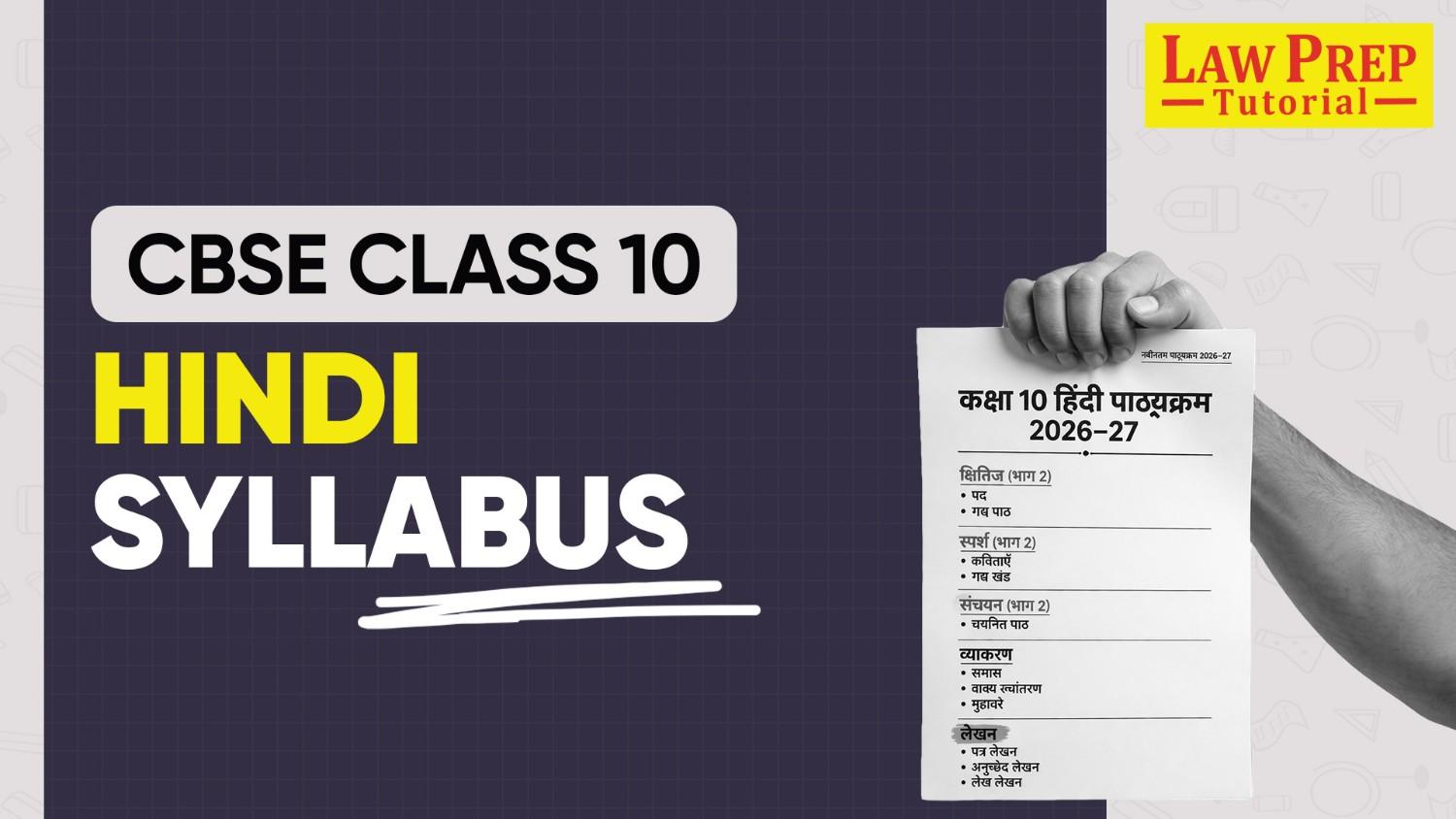

The CBSE Class 10th Hindi syllabus is not just about studying chapters for exams. It helps you express your ideas clearly and write answers in a structured way. When you use the right words and format, you can explain concepts better and improve your overall score in the board exam.
CBSE offers two courses based on your language background. If Hindi is your mother tongue (मातृभाषा), you study Hindi Course-A with books like Kshitij and Kritika, where you read detailed prose and poems and explain themes and characters. If Hindi is your second language (द्वितीय भाषा), you follow Hindi Course-B (Subject Code: 085) with books like Sparsh and Sanchayan, which focus more on basic grammar, comprehension, and simple writing tasks.
The syllabus includes reading comprehension, writing formats like letter and paragraph writing, grammar topics, and literature. For example, you may answer questions from a poem, write a formal letter, or solve unseen passages. This guide explains the complete CBSE Class 10th Hindi syllabus so you can plan your preparation and study with clarity.

CBSE Class 10th Hindi Syllabus Overview
The CBSE Class 10th Hindi syllabus gives you a clear direction for your board exam preparation. The syllabus explains how the question paper is structured and how marks are distributed across different sections, so you can plan your study time more effectively.
The course is divided into four main sections. In अपठित बोध, you read unseen passages and answer questions that test your understanding, analysis, and interpretation. In व्यावहारिक व्याकरण, you apply grammar concepts such as पदबंध, वाक्य रूपांतरण, समास, मुहावरे, वाक्य भेद, वाच्य, पद परिचय, and अलंकार depending on the course you choose.
The पाठ्यपुस्तक एवं पूरक पाठ्यपुस्तक section focuses on chapters and poems from prescribed books such as स्पर्श, क्षितिज, संचयन, and कृतिका. This section checks how well you understand themes, characters, and ideas, and how clearly you can express your answers.
In रचनात्मक लेखन, you write structured responses such as paragraphs, letters, notices, advertisements, emails, or short stories. These tasks help you organise your thoughts and present ideas clearly in different formats.
The theory paper carries 80 marks and includes objective, short-answer, and descriptive questions over 3 hours. Internal assessment carries 20 marks and includes periodic tests, portfolio work, and listening and speaking activities.
The overall structure remains similar in both Hindi Course A and Course B, but the weightage of literature and writing sections may vary slightly. This balanced pattern helps you build reading skills, grammar accuracy, and writing ability step by step.
Below are the major highlights that define the assessment pattern for CBSE Class 10th Hindi.
CBSE Class 10th हिंदी पाठ्यक्रम – अ (Subject Code 002)
| खंड | विषय-वस्तु | भारांक |
| क | अपठित बोध | 14 |
| ख | व्यावहारिक व्याकरण | 16 |
| ग | पाठ्यपुस्तक एवं पूरक पाठ्यपुस्तक | 30 |
| घ | रचनात्मक लेखन | 20 |
| — | वार्षिक बोर्ड परीक्षा | 80 |
| — | आंतरिक मूल्यांकन | 20 |
| कुल | कुल भारांक | 100 |
Must Checkout CBSE 10th Result 2026
CBSE Class 10th हिंदी पाठ्यक्रम – (ब) Subject Code 085
| खंड | विषय-वस्तु | भारांक |
| क | अपठित बोध | 14 |
| ख | व्यावहारिक व्याकरण | 16 |
| ग | पाठ्यपुस्तक एवं पूरक पाठ्यपुस्तक | 28 |
| घ | रचनात्मक लेखन | 22 |
| — | वार्षिक बोर्ड परीक्षा | 80 |
| — | आंतरिक मूल्यांकन | 20 |
| कुल | कुल भारांक | 100 |
Also checkout CBSE Full Form here!
Download Class 10th CBSE Hindi Syllabus 2026-27 PDF
The CBSE Class 10th Hindi Syllabus PDF gives you a clear idea of what to study and what to skip. Instead of guessing topics, you can follow the exact structure set by CBSE and prepare with confidence.
CBSE Hindi Class 10th PDF includes section-wise details, marking scheme, prescribed books, and internal assessment components in one place. Such a structure helps you plan your preparation in a focused and organised way.
Detailed CBSE Board Class 10th Hindi Syllabus
The CBSE Board Class 10th Hindi syllabus combines Hindi Course A and Course B to help you build strong reading, grammar, literature, and writing skills. The syllabus follows a structured exam pattern where you solve unseen passages, attempt grammar-based questions, and answer textbook questions from prescribed books. You also complete writing tasks such as paragraphs, letters, notices, or emails.
Marks are distributed across all sections, with literature and writing carrying significant weightage. The theory paper is conducted for 3 hours and carries 80 marks, while the internal assessment contributes 20 marks. This overall structure helps you improve both understanding and expression in a balanced way.
Below are the major highlights that define the CBSE Board Class 10th Hindi syllabus assessment.
CBSE Class 10th हिंदी पाठ्यक्रम – अ (Subject Code 002)
Hindi Course A of Class 10th CBSE helps you build real language skills you can use in exams and daily communication.
The paper follows a fixed format. You will see reading passages, grammar-based questions, textbook questions, and writing tasks in every exam for 3 hours. For example, you may answer MCQs from a passage, write short answers in 25-30 words, and complete a 100-word letter.
Marks are divided across sections like reading, grammar, literature, and writing.
Literature carries strong weightage, so you need to understand chapters, themes, and characters clearly. Writing tasks such as paragraph writing, letters, and emails test how well you organise your thoughts. When you practise each section regularly, you improve both accuracy and speed.
Below is the section-wise structure and weightage for the Central Board of Secondary Education (CBSE) Class 10th Hindi Course A paper, so you can plan your preparation step by step.
खंड-क अपठित बोध – 14 Marks
| खंड | विवरण | अंक |
| अपठित गद्यांश | आपको लगभग 250 शब्दों का एक गद्यांश दिया जाएगा। इसके आधार पर 3 बहुविकल्पीय प्रश्न और 2-3 लघु या अतिलघु प्रश्न पूछे जाएँगे। ये प्रश्न आपके समझ, विश्लेषण और मुख्य विचार पहचानने की क्षमता को परखते हैं। | 7 |
| अपठित काव्यांश | आपको लगभग 120 शब्दों का एक काव्यांश दिया जाएगा। इसके आधार पर 3 बहुविकल्पीय प्रश्न और 2-3 लघु या अतिलघु प्रश्न पूछे जाएँगे। यहाँ आपको कविता का भाव, संदेश और अर्थ समझकर उत्तर देना होता है। | 7 |
खंड- ख (व्यावहारिक व्याकरण) – 16 Marks
| खंड | विवरण | अंक |
| प्रश्न प्रारूप | 20 प्रश्न, 16 करने होंगे | 16 |
| वाक्य भेद | रचना के आधार पर वाक्य पहचान | 4 |
| वाच्य | कर्तृवाच्य और कर्मवाच्य | 4 |
| पद परिचय | शब्दों की पहचान | 4 |
| अलंकार | उपमा, रूपक, उत्प्रेक्षा, अतिशयोक्ति, मानवीकरण | 4 |
खंड-ग (पाठ्यपुस्तक एवं पूरक पाठ्यपुस्तक) – 30 Marks
| खंड | विवरण | प्रश्न | अंक |
| अ गद्य खंड पाठ्यपुस्तक (क्षितिज भाग-2) | मक्षितिज (भाग 2) से निर्धारित पाठों में से गद्यांश के आधार पर विषयवस्तु का ज्ञान, बोध, अभिव्यक्ति आदि पर एक अंकीय पाँच बहुविकल्पी प्रश्न पूछे जाएँगे। | 1 | 5 |
| मक्षितिज (भाग 2) से निर्धारित पाठों में से विषयवस्तु का ज्ञान, बोध, अभिव्यक्ति आदि पर तीन प्रश्न पूछे जाएँगे। | 2 | 6 | |
| ब काव्य खंड (पाठ्यपुस्तक) (क्षितिज भाग-2) | मक्षितिज (भाग 2) से निर्धारित कविताओं में से काव्यांश के आधार पर एक अंकीय पाँच बहुविकल्पी प्रश्न पूछे जाएँगे। | 1 | 5 |
| मक्षितिज (भाग 2) से निर्धारित कविताओं के आधार पर विद्यार्थियों का काव्यबोध परखने हेतु तीन प्रश्न पूछे जाएँगे। (विकल्प सहित – 25–30 शब्द-सीमा वाले 4 में से 3 प्रश्न करने होंगे | 2 | 6 | |
| स पूरक पाठ्यपुस्तक (कृतिका भाग-2) | कृतिका (भाग 2) से निर्धारित पाठों पर आधारित दो प्रश्न पूछे जाएँगे। (4×2) (विकल्प सहित – 50–60 शब्द-सीमा वाले 3 में से 2 प्रश्न करने होंगे | — | 8 |
खंड-घ (रचनात्मक लेखन) – 20 Marks
| भाग | विवरण | अंक |
| i | विभिन्न विषयों और संदर्भों पर विद्यार्थियों के तर्क संगत विचार प्रकट करने की क्षमता को परखने के लिए संकेत-बिंदुओं पर आधारित समसामयिक एवं व्यावहारिक जीवन से जुड़े हुए तीन विषयों में से किसी एक विषय पर लगभग 120 शब्दों में अनुच्छेद लेखन (6 x 1 = 6) | 6 |
| ii | अभिव्यक्ति की क्षमता पर केंद्रित औपचारिक अथवा अनौपचारिक विषयों में से किसी एक विषय पर लगभग 100 शब्दों में पत्र | 5 |
| iii | रोजगार से संबंधित रिक्तियों के लिए लगभग 80 शब्दों में स्ववृत्त लेखन अथवाविविध विषयों पर आधारित लगभग 80 शब्दों में ई-मेल लेखन | 5 |
| iv | विषय से संबंधित लगभग 40 शब्दों के अंतर्गत विज्ञापन लेखन अथवासंदेश लेखन लगभग 40 शब्दों में (शुभकामना, पर्व-त्योहारों एवं विशेष अवसरों पर दिए जाने वाले संदेश) | 4 |
आंतरिक मूल्यांकन अंक – 20 Marks
| खंड | विवरण | अंक |
| अ | सामयिक आकलन | 5 |
| ब | बहुविध आकलन | 5 |
| स | पोर्टफोलियो | 5 |
| द | श्रवण एवं वाचन | 5 |
CBSE Class 10th हिंदी पाठ्यक्रम – (ब) Subject Code 085
Hindi Course B in Class 10th CBSE builds your everyday language skills. You learn how to read clearly, use grammar correctly, and express ideas with confidence.
The exam paper follows a set pattern. You solve unseen passages, answer grammar questions, and write answers from your textbooks. You also complete writing tasks such as letters, notices, or paragraphs. For example, you may answer MCQs from a passage and write short answers in 25-30 words.
Each section tests a different skill. Reading checks your understanding. Grammar tests your accuracy. Literature checks how well you explain ideas from chapters and poems. Writing shows how clearly you organise your thoughts.
The table below explains the structure and weightage of Section B in the Central Board of Secondary Education (CBSE) Class 10th Hindi Course B paper, so you can focus on the exact topics you need to practise.
खंड – क (अपठित बोध) – 14 Marks
| खंड | विवरण | अंक |
| अपठित गद्यांश | आपको लगभग 200 शब्दों के दो अपठित गद्यांश दिए जाएँगे। प्रत्येक गद्यांश पर आधारित 3 बहुविकल्पीय प्रश्न और 2 लघु या अतिलघु प्रश्न पूछे जाएँगे। प्रश्न आपके बोध, चिंतन और विश्लेषण की क्षमता को परखते हैं। | 7 |
| अपठित गद्यांश (द्वितीय) | दूसरे गद्यांश पर भी समान प्रकार के प्रश्न पूछे जाएँगे, जिनमें मुख्य विचार और जानकारी की पहचान करनी होगी। | 7 |
खंड – ख (व्यावहारिक व्याकरण) – 16 Marks
| खंड | विवरण | अंक |
| प्रश्न प्रारूप | कुल 20 प्रश्न दिए जाएँगे, जिनमें से 16 प्रश्न हल करने होंगे। सभी प्रश्न 1 अंक के होंगे। | 16 |
| पदबंध | वाक्य में पदों की पहचान और प्रयोग | 4 |
| वाक्य रूपांतरण | रचना के आधार पर वाक्य परिवर्तन | 4 |
| समास | समास के प्रकार और प्रयोग | 4 |
| मुहावरे | मुहावरों का सही अर्थ और प्रयोग | 4 |
खंड – ग (पाठ्यपुस्तक एवं पूरक पाठ्यपुस्तक) – 28 Marks
| खंड | विवरण | प्रश्न | अंक |
| गद्य खंड (स्पर्श भाग-2) | निर्धारित पाठों से गद्यांश दिया जाएगा, जिसके आधार पर 5 बहुविकल्पीय प्रश्न पूछे जाएँगे। | 1 | 5 |
| गद्य पाठों से 25–30 शब्दों में 3 प्रश्न (4 में से 3) पूछे जाएँगे। | 3 | 6 | |
| काव्य खंड (स्पर्श भाग-2) | कविता के आधार पर 5 बहुविकल्पीय प्रश्न पूछे जाएँगे। | 1 | 5 |
| कविता से संबंधित 25–30 शब्दों में 3 प्रश्न (4 में से 3) पूछे जाएँगे। | 3 | 6 | |
| पूरक पाठ्यपुस्तक (संचयन भाग-2) | निर्धारित पाठों से 50–60 शब्दों में 2 प्रश्न (3 में से 2) पूछे जाएँगे। | — | 6 |
खंड – घ (रचनात्मक लेखन) – 22 Marks
| भाग | विवरण | अंक |
| i | विभिन्न विषयों और संदर्भों पर विद्यार्थियों की तार्किक सोच और अभिव्यक्ति को परखने के लिए संकेत-बिंदुओं के आधार पर समसामयिक और व्यावहारिक जीवन से जुड़े तीन विषयों में से किसी एक विषय पर लगभग 120 शब्दों में अनुच्छेद लेखन | 5 |
| ii | अभिव्यक्ति कौशल को परखने के लिए औपचारिक विषयों में से किसी एक पर लगभग 100 शब्दों में पत्र लेखन (विकल्प सहित) | 5 |
| iii | व्यावहारिक जीवन से जुड़े विषयों पर आधारित लगभग 60 शब्दों में सूचना लेखन (विकल्प सहित) | 4 |
| iv | दिए गए विषय के आधार पर लगभग 40 शब्दों में विज्ञापन लेखन (विकल्प सहित) | 3 |
| v | विभिन्न विषयों पर लगभग 80 शब्दों में ई-मेल लेखन (5 अंक) या दिए गए विषय/शीर्षक के आधार पर लगभग 100 शब्दों में लघुकथा लेखन | 5 |
आंतरिक मूल्यांकन – 20 Marks
| खंड | विवरण | अंक |
| अ | सामयिक आकलन | 5 |
| ब | बहुविध आकलन | 5 |
| स | पोर्टफोलियो | 5 |
| द | श्रवण एवं वाचन | 5 |

Preparing for IPMAT? Learn from the experts with leading Online IPMAT Coaching in India.
CBSE Class 10th Hindi Deleted Syllabus
CBSE follows the NCERT rationalised textbooks without any new changes for this session. This means the same chapters removed earlier are not part of the exam. When you prepare, you should skip these topics and focus only on the included chapters. This helps you save time and avoid unnecessary study.
Below is the combined list of deleted syllabus class 10th CBSE across both Hindi Course A and Course B, so you can clearly see what to exclude.
| NCERT Course | NCERT Hindi Book | Deleted Syllabus |
| Hindi Course A (Code 002) | क्षितिज भाग-2 | – अध्याय 3: देव (पाया मैंने राम रतन धन पायो…) – अध्याय 7: गिरिजा कुमार माथुर (छाया मत छूना) – अध्याय 8: ऋतुराज (कन्यादान) – अध्याय 13: सर्वेश्वर दयाल सक्सेना (मानवीय करुणा की दिव्य चमक) – अध्याय 15: महावीर प्रसाद द्विवेदी (स्त्री शिक्षा के विरोधी कुतर्कों का खंडन) |
| कृतिका भाग-2 | – जॉर्ज पंचम की नाकएही ठैयाँ झुलनी हेरानी हो रामा! | |
| Hindi Course B (Code 085) | स्पर्श भाग-2 | – बिहारी (दोहे) – महादेवी वर्मा (मधुर-मधुर मेरे दीपक जल) – अंतोन चेखव (मगरमच्छ / गिरगिट) |
| संचयन भाग-2 | कोई पाठ नहीं हटाया गया है |
Also checkout CBSE Class 10th all details now!
NCERT Hindi Books for Class 10th
Kshitij Part-II is the main NCERT textbook for Hindi Course A. It forms a core part of your board exam preparation. Most questions in the exam come from these chapters, so you need to study them carefully and understand both the meaning and context.
Below are the current chapters from the poetry and prose sections that you should focus on.
क्षितिज भाग-2 Main Textbook
Kshitij Bhag is the main textbook which includes both poetry and prose. You study poems to understand emotions and literary style, while prose helps you analyse ideas, characters, and real-life situations.
काव्य खंड
| Chapter Number | Chapter Name of Chapters | Poems Included |
| 1 | सूरदास (पद) | – ऊधौ, तुम हो अति बड़भागी; – मन की मन ही माँझ रही; – हमारैं हरि हारिल की लकरी; – हरि हैं राजनीति पढ़ि आए |
| 2 | तुलसीदास | राम-लक्ष्मण-परशुराम संवाद |
| 3 | जयशंकर प्रसाद | आत्मकथ्य |
| 4 | सूर्यकांत त्रिपाठी ‘निराला’ | – उत्साह; – अट नहीं रही है |
| 5 | नागार्जुन | – यह दंतुरित मुसकान; – फसल |
| 6 | मंगलेश डबराल | संगतकार |
गद्य खंड
| Chapter Number | Name of Chapters | Author |
| 10 | नेताजी का चश्मा | स्वयं प्रकाश |
| 11 | बालगोबिन भगत / बल्का | रामवृक्ष बेनीपुरी |
| 12 | लखनवी अंदाज़ | यशपाल |
| 14 | एक कहानी यह भी | मन्नू भंडारी |
| 16 | नौबतखाने में इबादत | यतीन्द्र मिश्रा |
| 17 | संस्कृति | भदंत आनंद कौसल्यायन |
कृतिका भाग-2 Supplementary Reader
Kritika Part-II supports your main textbook by adding selected prose lessons. These chapters focus on real-life experiences, personal reflections, and deeper ideas. When you study them carefully, you improve both your understanding and your ability to write clear, thoughtful answers.
| Chapter Number | Name of Chapter |
| 1 | माता का आँचल |
| 3 | साना–साना हाथ जोड़ि… |
| 5 | मैं क्यों लिखता हूँ? |
स्पर्श भाग-2 Main Textbook
Sparsh Bhag-2 is the main textbook that includes both poetry and prose. You study poems to understand themes like devotion, nature, and patriotism, while prose helps you connect with real-life situations, characters, and social messages.
काव्य खंड
| Chapter Number | Name of Chapter |
| 1 | साखी |
| 2 | पद |
| 4 | मानुष्यता |
| 5 | पर्वत प्रदेश में पावस |
| 7 | तोप |
| 8 | कर चले हम फ़िदा |
| 9 | आत्मत्राण |
गद्य खंड
| Chapter Number | Name of Chapter |
| 10 | बड़े भाई साहब |
| 11 | डायरी का एक पन्ना |
| 12 | तताँरा वामीरो कथा |
| 13 | तीसरी कसम के शिल्पकार शैलेंद्र |
| 15 | अब कहाँ दूसरे के दुख से दुखी होने वाले |
| 16 | पतझर में टूटी पत्तियाँ |
| 17 | कारतूस |
संचयन भाग-Supplementary Reader
Sanchayan Bhag-2 is the supplementary reader for Class 10th Hindi Course B. The book has only three chapters, and none of them are removed from the syllabus. You need to study all chapters carefully, as each one focuses on real-life themes and human relationships.
| Chapter Number | Name of Chapter |
| 1 | हरिहर काका |
| 2 | सपनों के-से दिन |
| 3 | टोपी शुक्ला |
The CBSE Class 10th Hindi syllabus gives you a clear roadmap for your board exam. It defines the exact sections, chapters, and marking scheme, so you know where to focus your effort.
Start with NCERT textbooks and cover each chapter step by step. Practise unseen passages, revise grammar rules, and write answers within the given word limits. For example, solve one reading passage and one writing task daily to build speed and accuracy.
When you follow the syllabus closely and practise consistently, you avoid confusion and improve your performance in the exam.
Check the latest CBSE Class 10th syllabus for all subjects below:
FAQs on CBSE Class 10th Hindi Syllabus
The CBSE Class 10th Hindi syllabus includes four main sections: Reading (अपठित बोध), Grammar (व्यावहारिक व्याकरण), Literature (पाठ्यपुस्तक एवं पूरक पाठ्यपुस्तक), and Writing (रचनात्मक लेखन). You read passages, apply grammar rules, study chapters from NCERT books, and practice structured writing tasks.
The exam follows a fixed pattern with 80 marks for theory and 20 marks for internal assessment. The paper includes MCQs, short answers, and descriptive questions from all four sections.
The prescribed books depend on your course. Hindi Course A includes क्षितिज भाग–2 and कृतिका भाग–2, while Hindi Course B includes स्पर्श भाग–2 and संचयन भाग–2. All questions in the exam come from these NCERT books.
The question paper has four sections: Section A (Reading), Section B (Grammar), Section C (Literature), and Section D (Writing). Each section tests a different skill, such as understanding, application, or expression.
The paper includes MCQs, very short answers, short answers (40–50 words), and long answers (100–120 words). For example, you may explain a poem, describe a character, or write a paragraph on a given topic.
NCERT books are enough for preparation because all questions are based on them. You should read each chapter carefully, understand the meaning, and practise questions from the same content.
In the reading section, you solve unseen passages and poems. You should read the passage carefully, identify the main idea, and answer questions based on meaning and details. Practicing one passage daily improves speed and accuracy.
Writing practice plays a key role in scoring well. You need to write clear and structured answers within the word limit. For example, practise paragraph writing or letter writing in 15-20 minutes to improve your performance.
CBSE removes some chapters or topics to reduce the syllabus load. You should always check the latest syllabus and focus only on the chapters that are currently included in your course.
You can download the CBSE Class 10th Hindi syllabus PDF from the official CBSE website. The PDF includes section-wise details, marking scheme, and prescribed books in one place.
Checkout more important resources for the CBSE Exam here:
| CBSE Class 11th Syllabus | CBSE Class 12th Syllabus |
| CBSE Class 11th: All details | CBSE Class 11th Commerce Subjects |
| CBSE Class 11th Hornbill | CBSE Class 11th Commerce Books |
Discover CLAT exam resources that can help you get started early:
Explore CLAT coaching centers across different cities: