
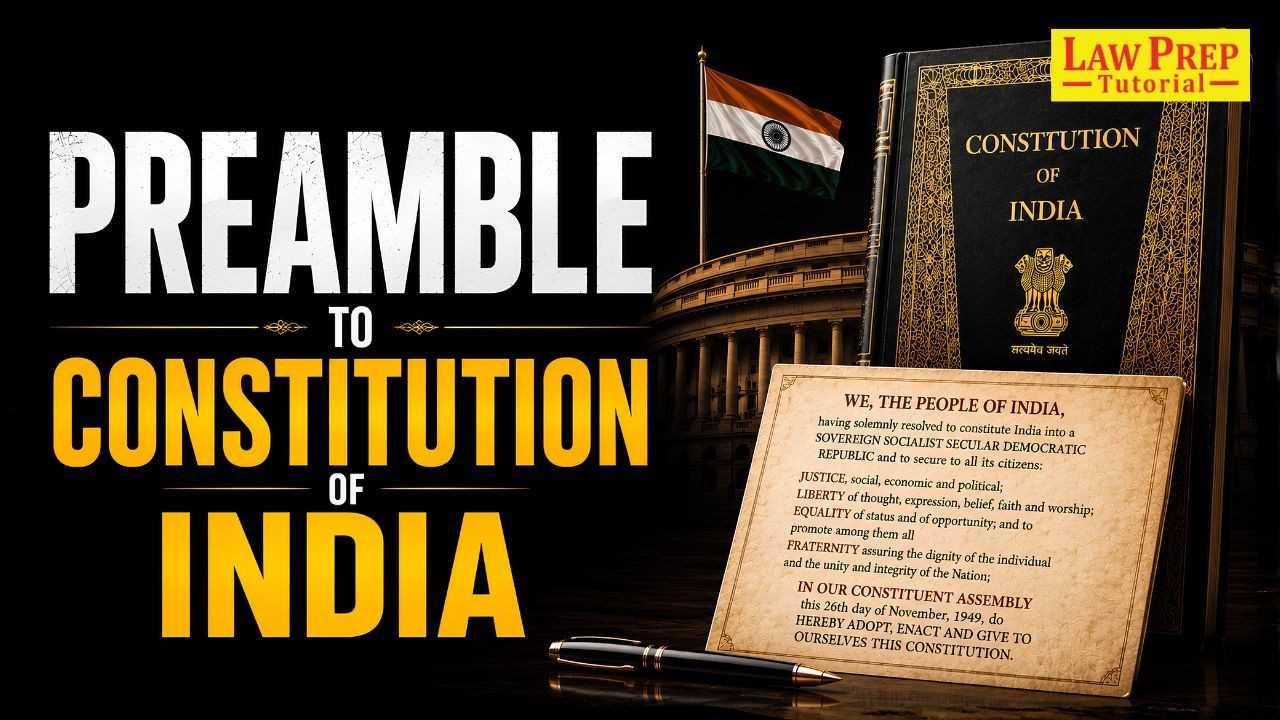

The constitution of India preamble is the opening section of the Constitution that explains the values, goals, and vision of the country in simple words. It is also known as the introduction or identity card of the Constitution because it gives a quick understanding of what India stands for and what the Constitution wants to achieve.
It starts with the famous words “We, the People of India”, which show that the real power of the country belongs to its citizens. The preamble to the constitution of India talks about ideas like justice, liberty, equality, and fraternity.
Below, you will understand its text, meaning, keywords, history, importance, and everything else in an easy way.
Constitution of India Preamble: Full Text
The current constitution of India preamble is given below:
WE, THE PEOPLE OF INDIA, having solemnly resolved to constitute India into a SOVEREIGN SOCIALIST SECULAR DEMOCRATIC REPUBLIC and to secure to all its citizens:
JUSTICE, social, economic and political;
LIBERTY of thought, expression, belief, faith and worship;
EQUALITY of status and of opportunity;
and to promote among them all
FRATERNITY assuring the dignity of the individual and the unity and integrity of the Nation;
IN OUR CONSTITUENT ASSEMBLY this twenty-sixth day of November, 1949, do HEREBY ADOPT, ENACT AND GIVE TO OURSELVES THIS CONSTITUTION.
The text above tells us one simple thing: India belongs to its people, and the Constitution promises justice, freedom, equal opportunities, and unity for everyone. It also explains the kind of nation India wants to be and the values that guide the country.
Also check out Facts About Indian Constitution
Meaning of Words in Indian Constitution Preamble
Below are the meanings of all words used in the preamble to the Constitution of India:
| Word | Meaning |
| We, The People of India | Shows that the Constitution gets its authority and power from the people of India |
| Sovereign | India is completely independent and no outside country controls its decisions |
| Socialist | The country aims to reduce inequality and provide fair opportunities for people |
| Secular | Every citizen has the freedom to follow any religion, and the government treats all religions equally |
| Democratic | People have the power to elect their representatives through voting |
| Republic | The head of the country is elected and not chosen through family inheritance |
| Justice | Ensures fair treatment in social, economic, and political matters |
| Liberty | Gives freedom of thought, expression, belief, faith, and worship |
| Equality | Gives equal status and opportunities to all citizens |
| Fraternity | Promotes brotherhood, unity, and respect among citizens |
| Dignity of Individual | Every person deserves respect and value in society |
| Unity | Keeps the nation connected and strong |
| Integrity | Protects the unity and wholeness of the country |
Explore more about Constitution Day of India here!
Earlier Version of the Preamble of Indian Constitution
The preamble to the Constitution of India was not exactly the same as the one we see today. The original version adopted in 1949 did not contain certain words that are now part of the current Preamble. Later, changes were made through a Constitutional Amendment.
The older or original version of the Preamble was:
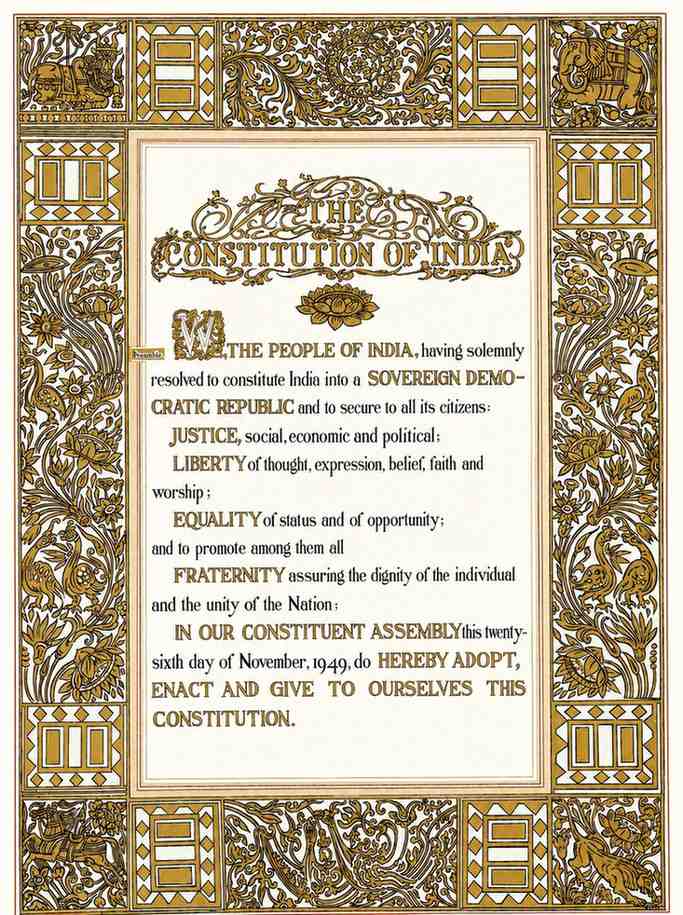
WE, THE PEOPLE OF INDIA, having solemnly resolved to constitute India into a SOVEREIGN DEMOCRATIC REPUBLIC and to secure to all its citizens:
JUSTICE, social, economic and political;
LIBERTY of thought, expression, belief, faith and worship;
EQUALITY of status and of opportunity;
and to promote among them all
FRATERNITY assuring the dignity of the individual and the unity of the Nation;
IN OUR CONSTITUENT ASSEMBLY this twenty-sixth day of November, 1949, do HEREBY ADOPT, ENACT AND GIVE TO OURSELVES THIS CONSTITUTION.
Difference Between Original and Current Preamble
| Original Preamble (1949) | Current Preamble |
| SOVEREIGN DEMOCRATIC REPUBLIC | SOVEREIGN SOCIALIST SECULAR DEMOCRATIC REPUBLIC |
| Mentioned “unity of the Nation” | Mentions “unity and integrity of the Nation” |
| Did not include the word Socialist | Includes Socialist |
| Did not include the word Secular | Includes Secular |
| Did not include the word Integrity | Includes Integrity |
| Original version adopted in 1949 | Current version came after changes in 1976 |
What Changed and Why?
The 42nd Constitutional Amendment Act, 1976 added three important words to the Preamble:
- Socialist – to highlight social and economic equality
- Secular – to show equal respect for all religions
- Integrity – to emphasize the unity and strength of the nation
These additions were made to further explain India’s values and national goals.
Check out the Difference between Act and Law now!
History of Constitution of India Preamble
The Preamble of Indian constitution was not created suddenly. It developed through ideas, discussions, and decisions taken over several years.
1. The Idea Began Before Independence
Even before India became independent, leaders believed that the country needed a clear vision for its future. People wanted a system that would provide freedom, equality, justice, and rights to citizens. The idea was not only to gain independence but also to decide what kind of nation India should become.
2. Objectives Resolution by Jawaharlal Nehru
On 13 December 1946, Jawaharlal Nehru introduced the Objectives Resolution in the Constituent Assembly. This resolution explained the goals and principles that independent India should follow. Many ideas mentioned in this resolution later became part of the Preamble.
3. Discussions in the Constituent Assembly
Members of the Constituent Assembly discussed many important topics before preparing the final Preamble. They exchanged views on democracy, people’s rights, equality, religion, and the powers of the government. These discussions helped shape the final wording and values included in the Preamble.
4. Adoption of the Preamble
The Preamble was adopted along with the Constitution on 26 November 1949. It became the opening section of the Constitution and reflected the vision and values of the nation.
5. Changes Through Constitutional Amendment
The Preamble remained unchanged for many years. Later, during the 42nd Constitutional Amendment Act, 1976, three new words were added:
- Socialist
- Secular
- Integrity
These words were included to further explain the values and direction of the country.
Who Wrote the Preamble of Indian Constitution?
The Preamble of the Indian Constitution was written by the Drafting Committee headed by Dr. B.R. Ambedkar, based mainly on Jawaharlal Nehru’s Objectives Resolution.
Drafting Process of the Preamble
The Preamble was prepared as part of the Indian Constitution drafting process by the Constituent Assembly. The Drafting Committee studied different ideas, constitutional principles, and discussions held in the Assembly before creating the final text. The aim was to include the values and goals that India wanted to follow after independence.
The committee carefully selected words that could explain India’s identity and vision in a simple but meaningful way. Terms like justice, liberty, equality, and fraternity were included to reflect the purpose of the Constitution.
Influence of Objectives Resolution
The Objectives Resolution introduced by Jawaharlal Nehru on 13 December 1946 had a major influence on the Preamble. The resolution explained the future direction of India and the values that should guide the nation.
Many ideas from the Objectives Resolution later became part of the Preamble, including:
- Democracy and self-governance
- Justice for citizens
- Freedom and liberty
- Equality for all people
- National unity and integrity
Because of this, the Objectives Resolution is often considered the foundation behind the Constitution’s Preamble.
Discover How to study Law in India here!
Salient Features of Constitution of India Preamble
These are the key features of the Constitution Preamble:
- Source of Constitutional Authority: The Preamble starts with “We, the People of India”, which means the Constitution receives its power from the people of the country and not from any king, ruler, or outside authority.
- Reflects National Values: The Preamble contains important values such as justice, liberty, equality, and fraternity. These values guide the country and help create a fair society.
- Shows the Nature of India: The Preamble describes India as a Sovereign, Socialist, Secular, Democratic Republic, giving a clear picture of the country’s identity.
- Explains the Objectives of the Constitution: The Preamble clearly mentions the goals that the Constitution wants to achieve, such as equal opportunities, freedom, justice, and unity.
- Promotes National Unity: The Preamble encourages unity and brotherhood among citizens so people from different religions, cultures, and regions can live together peacefully.
- Helps Understand the Constitution: Courts and legal authorities sometimes use the Preamble to understand the purpose and meaning of constitutional provisions.
- Represents Democratic Principles: The Preamble supports democracy by showing that people have the power to choose their representatives and participate in governance.
Amendment to Preamble of Indian Constitution
The Preamble remained unchanged after the Constitution came into effect in 1950. Later, one important amendment changed some parts of it.
42nd Constitutional Amendment Act, 1976
The 42nd Constitutional amendment is known as the Mini Constitution because many changes were made through it. Three important words were added to the Preamble.
| Added Word | Purpose |
| Socialist | To emphasize social and economic equality among citizens |
| Secular | To ensure equal treatment and respect for all religions |
| Integrity | To strengthen the unity and strength of the nation |
Objectives of Preamble of Constitution of India
The Constitution Preamble highlights the main goals that India wants to achieve as a nation.
- Justice: The Constitution aims to provide social, economic, and political justice so people get fair treatment and equal rights.
- Liberty: The Preamble gives people freedom of thought, expression, belief, faith, and worship so they can live according to their choices.
- Equality: The Constitution wants every citizen to receive equal status and equal opportunities without unfair discrimination.
- Fraternity: The Preamble promotes a feeling of unity, brotherhood, and mutual respect among citizens.
- Dignity of Individuals: The Constitution recognizes that every person deserves respect, value, and the right to live with dignity.
- Unity and Integrity of the Nation: The Constitution aims to keep the country united and maintain the strength and stability of the nation.
Get the complete details about Nani Palkhivala here!
Debates Around Preamble in the Constituent Assembly
The Preamble was discussed in the Constituent Assembly on 17 October 1949 before it was finally accepted. During these discussions, members shared different opinions and suggestions regarding the wording and ideas that should be included in the Preamble.
1. Debate on the Name of India
One member suggested changing the country’s identity and proposed using the name “Union of Indian Socialistic Republics”, inspired by the Soviet Union model. However, many members did not support this idea because they felt it did not match the constitutional framework and vision already being developed for India.
2. Debate on Adding the Word “God”
Another proposal suggested beginning the Preamble with the phrase “In the name of God.” This led to serious discussions among members. Some supported the idea, while many others disagreed.
People who opposed it believed that including God could indirectly force religious beliefs on citizens. They felt India should respect every individual’s freedom to follow any faith or no faith at all.
The proposal was later put to voting. Around 41 members supported it, while 68 members voted against it, so the suggestion was rejected.
3. Debate on Including Mahatma Gandhi’s Name
A suggestion was also made to include the name of Mahatma Gandhi in the Preamble. However, not all members agreed. Some believed the Constitution should stand on its own principles and should not directly mention any individual.
As a result, this proposal also did not receive approval.
Find more about the Nani Palkhiwala Moot Court Competition
Constitution of India Preamble PDF
Download the Constitution of India Preamble PDF that includes the full text of the Preamble, meaning of important words, amendments, objectives, key facts, and easy revision notes. This PDF help students preparing for CLAT, Judiciary, UPSC, CUET, SSC, State Exams, and general awareness tests.
FAQs About Constitution of India Preamble
The Constitution of India Preamble is the opening statement of the Constitution that explains the values, goals, and vision of India. It tells us what kind of country India wants to be and what it promises to its citizens.
“We the People of India” means that the Constitution gets its authority and power from the citizens of India and not from any king or external authority.
The Preamble was adopted on 26 November 1949 along with the Constitution of India.
The words Socialist, Secular, and Integrity were added later.
The 42nd Constitutional Amendment Act, 1976 changed the Preamble.
Yes, the Preamble can be amended through the Constitutional Amendment process, but its basic structure cannot be changed.
The Preamble is important because it explains the vision and values of the Constitution and acts as a guide for understanding laws and constitutional principles.
Explore more Law-Related Topics here: